Loading…
← All schools
South Post Oak Barber College
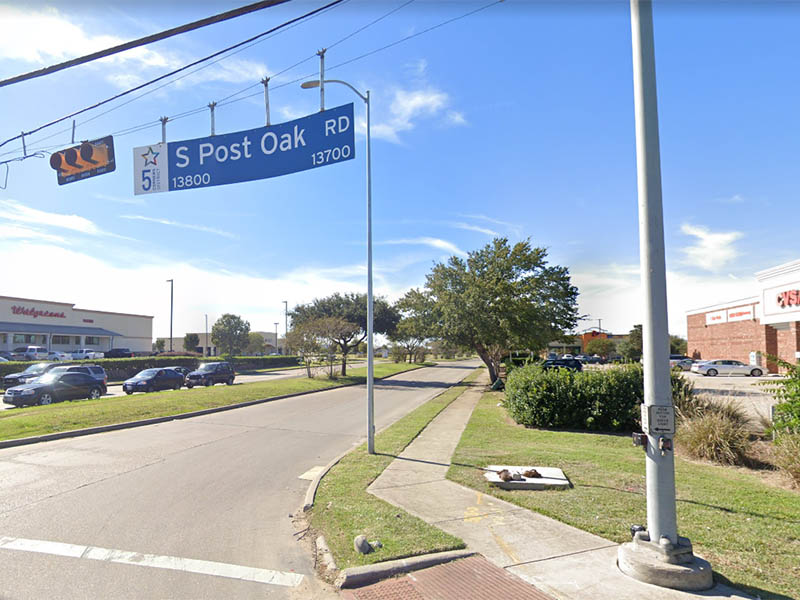
Houston, TXprivate forprofitsouthpostoakbarbercollege.com
South Post Oak Barber College is a singularly focused trade school in Houston, Texas, offering a direct, no-frills path to a career in barbering. It operates with the intensity of an apprenticeship, delivering a single, hands-on program to a small cohort of students each year. This is not a traditional liberal arts campus; it's a practical, career-launching workshop where success is measured by skill acquisition and licensure, not by campus life or selectivity metrics.
More details
- Undergrad enrollment
- 10
- Location
- Houston, TX
- Minimum Age
- 16
- Prerequisite
- High school diploma or GED
- Academic Focus
- Single program: Barbering/Barber
- Student-to-Faculty Ratio
- 5:1
- Federal Aid Participation
- Provisional certification
- First-Year Retention Rate
- 20%
- Annual Graduates (approx.)
- 13
- Institutional Scholarships
- None offered
Outcomes & value
Outcomes & value
- Pell (lower-income) share
- —
Earnings = median of students working ~10 years after entry; debt = median of graduates. Value divides 10-yr earnings by one year’s net price — read it as earnings per dollar of annual cost, not a full lifetime ROI; it favors lower-cost schools. Source: U.S. Dept. of Education College Scorecard. Figures lag ~2 years and reflect all students, not your intended major.
Campus & location
Climate
- Pleasant days / yr
- 108
- Summer high
- 92°F
- Winter low
- 49°F
- Annual rain
- 55.4"
- Natural-hazard risk
- Very High
Pleasant days counts days per year with a mean temperature of 55–75°F, a high at or below 90°F, a low at or above 45°F, and little precipitation — a transparent comfort measure, not a weighting we invented. Computed from Open-Meteo ERA5 daily history (2019–2023). Natural-hazard risk is the county’s composite rating from the FEMA National Risk Index.
Quick answers
- How many undergraduates attend South Post Oak Barber College?
- South Post Oak Barber College enrolls approximately 10 undergraduate students.
- Where is South Post Oak Barber College located?
- South Post Oak Barber College is located in Houston, TX.
Admissions
Admissions at South Post Oak Barber College are defined by practical, vocational prerequisites rather than the competitive metrics of traditional four-year institutions. The process is straightforward and geared toward assessing a candidate's readiness for trade education. Applicants must be at least 16 years old and possess a high school diploma or GED equivalent. The college may accept up to 700 hours of prior training, suggesting a pathway for those transferring from other programs. Unlike universities that heavily weigh essays, test scores, and interviews, this college's admissions appear focused on basic eligibility. Notably, one external source claims the school has a "0% ," but this is contradicted by other sources that list the rate as "Not reported," and the official admissions page outlines clear, attainable requirements rather than suggesting an impossibly selective process. Standardized test scores (SAT/ACT) are consistently reported as "Not reported" or "N/A" for admissions, indicating they are not a factor. The concept of "demonstrated interest"—a critical factor at many selective colleges—is irrelevant here; the school's admissions priorities are not detailed in a in the same way, as its model is open-admission adjacent for qualified candidates.
Compare South Post Oak Barber College
vs Livingstone Collegevs Emory University-Oxford Collegevs West Virginia University Institute of Technologyvs Hampden-Sydney College
See colleges similar to South Post Oak Barber College →Sources
- Common Data Set: Home
- Admissions & Enrollment
- Decoding the Common Data Set What You Need to Know for ...
- Common Data Set 2025-2026
- The Common Data Set: What It Is & How to Use It In ...
- How To Use a Common Data Set
- South Post Oak Barber College | Class of 2030 Community
- South Post Oak Barber College - EDsmart
- South Post Oak Barber College
- South Post Oak Barber College Enrollment Data
- South Post Oak Barber College | CollegeHelpGuide