Loading…
← All schools
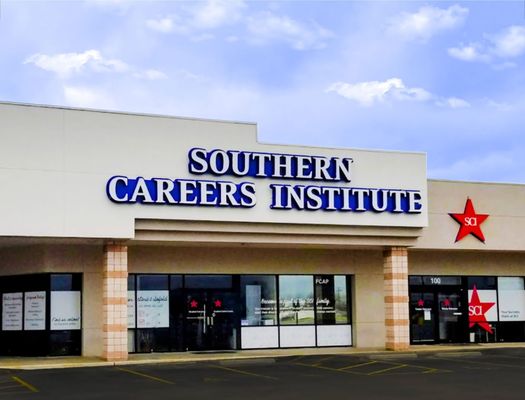
Southern Careers Institute-Austin
Austin, TXprivate forprofitscitexas.edu/
Avg net price
$25,660
Earnings (10 yr)
$27,035
Acceptance & SAT from Common Data Set / IPEDS; net price, earnings & graduation from the U.S. Dept. of Education College Scorecard. Figures lag ~1–2 years — verify with the school.
Southern Careers Institute-Austin is a trade school that operates with the urgency of a job placement agency, not the contemplative pace of a liberal arts college. It’s a direct pipeline into Texas’s skilled labor market, offering accelerated, hands-on programs in fields like welding, HVAC, and commercial driving. The environment is described as a ‘supportive, family-like’ community, though its open-door admissions and for-profit model have drawn criticism from some former students. For those seeking a fast, practical route to a trade certificate, SCI-Austin promises a no-frills, career-focused education.
More details
- Undergrad enrollment
- 746
- Student-Faculty Ratio
- 25:1
- Median Earnings (10yr)
- $27,035
- On-Time Graduation Rate
- 52%
- Average Total Aid Awarded
- $4,217
- Common Student Demographics
- Hispanic (34.5%), White (32.4%), Black (24.8%)
Outcomes & value
Outcomes & value
- Median earnings (10 yr)
- $27,035
- Value (earnings ÷ net price)
- 1.1×
- Median debt at graduation
- $8,708
- Reducing loan balance (3 yr)
- 18%
- Pell (lower-income) share
- 60%
- First-gen share (among federal-aid recipients)
- 64%
Earnings = median of students working ~10 years after entry; debt = median of graduates. Value divides 10-yr earnings by one year’s net price — read it as earnings per dollar of annual cost, not a full lifetime ROI; it favors lower-cost schools. Source: U.S. Dept. of Education College Scorecard. Figures lag ~2 years and reflect all students, not your intended major.
Campus & location
Campus safety
- On-campus violent crimes (2024)
- 0
On-campus criminal offenses classed as violent (murder/non-negligent manslaughter, rape, robbery, aggravated assault) for the most recent reported year. Source: U.S. Dept. of Education Campus Safety and Security (Clery Act). Counts reflect what’s reported to the school, and urban campuses often report more partly due to non-student incidents nearby — read alongside campus size and setting, not as a standalone safety verdict.
Climate
- Pleasant days / yr
- 104
- Summer high
- 95°F
- Winter low
- 44°F
- Annual rain
- 35.3"
- Annual snow
- 1.5"
- Natural-hazard risk
- Relatively High
Pleasant days counts days per year with a mean temperature of 55–75°F, a high at or below 90°F, a low at or above 45°F, and little precipitation — a transparent comfort measure, not a weighting we invented. Computed from Open-Meteo ERA5 daily history (2019–2023). Natural-hazard risk is the county’s composite rating from the FEMA National Risk Index.
Quick answers
- How much does Southern Careers Institute-Austin cost?
- At Southern Careers Institute-Austin, the average net price (after aid) is about $25,660 per year. Actual cost varies with financial aid and residency.
- How many undergraduates attend Southern Careers Institute-Austin?
- Southern Careers Institute-Austin enrolls approximately 746 undergraduate students.
- Where is Southern Careers Institute-Austin located?
- Southern Careers Institute-Austin is located in Austin, TX.
Admissions
Admissions at SCI-Austin is characterized by an open-access model, with multiple sources citing a 100% . The process is designed for speed and accessibility, targeting working adults and career-changers. To be considered, applicants must provide official high school transcripts, a diploma, or a verifiable GED certificate. The school does not appear to utilize standardized tests like the SAT or ACT as part of its admissions criteria, focusing instead on baseline educational attainment. One source notes a rate of 92.6%, indicating that nearly all admitted students choose to enroll, which is exceptionally high and underscores the school's role in serving a specific, ready-to-start population. There is no mention of Early Decision programs or demonstrated interest being a factor, aligning with its non-selective, direct-to-workforce mission.
Academics
The academic experience is laser-focused on job-ready skills. Programs are accelerated and practical, with a stated emphasis on allowing students to ‘work while you're in school’ through flexible online and in-person class schedules. Training is ‘customized based on your desired career’ and heavily emphasizes hands-on labs and externships. Popular programs include Business Administration and Management, Medical Insurance Coding, Commercial Motor Vehicle Operation, Electrical Technology, HVAC, and Welding. The student-faculty ratio is 25-to-1, which, while higher than a small liberal arts college, is presented as enabling ‘personalized instruction and academic support’ within a trade-school context. The curriculum is stripped of general education requirements, aiming to deliver specific technical competencies as efficiently as possible.
Compare Southern Careers Institute-Austin
vs Livingstone Collegevs United States Coast Guard Academyvs Dillard Universityvs Florida Polytechnic University
See colleges similar to Southern Careers Institute-Austin →Sources
- Common Data Set: Home
- Common Data Set - Institutional Reporting
- Common Data Set Explorer 2026: Compare 100 Colleges
- Where to find Common Data Set (CDS) for college ...
- The Common Data Set: What It Is & How to Use It In ...
- Useful Resource: a Repository of Common Data Set
- Southern Careers Institute - Austin
- Admissions - SCI
- Accreditation Statistics for Southern Careers Institute-Austin
- Southern Careers Institute-Austin - Sallie
- Southern Careers Institute San Antonio North Admission