Loading…
← All schools
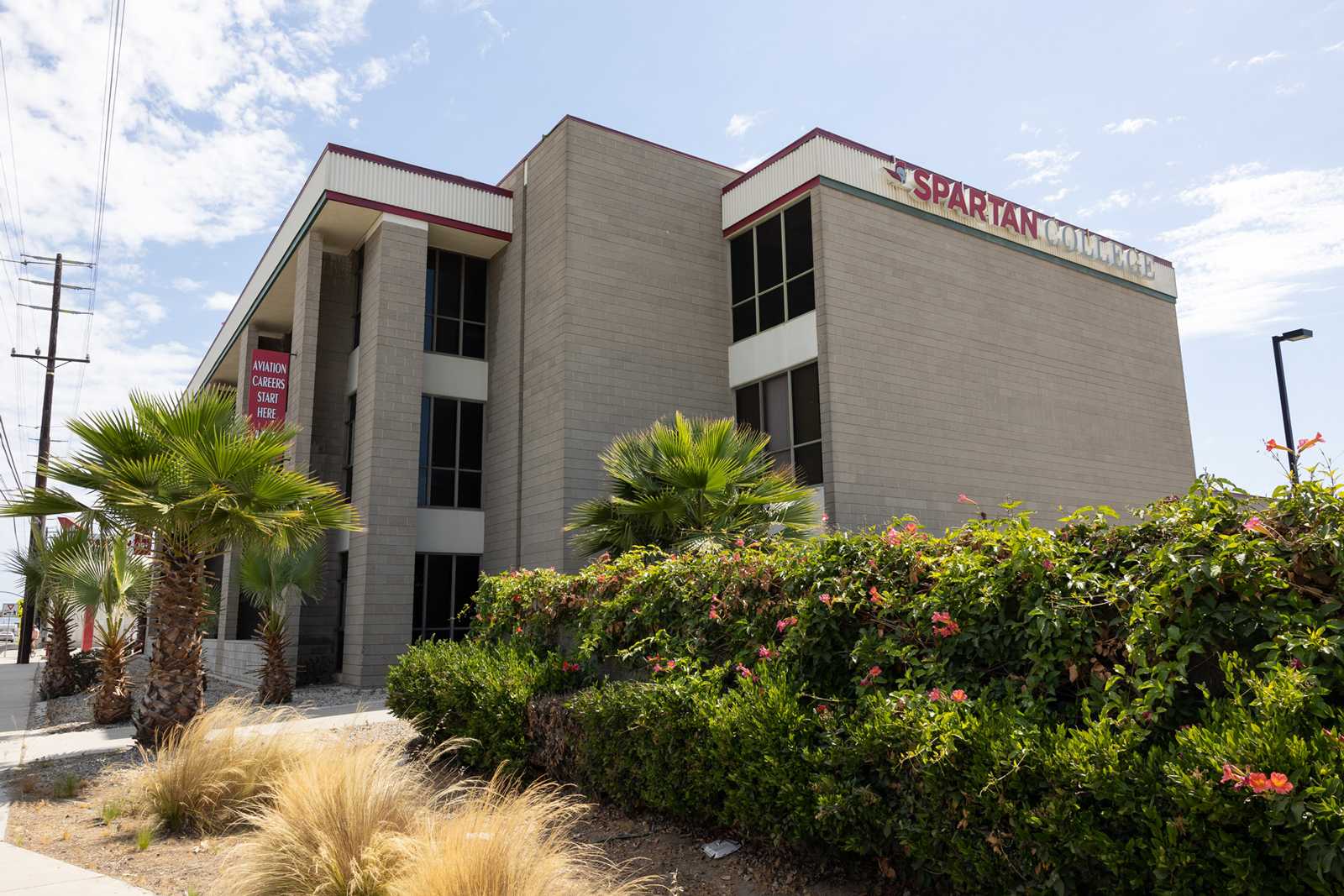
Spartan College of Aeronautics & Technology
Inglewood, CAprivate forprofitwww.spartan.edu/
Avg net price
$33,320
Earnings (10 yr)
$61,575
Acceptance & SAT from Common Data Set / IPEDS; net price, earnings & graduation from the U.S. Dept. of Education College Scorecard. Figures lag ~1–2 years — verify with the school.
Spartan College of Aeronautics & Technology is a specialized, career-focused trade school that operates with the single-minded intensity of a flight line. With campuses in Inglewood, CA, Tulsa, and elsewhere, it’s a direct pipeline into the aviation industry, offering FAA-based, hands-on training in hangars, not lecture halls. The culture is pragmatic and focused—this is not a party school, but a place where students earn their Airframe & Powerplant (A&P) certification and, according to federal data, often land jobs with median earnings that punch well above the typical two-year college graduate.
More details
- Undergrad enrollment
- 411
- Key Ranking
- 9th among two-year colleges for occupational earnings power
- Program Focus
- FAA-based A&P & aviation tech
- Graduation Rate
- ~74% (varies by source)
- Student Body Vibe
- Focused, not a party school
- Financial Aid Emphasis
- Federal loans & grants
- Median Earnings (10yr)
- $61,575
Outcomes & value
Outcomes & value
- Median earnings (10 yr)
- $61,575
- Value (earnings ÷ net price)
- 1.8×
- Median debt at graduation
- $20,000
- Reducing loan balance (3 yr)
- 38%
- Pell (lower-income) share
- 40%
- First-gen share (among federal-aid recipients)
- 51%
Earnings = median of students working ~10 years after entry; debt = median of graduates. Value divides 10-yr earnings by one year’s net price — read it as earnings per dollar of annual cost, not a full lifetime ROI; it favors lower-cost schools. Source: U.S. Dept. of Education College Scorecard. Figures lag ~2 years and reflect all students, not your intended major.
Campus & location
Campus safety
- On-campus violent crimes (2024)
- 0
On-campus criminal offenses classed as violent (murder/non-negligent manslaughter, rape, robbery, aggravated assault) for the most recent reported year. Source: U.S. Dept. of Education Campus Safety and Security (Clery Act). Counts reflect what’s reported to the school, and urban campuses often report more partly due to non-student incidents nearby — read alongside campus size and setting, not as a standalone safety verdict.
Climate
- Pleasant days / yr
- 277
- Summer high
- 74°F
- Winter low
- 47°F
- Annual rain
- 16.4"
- Natural-hazard risk
- Very High
Pleasant days counts days per year with a mean temperature of 55–75°F, a high at or below 90°F, a low at or above 45°F, and little precipitation — a transparent comfort measure, not a weighting we invented. Computed from Open-Meteo ERA5 daily history (2019–2023). Natural-hazard risk is the county’s composite rating from the FEMA National Risk Index.
Deep dive — research, future-scholar output & economic mobility
Research output
- Institutional h-index
- 2
- Scholarly works
- 5
Institutional research volume and impact from OpenAlex. The h-index reflects large research universities and will be low for teaching-focused liberal-arts colleges — not a measure of undergraduate quality.
Quick answers
- How much does Spartan College of Aeronautics & Technology cost?
- At Spartan College of Aeronautics & Technology, the average net price (after aid) is about $33,320 per year. Actual cost varies with financial aid and residency.
- How many undergraduates attend Spartan College of Aeronautics & Technology?
- Spartan College of Aeronautics & Technology enrolls approximately 411 undergraduate students.
- Where is Spartan College of Aeronautics & Technology located?
- Spartan College of Aeronautics & Technology is located in Inglewood, CA.
Admissions
Spartan College operates with an open admissions philosophy, prioritizing access for students committed to technical careers in aviation. Multiple sources report a 100% , characterizing the process as "not selective" [7, 8, 9, 35]. One data source cites a 76.9% acceptance rate based on 2014 figures, but more recent assessments consistently describe it as universally accessible [11]. The admissions requirements are program-specific, and the college encourages prospective students to complete an in-person or virtual visit to understand the training environment [1, 23]. The process is straightforward, with no available SAT or ACT range data reported, aligning with its mission-driven, non-traditional approach [10]. Total enrollment figures vary by source, ranging from 261 to 317 to about 840 undergraduate students, reflecting different reporting years and possibly different campus totals [2, 3, 9, 26].
Compare Spartan College of Aeronautics & Technology
vs Concordia University-Irvinevs Westmont Collegevs Vanguard University of Southern Californiavs Pitzer
See colleges similar to Spartan College of Aeronautics & Technology →Sources
- Admissions Overview
- Spartan College of Aeronautics and Technology Statistics
- Spartan College of Aeronautics and Technology (489371)
- DFR Report HTML - Department of Education
- College Catalog
- 2024 G&E for 2025 disclosure.xlsx
- Spartan College of Aeronautics and Technology (no-board)
- Spartan Colleges of Aeronautics and Technology - Tulsa
- Spartan College of Aeronautics and Technology, Tulsa ...