Admit rate has ranged 50%–73% over the last 5 years — notably volatile, though the latest figure above (77%) falls outside that window. Source: IPEDS via Urban Institute.
Acceptance & SAT from Common Data Set / IPEDS; net price, earnings & graduation from the U.S. Dept. of Education College Scorecard. Figures lag ~1–2 years — verify with the school.
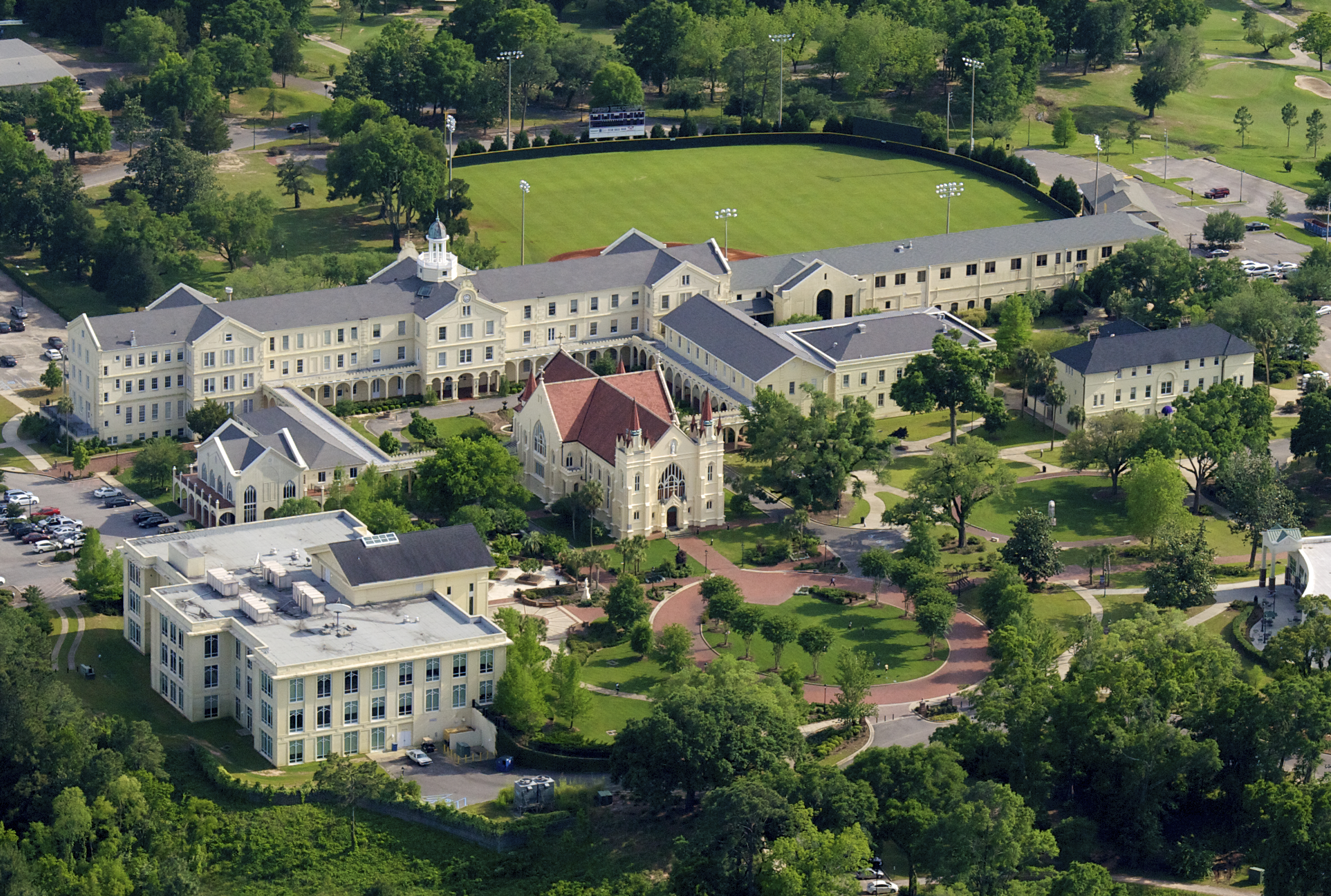
Spring Hill College is a small, Jesuit liberal arts college in Mobile, Alabama, that trades cutthroat selectivity for a deeply personal, values-driven education. Its identity is rooted in the Jesuit tradition of 'cura personalis'—care for the whole person—which manifests in a tight-knit campus community, a required liberal arts core, and a focus on moral character. While its graduation rates and financial aid policies are more modest than elite Northeastern peers, it offers a distinctive, supportive environment where students are 'known, not just enrolled.'
Admission requirements
Test-optional — scores considered if submitted
Required
High school transcript
Grade point average
TOEFL (non-native English)
Considered (not required)
Letters of recommendation
Test scores (SAT/ACT)
College-prep program
Source: IPEDS Admissions survey (2022) via Urban Institute. Covers formal factors only — it does not reflect essays, extracurriculars, or other holistic criteria.
More details
Undergrad enrollment
782
In-state tuition
$24,054
Out-of-state tuition
$24,054
No-Loan Policy
Not Stated in Sources
Graduation Rate
52%
Meets Full Need
Not Stated in Sources
ED Share of Class
Not Stated in Sources
First-Year Retention
Not Stated in Sources
Demonstrated Interest
Not Stated in Sources
Median Earnings (10yr)
$51,500
Outcomes & value
Outcomes & value
Median earnings (10 yr)
$51,500
Value (earnings ÷ net price)
2.5×
Median debt at graduation
$27,000
Graduation rate
52%
First-year retention
70%
Reducing loan balance (3 yr)
61%
Pell (lower-income) share
32%
First-gen share (among federal-aid recipients)
25%
Financial health
2.0 / 3.0Meets the federal financial-responsibility standard
U.S. Dept. of Education Financial Responsibility Composite Score (FY2022-23). Scale −1.0 to 3.0; ≥1.5 meets the standard. Reported for private nonprofit & for-profit institutions only — public universities are state-backed and not scored, so this is a stability signal, not a ranking.
Campus & location
Campus safety
On-campus violent crimes (2024)
2
Per 1,000 students
2.18
On-campus criminal offenses classed as violent (murder/non-negligent manslaughter, rape, robbery, aggravated assault) for the most recent reported year. Source: U.S. Dept. of Education Campus Safety and Security (Clery Act). Counts reflect what’s reported to the school, and urban campuses often report more partly due to non-student incidents nearby — read alongside campus size and setting, not as a standalone safety verdict.
Climate
Pleasant days / yr
111
Summer high
89°F
Winter low
48°F
Annual rain
60.1"
Natural-hazard risk
Relatively High
Pleasant days counts days per year with a mean temperature of 55–75°F, a high at or below 90°F, a low at or above 45°F, and little precipitation — a transparent comfort measure, not a weighting we invented. Computed from Open-Meteo ERA5 daily history (2019–2023). Natural-hazard risk is the county’s composite rating from the FEMA National Risk Index.
Deep dive — research, future-scholar output & economic mobility▾
Research output
Institutional h-index
43
Scholarly works
469
Institutional research volume and impact from OpenAlex. The h-index reflects large research universities and will be low for teaching-focused liberal-arts colleges — not a measure of undergraduate quality.
Economic mobility
Mobility rate
2.6%
Bottom → top quintile
40%
From bottom quintile
7%
Mobility rate = the share of students who both start in the bottom household-income quintile and reach the top quintile; bottom → top is that chance conditional on starting at the bottom. Source: Opportunity Insights Mobility Report Cards (Chetty, Friedman, Saez, Turner & Yagan). Reflects 1980–82 birth cohorts, so it’s directional, not current.
Quick answers
What is the acceptance rate at Spring Hill College?
Spring Hill College's acceptance rate is approximately 77% (Mobile, AL), based on the most recent figures we compiled from public and primary sources.
How much does Spring Hill College cost?
At Spring Hill College, the average net price (after aid) is about $20,449 per year. Actual cost varies with financial aid and residency.
How many undergraduates attend Spring Hill College?
Spring Hill College enrolls approximately 782 undergraduate students.
Where is Spring Hill College located?
Spring Hill College is located in Mobile, AL.
Admissions
Spring Hill College is a moderately selective institution where the majority of applicants are admitted, positioning it as an accessible option within private, faith-based liberal arts education. The admissions process is straightforward, with no application fee and a rolling admissions policy after the priority deadline. The college reports that standardized test scores are considered but not required for all applicants, and a minimum high school GPA of 2.5 is recommended. The middle 50% ACT score range for admitted students who submit scores is between 17 and 24, while the SAT range is approximately 1110 to 1230. While the is a standard source for detailed admissions factors like demonstrated interest, the specific Spring Hill CDS was not among the provided sources, so the relative importance of factors like interviews, essays, or extracurricular activities cannot be confirmed from these materials. One source notes an Early Action of 65%, compared to a 60% overall rate, suggesting a slight advantage for early applicants. The rate—the percentage of admitted students who enroll—is reported at 8.26%, which is low compared to the national average for similar institutions, indicating that many admitted students choose other options.
Earnings = median of students working ~10 years after entry; debt = median of graduates. Value divides 10-yr earnings by one year’s net price — read it as earnings per dollar of annual cost, not a full lifetime ROI; it favors lower-cost schools. Source: U.S. Dept. of Education College Scorecard. Figures lag ~2 years and reflect all students, not your intended major.
Academics at Spring Hill are built upon a mandatory Jesuit, liberal arts core curriculum that all undergraduates must complete, reflecting the college's Catholic philosophical foundation. The college offers more than 45 undergraduate majors and areas of concentration. The most popular fields of study are consistently in Business, Management, Marketing, and Related Support Services, followed by Health Professions and Related Programs. Other popular majors include Psychology and General Business Administration and Management. This curriculum is designed to provide a well-rounded education that emphasizes learning both inside and outside the classroom, in line with Jesuit educational principles. The academic structure supports students exploring a range of disciplines before committing to a major, with programs available for traditional undergraduates, graduate students, and adult learners.
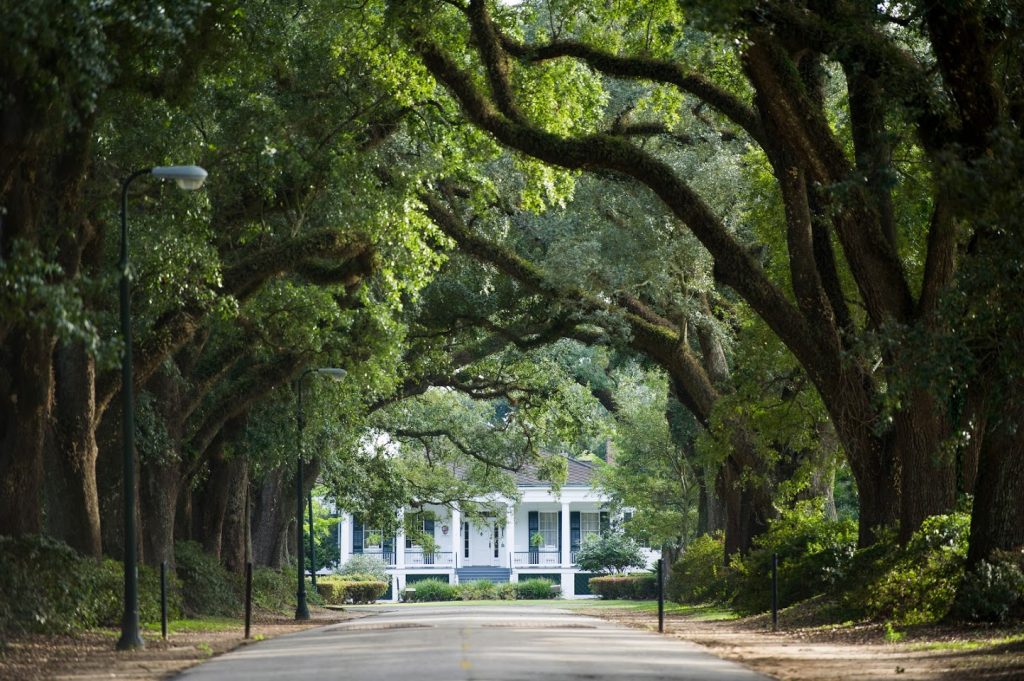
Life at Spring Hill is defined by its close-knit, residential community and its beautiful, safe campus in Mobile. The college actively fosters an atmosphere that encourages spiritual maturity, respect for diversity, and personal responsibility. A significant majority of students—74%—live in college-owned, -operated, or -affiliated housing, creating a strongly residential feel. The college promotes the idea that students are 'known, not just enrolled,' and that being part of a community feels natural. Social life revolves around campus clubs, sports, and events. As a voluntary member of this Jesuit, Catholic community, students are expected to understand and abide by its community standards, which integrate the institution's values into campus life. Student reviews describe the campus positively, noting ample opportunities for socializing within this structured environment.
Spring Hill College reports solid career outcomes for its graduates, though its graduation rates indicate some students face challenges completing their degrees. For the class of 2021, 92% of graduates secured employment or continued into graduate school within a year—a rate the college notes exceeds the national average. However, the six-year graduation rate is reported at 53%, with a four-year graduation rate of 44%. One notable bright spot is a 100% pass rate for graduates seeking teaching certification. The median earnings figure for graduates is established by the canonical data. These metrics paint a picture of a college where those who persist and graduate find success, but where a significant portion of the entering class does not complete a degree within six years.
The published tuition and fees for Spring Hill College are $25,550 per year. However, the average after aid—what students actually pay—is significantly lower. A high percentage of undergraduate students receive financial aid, with one source stating 100% of undergraduates receive aid and 33% receive federal Pell Grants. The college offers academic merit scholarships to both first-year and transfer students. Families are encouraged to use the Net Price Calculator on the college's website to get a personalized estimate. The financial aid office provides information on various types of aid, including loans, and notes that if a parent is denied a Parent PLUS loan, the student may become eligible for additional federal loan funds. The net price is a critical figure for prospective families, as it represents the real out-of-pocket cost after grants and scholarships.
Spring Hill College stands out as a specific type of educational proposition: a small, Jesuit, liberal arts college in the Deep South that prioritizes community and character formation alongside academics. Its defining feature is the intentional, values-based community it cultivates, summed up in the Jesuit ideal of 'cura personalis.' This isn't a place for anonymous attendance; the college explicitly promises students will be 'known, not just enrolled.' This manifests in a high residential population (74%), a required core curriculum steeped in Catholic and Jesuit thought, and community standards that students voluntarily agree to uphold. It's for students seeking a cohesive, supportive environment where spiritual and moral development are considered part of the education. The trade-offs are visible in the metrics: high acceptance and low rates suggest it's not a first choice for many, and graduation rates lag behind national averages. But for a student looking for a close-knit, faith-informed liberal arts experience with strong post-graduate career outcomes, Spring Hill offers a distinctive and personal alternative to larger, more secular, or more impersonal institutions.
Spring Hill College seal · sourceHallmark Movie Filmed on the Campus of Spring Hill College Premieres in April - www.shc.edu · sourceFacility Rentals | Administration | Spring Hill College | Mobile, AL · sourceSpring Hill College - Profile, Rankings and Data | US News Best Colleges · source