Admit rate has ranged 75%–82% over the last 5 years. Source: IPEDS via Urban Institute.
Acceptance & SAT from Common Data Set / IPEDS; net price, earnings & graduation from the U.S. Dept. of Education College Scorecard. Figures lag ~1–2 years — verify with the school.
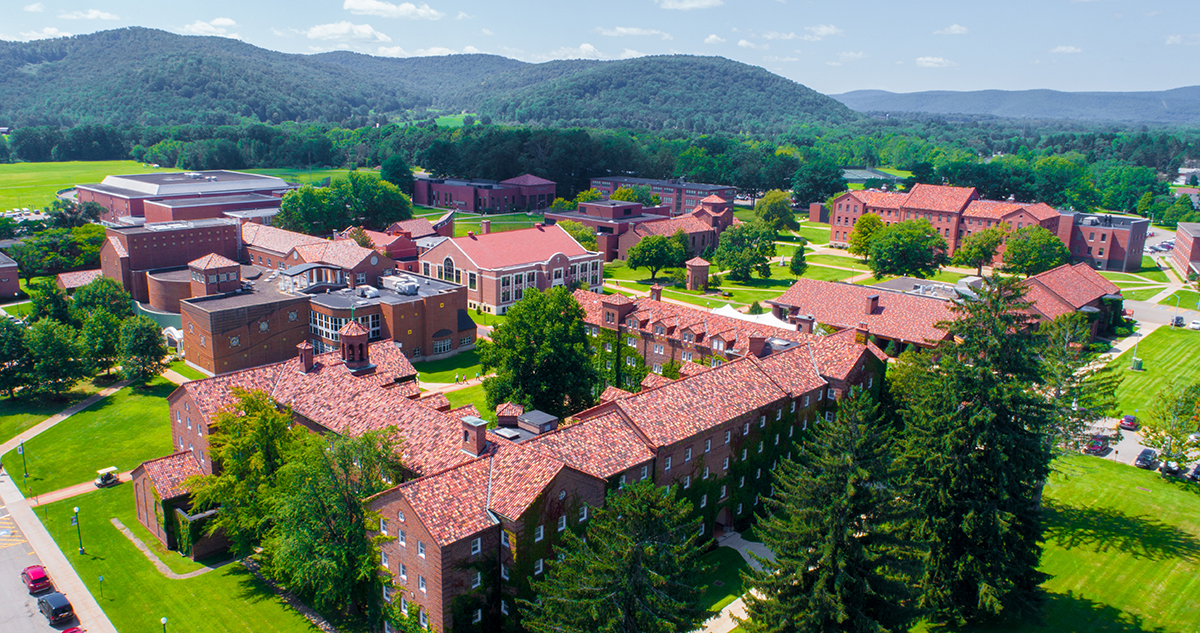
St. Bonaventure University is a small, private Catholic-Franciscan university in rural Western New York that punches above its weight in business and communications. Its identity is defined by a tight-knit, residential community where 81% of students live on campus, a strong emphasis on service and Franciscan values, and a surprisingly robust return on investment for a regional school. This is a place for students who want a personalized, values-driven education and a classic college-town feel, not an anonymous urban experience.
Admission requirements
Test-optional — scores considered if submitted
Required
High school transcript
Grade point average
Letters of recommendation
TOEFL (non-native English)
Considered (not required)
Class rank
Test scores (SAT/ACT)
College-prep program
Source: IPEDS Admissions survey (2022) via Urban Institute. Covers formal factors only — it does not reflect essays, extracurriculars, or other holistic criteria.
More details
Undergrad enrollment
2,012
In-state tuition
$41,735
Out-of-state tuition
$41,735
Graduation Rate
67%
Median Earnings (10yr)
$57,214
Student-to-Faculty Ratio
13:1
First-Year Retention Rate
86%
Students Living On Campus
81%
Financial Aid Recipients (First-Year)
>98%
Outcomes & value
Outcomes & value
Median earnings (10 yr)
$57,214
Value (earnings ÷ net price)
2.1×
Median debt at graduation
$26,000
Graduation rate
67%
First-year retention
86%
Reducing loan balance (3 yr)
71%
Pell (lower-income) share
27%
First-gen share (among federal-aid recipients)
19%
Financial health
2.5 / 3.0Meets the federal financial-responsibility standard
U.S. Dept. of Education Financial Responsibility Composite Score (FY2022-23). Scale −1.0 to 3.0; ≥1.5 meets the standard. Reported for private nonprofit & for-profit institutions only — public universities are state-backed and not scored, so this is a stability signal, not a ranking.
Top-earning majors
Median earnings by field of study (highest credential), ~2 years after completion.
Finance and Financial Management Services$52,941
Accounting and Related Services$49,962
Marketing$42,363
Business Administration, Management and Operations$38,829
Radio, Television, and Digital Communication$35,274
Special Education and Teaching
Campus & location
Campus safety
On-campus violent crimes (2024)
1
Per 1,000 students
0.37
On-campus criminal offenses classed as violent (murder/non-negligent manslaughter, rape, robbery, aggravated assault) for the most recent reported year. Source: U.S. Dept. of Education Campus Safety and Security (Clery Act). Counts reflect what’s reported to the school, and urban campuses often report more partly due to non-student incidents nearby — read alongside campus size and setting, not as a standalone safety verdict.
Climate
Pleasant days / yr
92
Summer high
77°F
Winter low
20°F
Annual rain
44.5"
Annual snow
49.9"
Natural-hazard risk
Relatively Moderate
Pleasant days counts days per year with a mean temperature of 55–75°F, a high at or below 90°F, a low at or above 45°F, and little precipitation — a transparent comfort measure, not a weighting we invented. Computed from Open-Meteo ERA5 daily history (2019–2023). Natural-hazard risk is the county’s composite rating from the FEMA National Risk Index.
Deep dive — research, future-scholar output & economic mobility▾
Research output
Institutional h-index
78
Scholarly works
3,137
Institutional research volume and impact from OpenAlex. The h-index reflects large research universities and will be low for teaching-focused liberal-arts colleges — not a measure of undergraduate quality.
Economic mobility
Mobility rate
0.7%
Bottom → top quintile
19%
From bottom quintile
4%
Mobility rate = the share of students who both start in the bottom household-income quintile and reach the top quintile; bottom → top is that chance conditional on starting at the bottom. Source: Opportunity Insights Mobility Report Cards (Chetty, Friedman, Saez, Turner & Yagan). Reflects 1980–82 birth cohorts, so it’s directional, not current.
Quick answers
What is the acceptance rate at St Bonaventure University?
St Bonaventure University's acceptance rate is approximately 82% (Saint Bonaventure, NY), based on the most recent figures we compiled from public and primary sources.
What SAT score do you need for St Bonaventure University?
Admitted students at St Bonaventure University typically score 1065–1290 on the SAT (the middle-50% range). Scores outside this band are still admitted, especially with strong applications.
How much does St Bonaventure University cost?
At St Bonaventure University, the average net price (after aid) is about $27,074 per year. Actual cost varies with financial aid and residency.
How many undergraduates attend St Bonaventure University?
St Bonaventure University enrolls approximately 2,012 undergraduate students.
Where is St Bonaventure University located?
St Bonaventure University is located in Saint Bonaventure, NY.
Admissions
St. Bonaventure's admissions process is accessible and straightforward, reflecting its mission to provide broad access within a supportive framework. The university maintains an 82% acceptance rate, making it a realistic target for a wide range of students. The process is , accepting the Common Application with a rolling review that promises a decision within about two weeks of a completed application. For those who do submit scores, the middle 50% SAT range is 1065–1290, and the average high school GPA of enrolled freshmen is a solid 3.66. The admissions office reviews applications year-round, with a final regular decision deadline of July 30. While the university welcomes many applicants, the enrolled class is academically prepared, with grade distributions showing 39% of entering students had a GPA of 3.75 or higher and another 35% between 3.50 and 3.74. The rate—the percentage of admitted students who choose to enroll—is reported at 22.9%, which is typical for a regional private institution. There is no publicly available information from the provided sources indicating that St. Bonaventure considers 'demonstrated interest' as a factor in admissions decisions.
Earnings = median of students working ~10 years after entry; debt = median of graduates. Value divides 10-yr earnings by one year’s net price — read it as earnings per dollar of annual cost, not a full lifetime ROI; it favors lower-cost schools. Source: U.S. Dept. of Education College Scorecard. Figures lag ~2 years and reflect all students, not your intended major.
$33,993
Journalism$33,565
Sociology$30,771
Source: U.S. Dept. of Education College Scorecard (field-of-study earnings). Figures cover graduates who received federal aid and lag ~2 years; not all programs report data.
Academics at St. Bonaventure are firmly anchored in the liberal arts but dominated by professional preparation, particularly in business. The university is organized into schools of Arts & Sciences, Business, Communication, Education, and Health Professions. The most popular majors are unambiguously career-focused:
Finance, General
Marketing/Marketing Management, General
Accounting
Business Administration and Management, General
Journalism
Finance alone accounts for around 41 degrees awarded annually. The curriculum emphasizes building a strong foundation; for instance, health professions students take coursework in medical terminology, health research methods, nutrition, and epidemiology to gain hands-on experience. The student-to-faculty ratio is 13 to 1, fostering the kind of close, mentoring relationships with professors that the university promotes. This environment is described by reviewers as having a "qualified staff" and "welcoming student body," with opportunities for service and extracurricular activity deeply integrated into the academic experience.
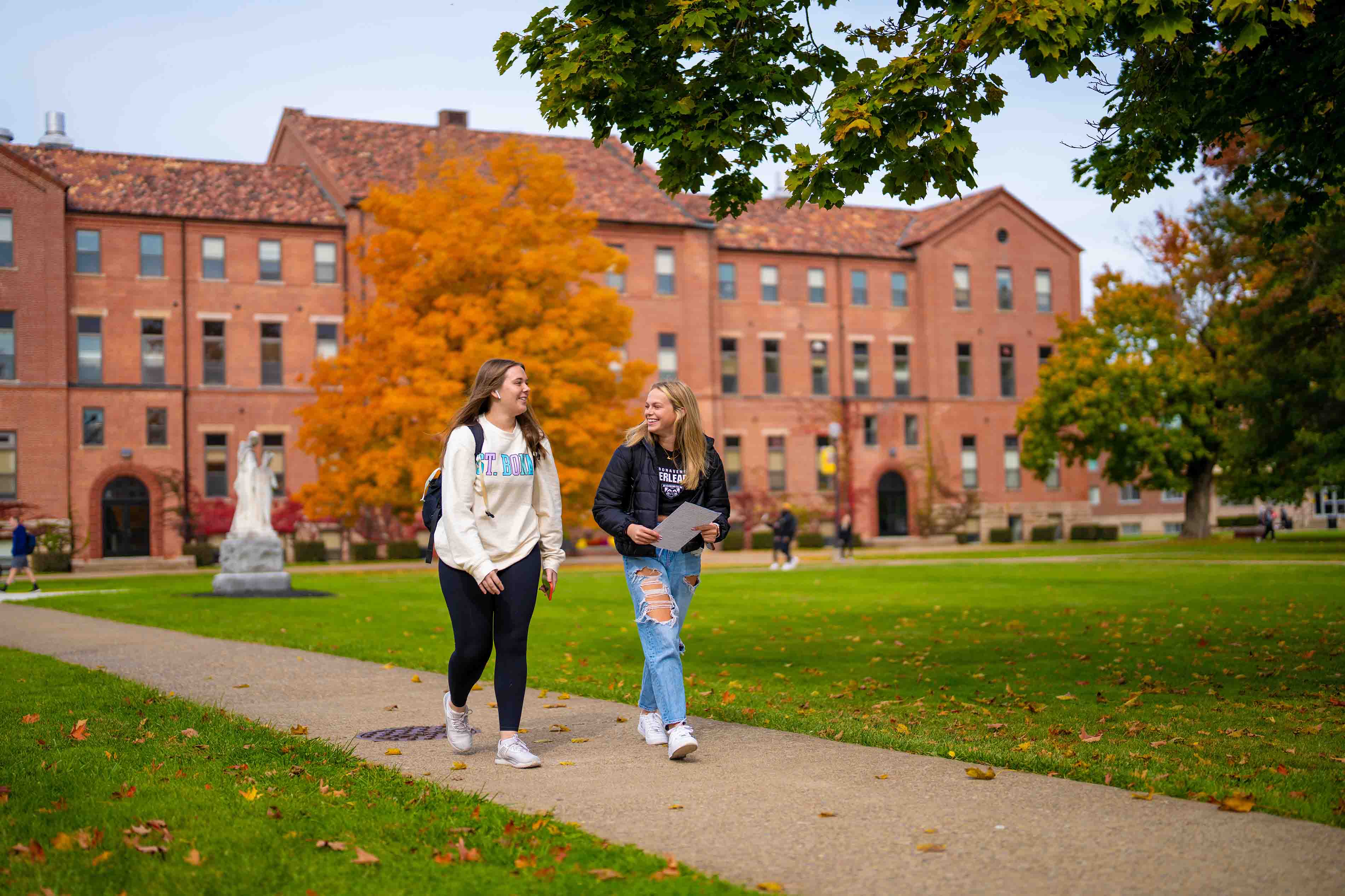
Life at St. Bonaventure is intensely residential and communal, creating the classic "bubble" campus experience. A remarkable 81% of all students live on campus, with that figure jumping to 96% for freshmen. This creates a environment where residence and dining halls are constant hubs of activity. The campus culture is explicitly shaped by the university's Catholic-Franciscan identity, with a strong emphasis on values like compassion, dignity, and inclusion. Students report that this community spirit and the importance of spiritual growth permeate daily life. The rural location in Saint Bonaventure, New York, means the campus itself is the primary center of social life, fostering deep bonds but also leading some students to seek more external activity. It’s a place where you know your neighbors, run into professors outside of class, and are encouraged to engage in service—a world unto itself in the best sense for students seeking that immersive, values-oriented community.
St. Bonaventure delivers solid outcomes that consistently outperform national averages, a key point of pride for the institution. The first-year retention rate is 86%, a strong indicator of student satisfaction and support. The six-year graduation rate is reported between 69% and 73%, which the university notes is significantly higher than the national average. Most impressively, 99% of graduates are employed or enrolled in graduate school within six months of graduation. For earnings, graduates see a median income of $41,627 one year after graduation, which grows to $58,196 after five years. The average time to degree is an efficient 4.1 years. These figures paint a picture of a university that successfully shepherds its students to completion and prepares them for immediate entry into the workforce or further study.
As a private institution, St. Bonaventure's sticker price is high, but the university uses substantial institutional aid to make attendance feasible for most students. The average net price after grants and scholarships is $27,074. A vast majority—more than 98% of full-time, first-year students—receive financial assistance through scholarships and grants. The average financial aid package is $30,279. The university offers merit-based scholarships up to $26,000 for freshmen and promotes its Calculator for families to estimate their actual cost. Eligibility for most aid is based on need and/or academic achievement. It's important to note that the provided sources do not indicate St. Bonaventure has a "no-loan" policy (where 100% of need is met with grants) or a policy of meeting the full demonstrated financial need of all admitted students. Financial need is a primary determinant for university grants-in-aid.
St. Bonaventure stands out for its potent, cohesive combination of identity, community, and results. It’s not just a small private school; it’s a Catholic-Franciscan university where values of compassion, service, and community are operationalized in daily campus life, affecting everything from student interactions to the emphasis on spiritual growth. This mission fosters an exceptionally tight-knit, residential experience—with over 80% of students living on campus—that feels like a world apart, ideal for students who thrive in a close, supportive environment. Academically, it defies the stereotype of a liberal arts college by being unapologetically focused on practical, high-demand majors like finance, marketing, and accounting, which drive its strong post-graduate employment rates. Finally, it delivers outcomes that beat the national averages—in graduation rates, retention, and job placement—providing a clear return on investment. It’s a distinctive niche: a values-driven, community-focused campus that efficiently channels students into solid careers.
St Bonaventure University seal · sourceHome | St. Bonaventure University | Located in Western New York · sourceMaps, Directions & Accommodations | St. Bonaventure University · sourceSt Bonaventure University | Undergraduate Program · source
.jpg?width=1600)