Admit rate has ranged 42%–63% over the last 5 years — notably volatile. Source: IPEDS via Urban Institute.
Acceptance & SAT from Common Data Set / IPEDS; net price, earnings & graduation from the U.S. Dept. of Education College Scorecard. Figures lag ~1–2 years — verify with the school.
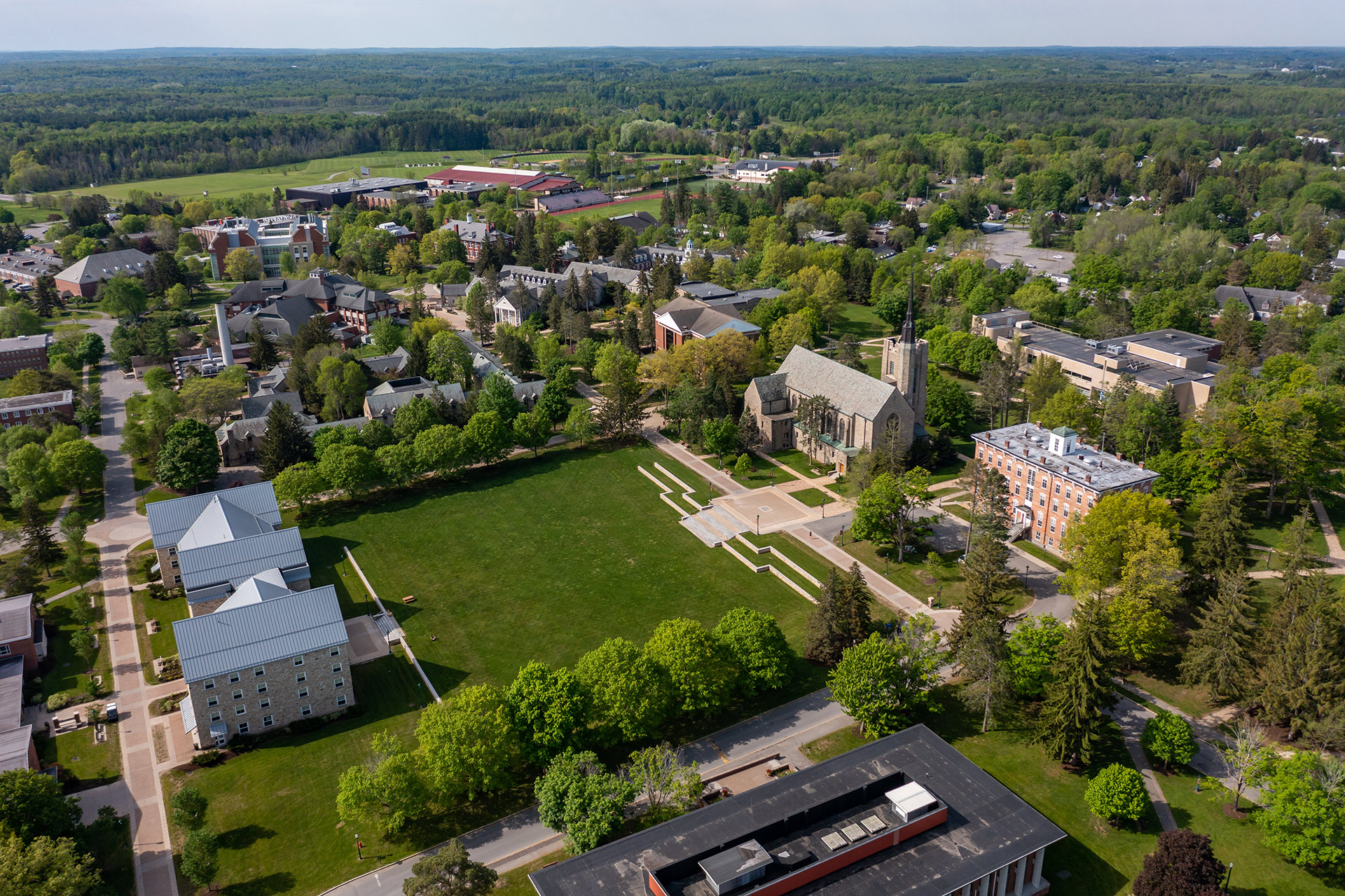
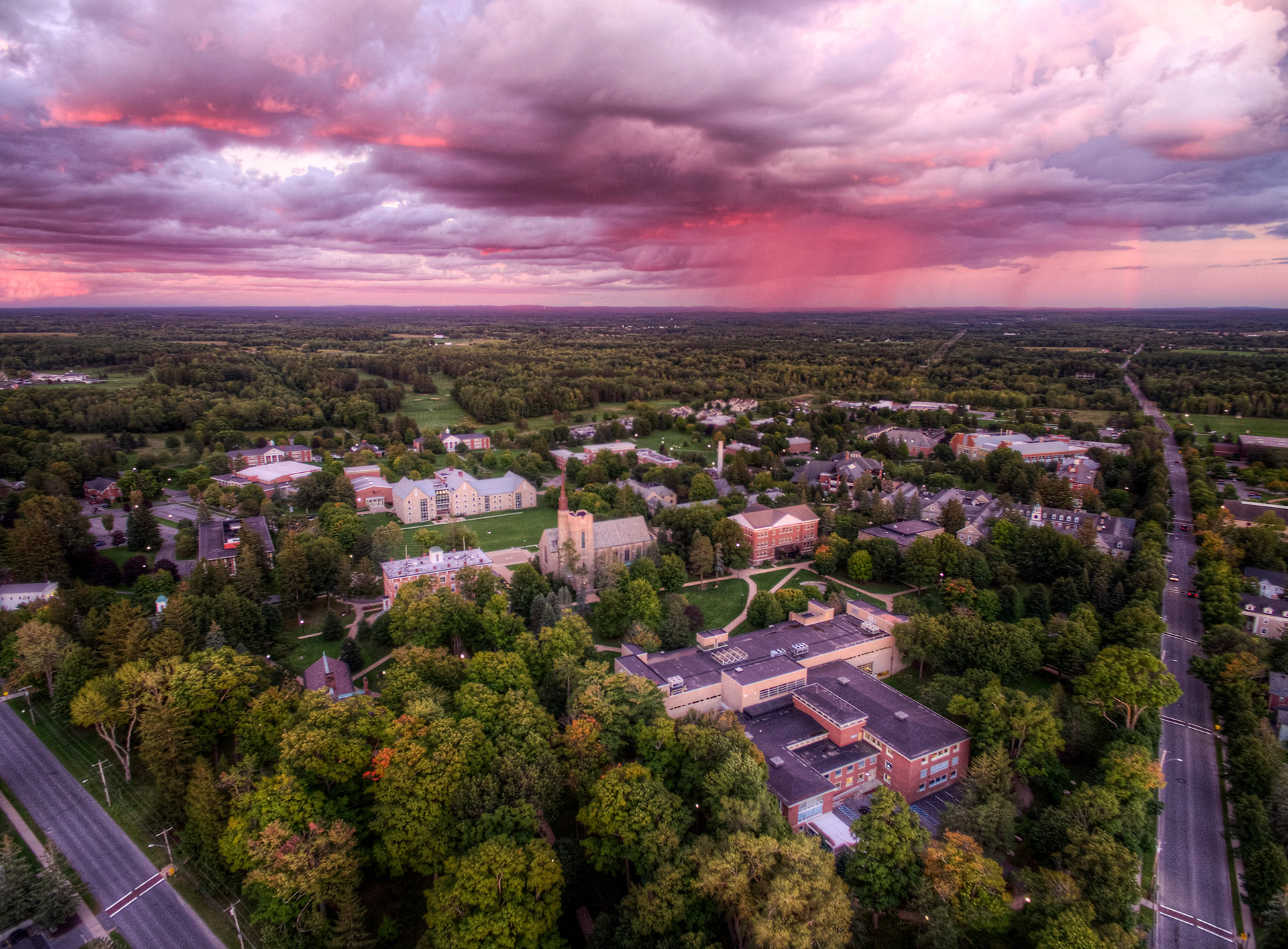
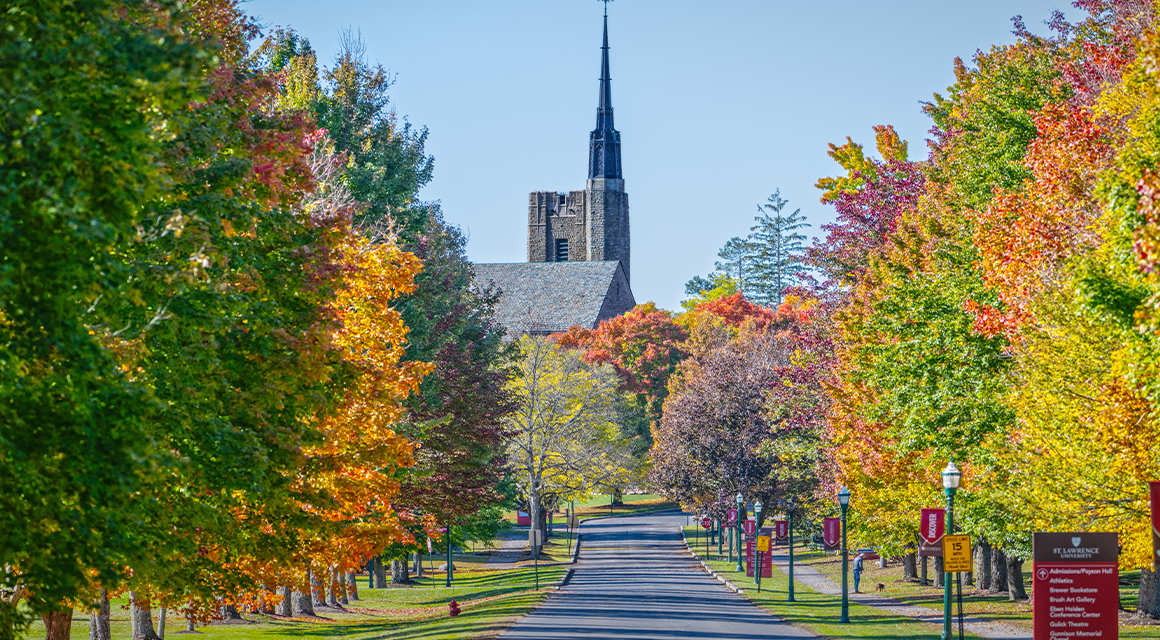
St. Lawrence University is a private liberal arts college in Canton, New York, with a distinct identity forged by its remote, scenic location and a culture of active, outdoorsy engagement. It offers a classic liberal arts curriculum across more than 100 areas of study, wrapped in a residential experience where 99% of students live on campus, fostering a tight-knit community. The university is selective but accessible, with a focus on holistic admissions and a strong track record of graduating students who enter the workforce with solid earning potential.
Admission requirements
Test-optional — scores considered if submitted
Required
High school transcript
Grade point average
Letters of recommendation
College-prep program
TOEFL (non-native English)
Considered (not required)
Class rank
Test scores (SAT/ACT)
Demonstrated competencies
Source: IPEDS Admissions survey (2022) via Urban Institute. Covers formal factors only — it does not reflect essays, extracurriculars, or other holistic criteria.
More details
Undergrad enrollment
1,918
In-state tuition
$65,900
Out-of-state tuition
$65,900
Areas of Study
100+
No-Loan Policy
No
Graduation Rate
79%
Meets Full Need
No (per university statement)
ED Share of Class
Data not in provided sources
On-Campus Housing
99%
Demonstrated Interest
Data not in provided sources
Median Earnings (10yr)
$67,258
First-Year Retention Rate
Data not in provided sources
Outcomes & value
Outcomes & value
Median earnings (10 yr)
$67,258
Value (earnings ÷ net price)
2.3×
Median debt at graduation
$27,000
Graduation rate
79%
First-year retention
91%
Reducing loan balance (3 yr)
85%
Pell (lower-income) share
21%
First-gen share (among federal-aid recipients)
13%
Financial health
2.4 / 3.0Meets the federal financial-responsibility standard
U.S. Dept. of Education Financial Responsibility Composite Score (FY2022-23). Scale −1.0 to 3.0; ≥1.5 meets the standard. Reported for private nonprofit & for-profit institutions only — public universities are state-backed and not scored, so this is a stability signal, not a ranking.
Top-earning majors
Median earnings by field of study (highest credential), ~2 years after completion.
Economics$48,600
Business/Commerce, General$47,846
Mathematics$42,682
Communication and Media Studies$39,729
Political Science and Government$36,490
History$36,134
International/Globalization Studies
Campus & location
Campus safety
On-campus violent crimes (2024)
5
Per 1,000 students
2.55
On-campus criminal offenses classed as violent (murder/non-negligent manslaughter, rape, robbery, aggravated assault) for the most recent reported year. Source: U.S. Dept. of Education Campus Safety and Security (Clery Act). Counts reflect what’s reported to the school, and urban campuses often report more partly due to non-student incidents nearby — read alongside campus size and setting, not as a standalone safety verdict.
Climate
Pleasant days / yr
85
Summer high
78°F
Winter low
15°F
Annual rain
47.2"
Annual snow
53.3"
Natural-hazard risk
Relatively Low
Pleasant days counts days per year with a mean temperature of 55–75°F, a high at or below 90°F, a low at or above 45°F, and little precipitation — a transparent comfort measure, not a weighting we invented. Computed from Open-Meteo ERA5 daily history (2019–2023). Natural-hazard risk is the county’s composite rating from the FEMA National Risk Index.
Deep dive — research, future-scholar output & economic mobility▾
Research output
Institutional h-index
101
Scholarly works
2,187
Institutional research volume and impact from OpenAlex. The h-index reflects large research universities and will be low for teaching-focused liberal-arts colleges — not a measure of undergraduate quality.
Economic mobility
Mobility rate
2.1%
Bottom → top quintile
34%
From bottom quintile
6%
Mobility rate = the share of students who both start in the bottom household-income quintile and reach the top quintile; bottom → top is that chance conditional on starting at the bottom. Source: Opportunity Insights Mobility Report Cards (Chetty, Friedman, Saez, Turner & Yagan). Reflects 1980–82 birth cohorts, so it’s directional, not current.
Quick answers
What is the acceptance rate at St Lawrence University?
St Lawrence University's acceptance rate is approximately 54% (Canton, NY), based on the most recent figures we compiled from public and primary sources.
What SAT score do you need for St Lawrence University?
Admitted students at St Lawrence University typically score 1255–1420 on the SAT (the middle-50% range). Scores outside this band are still admitted, especially with strong applications.
How much does St Lawrence University cost?
At St Lawrence University, the average net price (after aid) is about $28,651 per year. Actual cost varies with financial aid and residency.
How many undergraduates attend St Lawrence University?
St Lawrence University enrolls approximately 1,918 undergraduate students.
Where is St Lawrence University located?
St Lawrence University is located in Canton, NY.
Admissions
St. Lawrence's admissions process is selective but not hyper-competitive, positioning it as a reachable target for strong students. The university employs a , considering factors beyond test scores and grades. While the specifics for St. Lawrence are not provided in the sources, general guidance indicates that colleges use the CDS to rank the importance of 19 admission factors, which can include course rigor, class rank, and demonstrated interest. The early decision is significantly higher than the regular decision rate, suggesting a notable advantage for committed applicants. For the class of 2024, the university reported a 23% placement rate for its first-year class, though the exact meaning of this metric in the context provided is unclear.
Earnings = median of students working ~10 years after entry; debt = median of graduates. Value divides 10-yr earnings by one year’s net price — read it as earnings per dollar of annual cost, not a full lifetime ROI; it favors lower-cost schools. Source: U.S. Dept. of Education College Scorecard. Figures lag ~2 years and reflect all students, not your intended major.
$35,060
Social Sciences, Other$33,459
Source: U.S. Dept. of Education College Scorecard (field-of-study earnings). Figures cover graduates who received federal aid and lag ~2 years; not all programs report data.
St. Lawrence provides a comprehensive liberal arts education with a wide array of choices. Students can choose from 47 majors, 41 minors, and several pre-professional programs, creating more than 100 areas of study to consider. The curriculum encourages interdisciplinary exploration, exemplified by combined majors like anthropology and African studies. The most popular majors cluster in the social sciences and business-related fields. For the 2024 graduating class, the ten most popular majors were:
Social Sciences (24%)
Business, Management, Marketing, and Related Support Services (15%)
Biological and Biomedical Sciences (data not specified in snippet)
Independent data suggests Economics is a particularly popular individual major, with about 67 degrees awarded annually.
Life at St. Lawrence is defined by an immersive, residential community in a remote setting. The campus vibe is active and outdoorsy, attracting students with passions for 'artistic expression and advocacy, to substance-free living, outdoor adventures, [and] music.' This is not a suitcase school; an overwhelming 99% of students live in college-owned, -operated, or -affiliated housing, creating a close-knit environment where learning extends beyond the classroom to dining halls, the gym, and concerts. The university has a total undergraduate population of roughly 2,100 students, which supports this intimate feel. Descriptions characterize the campus as 'spirited' and full of 'active achievers who like and love the outdoors,' leveraging its location an hour from the Adirondack Mountains.
St. Lawrence graduates students at rates well above the national average for private institutions, indicating strong academic support and student persistence. The university's six-year graduation rate is 79.1%, significantly higher than the 64% national average for private non-profit schools. Its four-year graduation rate is a robust 68.3%. Independent analyses place St. Lawrence's overall graduation performance in the top 15% nationally. For career outcomes, the university reports a '23% Placement Rate (7-9 months)' for the Fall 2024 first-year class, though the specific definition of 'placement' is not detailed in the provided snippet.
St. Lawrence is a private institution with a corresponding sticker price, but it is committed to providing need-based financial aid to make attendance feasible. The university states that 'We offer in the form of grants, loans, and on-campus employment opportunities,' but adds a caveat: 'While we can't guarantee that we will meet 100% of every student's' need. This indicates it does not have a blanket 'meet full need' or 'no-loan' policy for all admitted students. Financial aid is designed to assist in meeting a student's demonstrated financial need, and students are expected to apply for all available federal and state aid. The university provides a Calculator to help families estimate their actual cost, and external sources report that 57.2% of students receive financial aid, with an average aid package of $59,478.
St. Lawrence's distinctiveness lies in the powerful synergy between its academic model and its geographic and social environment. It offers a rigorous, choice-rich liberal arts curriculum typical of top-tier colleges, but delivers it within an almost fully residential community in a remote, nature-rich corner of New York. This creates a uniquely focused and immersive undergraduate experience. Students aren't just studying liberal arts; they are living a collaborative, campus-centric life where community bonds are strong and outdoor adventure is a genuine part of the culture. It stands out for students seeking a classic liberal arts education without urban distractions, who thrive in a tight-knit setting and want their college experience to be defined as much by the community and landscape as by the coursework. The university's strong graduation rates and solid post-graduate outcomes suggest this model effectively prepares students for life after Canton.
St Lawrence University seal · sourceExplore Our Campus | St. Lawrence University · sourceAbout St. Lawrence | St. Lawrence University · sourceSt. Lawrence Recognized as a 2025 Tree Campus | St. Lawrence University · source