Loading…
← All schools
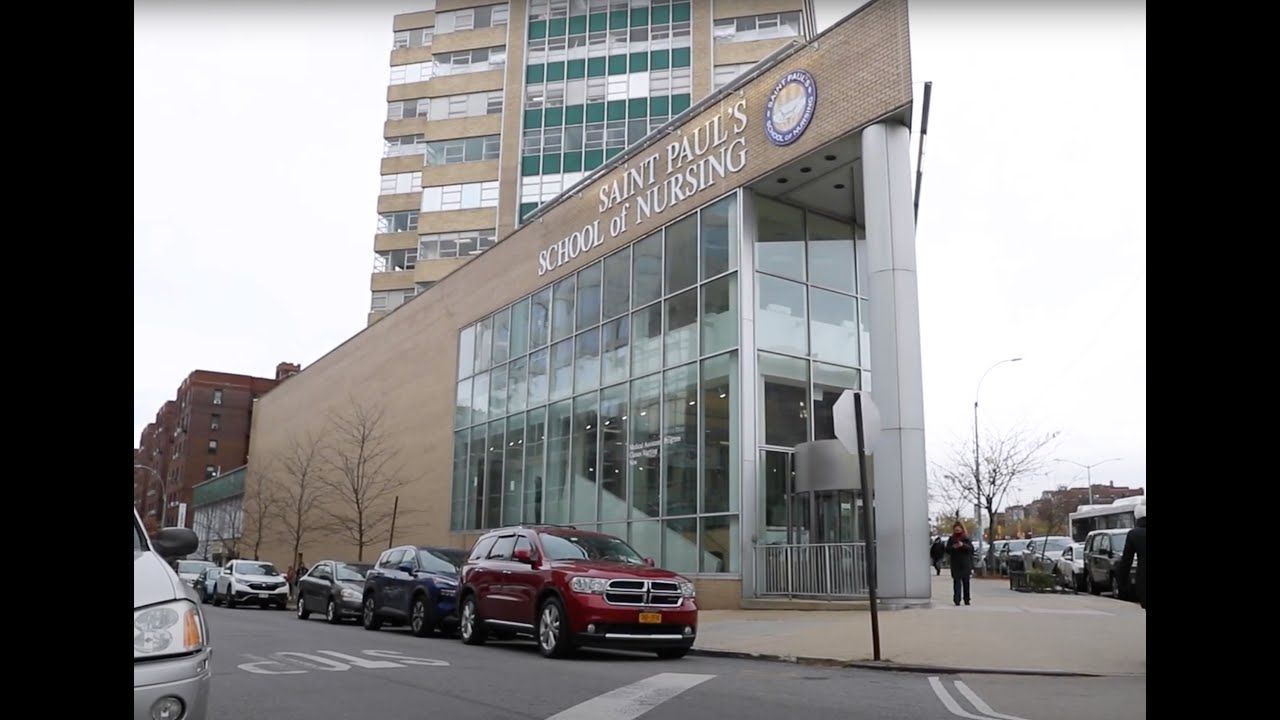
St Paul's School of Nursing-Staten Island
Staten Island, NYprivate forprofitwww.stpaulsschoolofnursing.edu/
Avg net price
$35,666
Earnings (10 yr)
$86,693
Acceptance & SAT from Common Data Set / IPEDS; net price, earnings & graduation from the U.S. Dept. of Education College Scorecard. Figures lag ~1–2 years — verify with the school.
St. Paul's School of Nursing-Staten Island is a for-profit, single-purpose institution laser-focused on turning out registered nurses and medical assistants through accelerated associate degree programs. With an open-access admissions policy and a student body that is overwhelmingly female and majority-minority, it serves as a direct, no-frills pipeline into healthcare for career-changers and local students. The trade-off is a high-stakes academic environment where passing grades are non-negotiable and the financial investment is substantial, but the potential payoff—a median graduate earning nearly $87,000 a decade later—is a powerful draw.
More details
- Undergrad enrollment
- 656
- In-state tuition
- $17,492
- Out-of-state tuition
- $17,492
- Female Students
- 68%
- Most Popular Major
- Registered Nursing (84% of students)
- Student-Faculty Ratio
- 17:1
- Highest Degree Offered
- Associate
- Median Earnings (10yr)
- $86,693
- Completion Rate (2022 Cohort)
- 58%
Outcomes & value
Outcomes & value
- Median earnings (10 yr)
- $86,693
- Value (earnings ÷ net price)
- 2.4×
- Median debt at graduation
- $25,729
- Reducing loan balance (3 yr)
- 40%
- Pell (lower-income) share
- 51%
- First-gen share (among federal-aid recipients)
- 54%
Earnings = median of students working ~10 years after entry; debt = median of graduates. Value divides 10-yr earnings by one year’s net price — read it as earnings per dollar of annual cost, not a full lifetime ROI; it favors lower-cost schools. Source: U.S. Dept. of Education College Scorecard. Figures lag ~2 years and reflect all students, not your intended major.
Campus & location
Campus safety
- On-campus violent crimes (2024)
- 0
On-campus criminal offenses classed as violent (murder/non-negligent manslaughter, rape, robbery, aggravated assault) for the most recent reported year. Source: U.S. Dept. of Education Campus Safety and Security (Clery Act). Counts reflect what’s reported to the school, and urban campuses often report more partly due to non-student incidents nearby — read alongside campus size and setting, not as a standalone safety verdict.
Climate
- Pleasant days / yr
- 97
- Summer high
- 83°F
- Winter low
- 30°F
- Annual rain
- 40.3"
- Annual snow
- 16.8"
- Natural-hazard risk
- Relatively Moderate
Pleasant days counts days per year with a mean temperature of 55–75°F, a high at or below 90°F, a low at or above 45°F, and little precipitation — a transparent comfort measure, not a weighting we invented. Computed from Open-Meteo ERA5 daily history (2019–2023). Natural-hazard risk is the county’s composite rating from the FEMA National Risk Index.
Quick answers
- How much does St Paul's School of Nursing-Staten Island cost?
- At St Paul's School of Nursing-Staten Island, the average net price (after aid) is about $35,666 per year. Actual cost varies with financial aid and residency.
- How many undergraduates attend St Paul's School of Nursing-Staten Island?
- St Paul's School of Nursing-Staten Island enrolls approximately 656 undergraduate students.
- Where is St Paul's School of Nursing-Staten Island located?
- St Paul's School of Nursing-Staten Island is located in Staten Island, NY.
Admissions
Admissions at St. Paul's is characterized by high accessibility, with multiple sources citing an of 100% or near it. One source explicitly states the school has a 100% acceptance rate, while another calculates a 67.8% rate based on 4,600 applicants and 3,119 acceptances for an enrolled class of 656 students. The process is described as "streamlined," focused on providing information for applying to its nursing and medical assistant associate degree programs. There is no mention of standardized test requirements like the SAT or ACT being a factor; the emphasis appears to be on meeting program prerequisites rather than competitive selection. The enrolled student body is predominantly female (68%) and has a high minority enrollment of 74%.
Compare St Paul's School of Nursing-Staten Island
vs United States Coast Guard Academyvs Saint Joseph's University - Lancastervs Maine Maritime Academyvs Grove City College
See colleges similar to St Paul's School of Nursing-Staten Island →Sources
- 2026 CATALOG
- St Paul's School of Nursing-Staten Island - Sallie
- St Paul's School of Nursing-Staten Island - Community College Review
- St Paul's School of Nursing-Staten Island - College Scorecard
- Common Data Set: Home
- St. Paul's School of Nursing, Queens and Staten Island Campuses
- Saint Paul's School of Nursing - Staten Island
- St. Paul's School of Nursing, Staten Island
- Saint Paul's School of Nursing | Staten Island, NY
- St. Paul's School of Nursing, Staten Island SAT Scores ...