Admit rate has ranged 33%–76% over the last 5 years — notably volatile. Source: IPEDS via Urban Institute.
Acceptance & SAT from Common Data Set / IPEDS; net price, earnings & graduation from the U.S. Dept. of Education College Scorecard. Figures lag ~1–2 years — verify with the school.
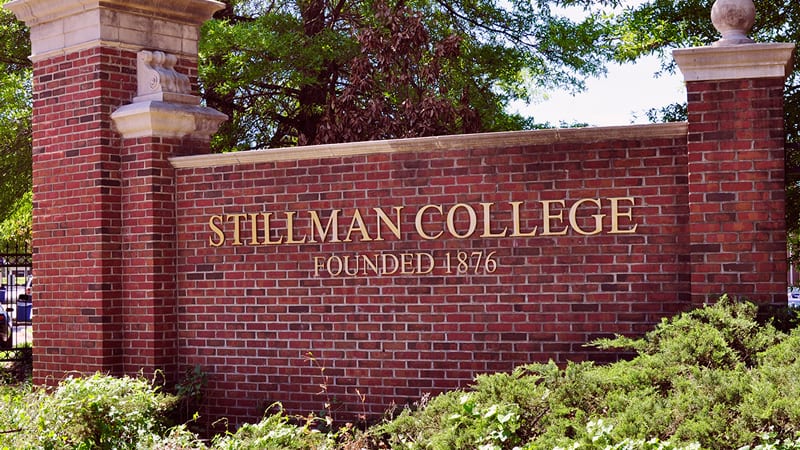
Stillman College is a small, historically Black liberal arts institution in Tuscaloosa, Alabama, that operates with a distinct sense of mission and a clear-eyed understanding of its student body. With an acceptance rate of 62% and a student-faculty ratio of 12:1, it offers a personalized, supportive environment, particularly for its majority Pell-eligible population. The college is forthright about its challenges—notably a 25% six-year graduation rate—while emphasizing its role in providing access and fostering a close-knit community centered on its Division of Arts and Sciences and popular business program.
Admission requirements
Test-blind — scores not considered
Required
High school transcript
Grade point average
TOEFL (non-native English)
Source: IPEDS Admissions survey (2022) via Urban Institute. Covers formal factors only — it does not reflect essays, extracurriculars, or other holistic criteria.
More details
Undergrad enrollment
706
In-state tuition
$12,126
Out-of-state tuition
$12,126
Graduation Rate
25%
On-Campus Housing
50%
Most Popular Major
Business/Commerce, General
Student-Faculty Ratio
12:1
Median Earnings (10yr)
$35,421
Regular Decision Deadline
December 1
Outcomes & value
Outcomes & value
Median earnings (10 yr)
$35,421
Value (earnings ÷ net price)
2.3×
Median debt at graduation
$29,067
Graduation rate
25%
First-year retention
53%
Reducing loan balance (3 yr)
25%
Pell (lower-income) share
76%
First-gen share (among federal-aid recipients)
41%
Earnings = median of students working ~10 years after entry; debt = median of graduates. divides 10-yr earnings by net price — read it as earnings per dollar of annual cost, not a full lifetime ROI; it favors lower-cost schools. Source: U.S. Dept. of Education College Scorecard. Figures lag ~2 years and reflect all students, not your intended major.
Financial health
2.5 / 3.0Meets the federal financial-responsibility standard
U.S. Dept. of Education Financial Responsibility Composite Score (FY2022-23). Scale −1.0 to 3.0; ≥1.5 meets the standard. Reported for private nonprofit & for-profit institutions only — public universities are state-backed and not scored, so this is a stability signal, not a ranking.
Campus & location
Campus safety
On-campus violent crimes (2024)
2
On-campus criminal offenses classed as violent (murder/non-negligent manslaughter, rape, robbery, aggravated assault) for the most recent reported year. Source: U.S. Dept. of Education Campus Safety and Security (Clery Act). Counts reflect what’s reported to the school, and urban campuses often report more partly due to non-student incidents nearby — read alongside campus size and setting, not as a standalone safety verdict.
Climate
Pleasant days / yr
94
Summer high
90°F
Winter low
41°F
Annual rain
56.2"
Annual snow
0.5"
Natural-hazard risk
Relatively Moderate
Pleasant days counts days per year with a mean temperature of 55–75°F, a high at or below 90°F, a low at or above 45°F, and little precipitation — a transparent comfort measure, not a weighting we invented. Computed from Open-Meteo ERA5 daily history (2019–2023). Natural-hazard risk is the county’s composite rating from the FEMA National Risk Index.
Deep dive — research, future-scholar output & economic mobility▾
Research output
Institutional h-index
27
Scholarly works
172
Institutional research volume and impact from OpenAlex. The h-index reflects large research universities and will be low for teaching-focused liberal-arts colleges — not a measure of undergraduate quality.
Economic mobility
Mobility rate
1.4%
Bottom → top quintile
5%
From bottom quintile
30%
Mobility rate = the share of students who both start in the bottom household-income quintile and reach the top quintile; bottom → top is that chance conditional on starting at the bottom. Source: Opportunity Insights Mobility Report Cards (Chetty, Friedman, Saez, Turner & Yagan). Reflects 1980–82 birth cohorts, so it’s directional, not current.
Quick answers
What is the acceptance rate at Stillman College?
Stillman College's acceptance rate is approximately 62% (Tuscaloosa, AL), based on the most recent figures we compiled from public and primary sources.
How much does Stillman College cost?
At Stillman College, the average net price (after aid) is about $15,258 per year. Actual cost varies with financial aid and residency.
How many undergraduates attend Stillman College?
Stillman College enrolls approximately 706 undergraduate students.
Where is Stillman College located?
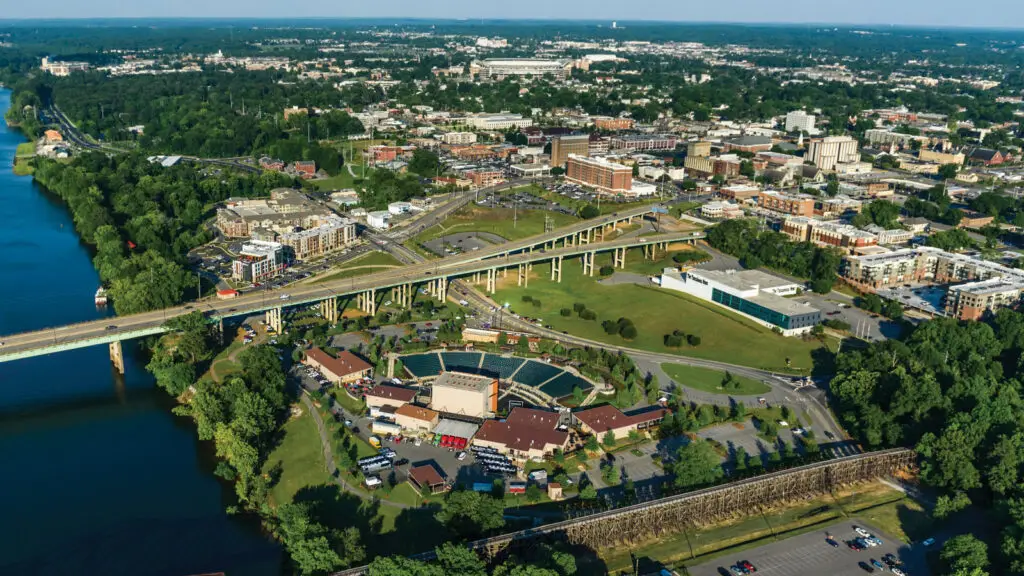
Stillman College is located in Tuscaloosa, AL.
Admissions
Stillman's admissions process is notably accessible and . The college received 3,094 undergraduate applications and admitted 62% of applicants for the 2024 cycle. There's a gender gap in selectivity: the female is 65%, compared to 57% for men. However, converting admits into enrolled students is a significant challenge, as the rate—the percentage of admitted students who actually enroll—is just 8%. The process is explicitly test-optional; scores from the ACT or SAT are not required but may be submitted for consideration. For those who do submit, the middle 50% of admitted applicants have SAT scores between 780 and 970. Regular applications are due December 1. The admissions data suggests the college's primary hurdle is not selectivity, but rather persuading admitted students to commit.
Academic life at Stillman is structured around a classic liberal arts core, delivered through an intimate 12:1 student-faculty ratio. The curriculum is administered by the Division of Arts and Sciences, which houses the Departments of English, Fine Arts, Mathematics, Natural Sciences, Psychology, and Religion and Theology. The most popular major by far is Business/Commerce, General, with about 27 degrees awarded annually in that field. Other offered majors include Biology, Chemistry, Criminal Justice, and various education tracks like Childhood Education and Instructional Development. The college also provides an online option through 'Stillman Online,' designed as an affordable and flexible learning environment for those seeking a degree or college credit. The academic focus appears pragmatic, blending traditional liberal arts with career-oriented programs like business and education.
Campus life at Stillman is defined by its small, close-knit community, a feature students frequently highlight. The residential experience is evenly split, with 50% of students living in college-owned, -operated, or -affiliated housing and the other 50% living off-campus. The Office of Student Life works to unify the campus through diverse activities, promote student self-worth, and foster school spirit. This includes organizing clubs and organizations and executing year-round events like Stillman Homecoming and a unique, two-week First-Year Experience program. The college aspires to maintain an environment free of discrimination, sexual harassment, and gender-based violence, underpinned by a formal Stillman Student Honor Code and Commitment. The vibe is one of a supportive, intentionally curated community for students navigating their college journey.
Student outcomes at Stillman are a central point of institutional focus and candor. The college has publicly set expected graduation rate benchmarks: 16% for four years, 25% for six years, and a further rate for eight years. It openly acknowledges the correlation between its student demographics and graduation rates, noting that because more than 70% of its students are Pell-eligible, 'students with lower socioeconomic status predict lower graduation rates'—a reality that influenced its decision to withdraw from the U.S. News & World Report rankings. The latest reported six-year graduation rate is 25%. Post-graduation, the median salary for alumni six years after graduation is $29,790. These figures frame Stillman not as a high-throughput degree factory, but as an institution serving a population for whom graduation is a hard-won achievement.
Affordability is a key pillar of Stillman's mission. The average —the cost after grants and scholarships—is reported between $12,479 and $16,595, with an average aid package of $11,220 and an average grant award of $7,618. The college provides a Net Price Calculator for families to estimate their individual cost. Financial aid includes federal, state, and institutional sources, with awards like the Stillman College Grant of up to $2,000 per semester for students enrolled in at least 6 credit hours. Federal regulations prevent the total aid package from exceeding the . The college's literature emphasizes informing students of 'how much of your financial need, as determined by Stillman College, has been met' and 'what portion of the aid received is a loan and what portion is a grant.' There is no indication in the provided sources of a 'no-loan' policy or a guarantee to meet 100% of demonstrated need without loans.
Stillman College stands out for its unflinching commitment to a specific, underserved population and its transparent, mission-driven approach. It is not a college chasing prestige metrics; its withdrawal from U.S. News rankings was a principled statement about the inequities of such systems for institutions serving low-income students. What defines Stillman is its identity as a small, supportive HBCU community where the 12:1 student-faculty ratio allows for personal attention. It balances a traditional liberal arts curriculum through its Division of Arts and Sciences with practical, high-demand majors like Business Administration. The campus culture is actively cultivated through a First-Year Experience, honor code, and homecoming traditions aimed at building camaraderie and self-worth. In a higher education landscape often obsessed with selectivity and rankings, Stillman's distinctiveness lies in its focus on access, support, and the tangible, difficult work of educating a predominantly Pell-eligible student body.
Stillman College seal · sourceStillman College - Profile, Rankings and Data | US News Best Colleges · sourceThings To Do | Stillman College · sourceStillman College - UNCF · source