Admit rate has ranged 52%–75% over the last 5 years — notably volatile. Source: IPEDS via Urban Institute.
Acceptance & SAT from Common Data Set / IPEDS; net price, earnings & graduation from the U.S. Dept. of Education College Scorecard. Figures lag ~1–2 years — verify with the school.
SUNY Purchase College is a public liberal arts college that feels like a radical art school grafted onto a traditional campus. Founded in 1967 by Governor Nelson Rockefeller, its identity is defined by a deliberate, almost architectural blend of the arts, sciences, and humanities, creating a 'living laboratory' where dancers, filmmakers, biologists, and psychologists share the same quad. The campus culture is famously inclusive and creative, with a strong LGBTQ+ presence, and its proximity to New York City provides a professional backdrop for its heavily arts-focused student body.
Admission requirements
Test-optional — scores considered if submitted
Required
High school transcript
Grade point average
Demonstrated competencies
TOEFL (non-native English)
Considered (not required)
Class rank
Letters of recommendation
Test scores (SAT/ACT)
Source: IPEDS Admissions survey (2022) via Urban Institute. Covers formal factors only — it does not reflect essays, extracurriculars, or other holistic criteria.
More details
Undergrad enrollment
3,197
In-state tuition
$8,953
Out-of-state tuition
$19,203
Application Fee
$50
Graduation Rate
63%
First-Year Retention
80%
Median Earnings (10yr)
$45,092
Most Popular Major Field
Visual & Performing Arts (53%)
Outcomes & value
Outcomes & value
Median earnings (10 yr)
$45,092
Value (earnings ÷ net price)
2.4×
Median debt at graduation
$21,067
Graduation rate
63%
First-year retention
80%
Reducing loan balance (3 yr)
60%
Pell (lower-income) share
36%
First-gen share (among federal-aid recipients)
24%
Top-earning majors
Median earnings by field of study (highest credential), ~2 years after completion.
Mathematics and Statistics, Other$48,041
Visual and Performing Arts, Other$38,289
Natural Resources Conservation and Research$32,569
Arts, Entertainment, and Media Management$30,475
Journalism$30,305
Psychology, General$30,047
Campus & location
Campus safety
On-campus violent crimes (2024)
6
Per 1,000 students
1.83
On-campus criminal offenses classed as violent (murder/non-negligent manslaughter, rape, robbery, aggravated assault) for the most recent reported year. Source: U.S. Dept. of Education Campus Safety and Security (Clery Act). Counts reflect what’s reported to the school, and urban campuses often report more partly due to non-student incidents nearby — read alongside campus size and setting, not as a standalone safety verdict.
Climate
Pleasant days / yr
95
Summer high
82°F
Winter low
29°F
Annual rain
55.3"
Annual snow
21.6"
Natural-hazard risk
Relatively High
Pleasant days counts days per year with a mean temperature of 55–75°F, a high at or below 90°F, a low at or above 45°F, and little precipitation — a transparent comfort measure, not a weighting we invented. Computed from Open-Meteo ERA5 daily history (2019–2023). Natural-hazard risk is the county’s composite rating from the FEMA National Risk Index.
Quick answers
What is the acceptance rate at SUNY at Purchase College?
SUNY at Purchase College's acceptance rate is approximately 74% (Purchase, NY), based on the most recent figures we compiled from public and primary sources.
What SAT score do you need for SUNY at Purchase College?
Admitted students at SUNY at Purchase College typically score 1185–1380 on the SAT (the middle-50% range). Scores outside this band are still admitted, especially with strong applications.
How much does SUNY at Purchase College cost?
At SUNY at Purchase College, the average net price (after aid) is about $18,913 per year. Actual cost varies with financial aid and residency.
How many undergraduates attend SUNY at Purchase College?
SUNY at Purchase College enrolls approximately 3,197 undergraduate students.
Where is SUNY at Purchase College located?
SUNY at Purchase College is located in Purchase, NY.
Admissions
Purchase College is less selective, admitting a significant majority of its applicants. The admissions process is , a policy the college adopted with the observation that in its inaugural year, the of the incoming class increased by 3 percentage points. The yield rate—the percentage of admitted students who enroll—is reported at 12.9%. While the is the definitive source for understanding how a college weighs various factors in admissions, the provided sources do not contain Purchase's specific CDS to confirm its stance on demonstrated interest or the existence of an Early Decision program. The application fee is $50.
Earnings = median of students working ~10 years after entry; debt = median of graduates. Value divides 10-yr earnings by one year’s net price — read it as earnings per dollar of annual cost, not a full lifetime ROI; it favors lower-cost schools. Source: U.S. Dept. of Education College Scorecard. Figures lag ~2 years and reflect all students, not your intended major.
Economics$28,309
Communication and Media Studies$28,236
Source: U.S. Dept. of Education College Scorecard (field-of-study earnings). Figures cover graduates who received federal aid and lag ~2 years; not all programs report data.
Creativity lies at the core of Purchase's academic mission, which is explicitly designed as an interdisciplinary experiment. The college encourages interdisciplinary study, aiming to develop a toolbox of skills including problem-solving, critical thinking, and collaboration. The curriculum is a distinctive blend of the arts, sciences, and humanities on a single campus. This is reflected in the popular majors: Visual and Performing Arts dominates, accounting for 53% of degrees conferred, followed by Communication, Journalism, and Related Programs (13%), and Liberal Arts and Sciences, General Studies, and Humanities (9%). The three most popular specific majors are Psychology, General; Communication, General; and Dance, General. Faculty are widely praised by students for being knowledgeable and accessible.
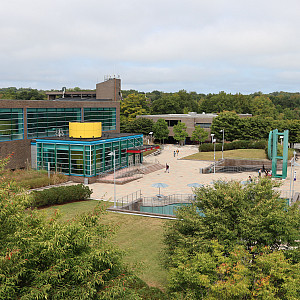
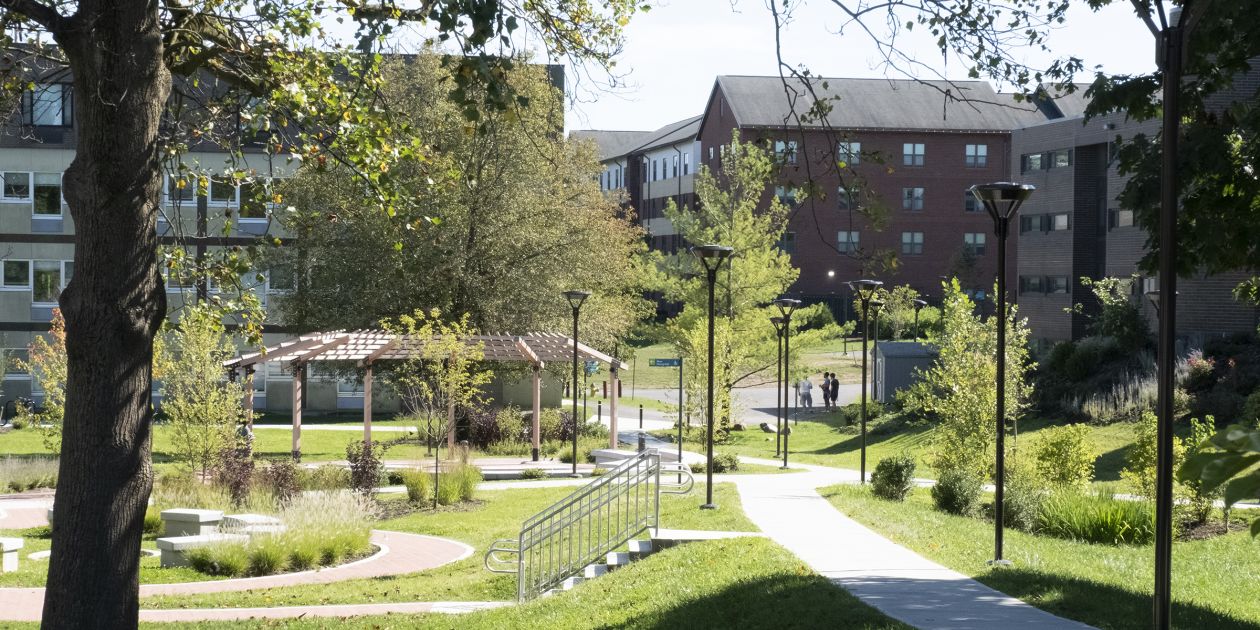
The campus is built for pedestrian life, described as peaceful and surrounded by public art created by both students and renowned artists. The culture is distinctive, very inclusive, and particularly welcoming to artistic, creative, and diverse students, including a strong LGBTQ+ community. Proximity to New York City provides students access to outstanding cultural and career-related opportunities, such as seeing world-class performances at venues like Lincoln Center. Student activities are vibrant, with annual traditions including Orientation, Welcome Week, Family Day, Fall Ball, Zombie Prom, Culture Shock, Pancake Madness, and the Annual Student Showcase. The college was established in 1967 by Governor Nelson Rockefeller.
The first-year retention rate is 80%, indicating most students return for their sophomore year. The six-year graduation rate is 67%. Earnings data shows a median salary of $45,092 ten years after entry. One year after graduation, reported earnings are $36,427, rising to $41,643 five years after graduation. There is a notable disparity in outcomes by major and background; for instance, graduates in Visual and Performing Arts earn an average annual salary of about $22,014, while film graduates may earn more. Furthermore, non-Pell Grant recipients graduate at a rate 9.1 percentage points higher than Pell Grant recipients.
The average annual —the cost after grants and scholarships—is $18,913. A significant majority of students receive financial aid, with 72% of full-time beginning undergraduates receiving grant or scholarship aid. The average aid package is $12,573. Breaking down the aid types, 36% of students receive federal grants averaging $5,899, 45% receive state/local grants averaging $4,272, and 69% receive institutional grants averaging $4,954. Loans are also common, with 48% of students taking out loans averaging $7,298. SUNY Purchase strongly encourages students to complete the FAFSA to qualify for Federal Direct Loans, which are available to undergraduates regardless of demonstrated financial need. The college offers scholarships based on academic achievement, talent, and program of study.
Purchase College is not just another liberal arts school; it's a specific, intentional experiment in higher education. Its founding principle—to blend the arts, sciences, and humanities into a 'living laboratory'—isn't just marketing; it's reflected in the campus layout, the curriculum, and the student body, where over half of all graduates are in the visual and performing arts. This creates an environment where creative expression is the norm, not the exception, fostering a campus culture celebrated for its inclusivity and bohemian spirit. While it offers the affordability and structure of the SUNY system, its soul is closer to that of a dedicated arts conservatory or an experimental college, amplified by its direct pipeline to the cultural capital of New York City. The trade-off is evident in outcomes data, where earnings can vary dramatically by major, underscoring that Purchase is a college for students with a clear, passionate direction, particularly in the arts.

.gif)