Admit rate has ranged 61%–75% over the last 5 years — notably volatile. Source: IPEDS via Urban Institute.
Acceptance & SAT from Common Data Set / IPEDS; net price, earnings & graduation from the U.S. Dept. of Education College Scorecard. Figures lag ~1–2 years — verify with the school.
SUNY College at Geneseo is the public liberal arts honors college of the SUNY system, a place where high-achieving, cost-conscious New Yorkers find a rigorous, intimate academic experience often compared to a private college. Its character is defined by a serious, collaborative intellectual vibe set against the backdrop of a classic college town in the Finger Lakes region. While its acceptance rate suggests accessibility, its academic profile and outcomes reveal a selective, high-performing core that punches well above its weight in the sciences, education, and business.
Admission requirements
Test-optional — scores considered if submitted
Required
High school transcript
Grade point average
TOEFL (non-native English)
Considered (not required)
Class rank
Letters of recommendation
Test scores (SAT/ACT)
Source: IPEDS Admissions survey (2022) via Urban Institute. Covers formal factors only — it does not reflect essays, extracurriculars, or other holistic criteria.
More details
Undergrad enrollment
3,869
In-state tuition
$8,999
Out-of-state tuition
$19,569
No-Loan Policy
No
Graduation Rate
71%
Meets Full Need
Not specified as no-loan
ED Share of Class
Not in sources
First-Year Retention
Not in sources
Demonstrated Interest
Not considered
Median Earnings (10yr)
$67,316
Outcomes & value
Outcomes & value
Median earnings (10 yr)
$67,316
Value (earnings ÷ net price)
3.7×
Median debt at graduation
$19,500
Graduation rate
71%
First-year retention
87%
Reducing loan balance (3 yr)
78%
Pell (lower-income) share
28%
First-gen share (among federal-aid recipients)
19%
Top-earning majors
Median earnings by field of study (highest credential), ~2 years after completion.
Accounting and Related Services$56,114
Economics$42,682
Business Administration, Management and Operations$41,565
Teacher Education and Professional Development, Specific Levels and Methods$39,369
Mathematics$37,568
Chemistry$36,141
Campus & location
Campus safety
On-campus violent crimes (2024)
8
Per 1,000 students
2.03
On-campus criminal offenses classed as violent (murder/non-negligent manslaughter, rape, robbery, aggravated assault) for the most recent reported year. Source: U.S. Dept. of Education Campus Safety and Security (Clery Act). Counts reflect what’s reported to the school, and urban campuses often report more partly due to non-student incidents nearby — read alongside campus size and setting, not as a standalone safety verdict.
Climate
Pleasant days / yr
95
Summer high
80°F
Winter low
23°F
Annual rain
40.7"
Annual snow
40.1"
Natural-hazard risk
Relatively Low
Pleasant days counts days per year with a mean temperature of 55–75°F, a high at or below 90°F, a low at or above 45°F, and little precipitation — a transparent comfort measure, not a weighting we invented. Computed from Open-Meteo ERA5 daily history (2019–2023). Natural-hazard risk is the county’s composite rating from the FEMA National Risk Index.
Deep dive — research, future-scholar output & economic mobility▾
Economic mobility
Mobility rate
1.7%
Bottom → top quintile
44%
From bottom quintile
4%
Mobility rate = the share of students who both start in the bottom household-income quintile and reach the top quintile; bottom → top is that chance conditional on starting at the bottom. Source: Opportunity Insights Mobility Report Cards (Chetty, Friedman, Saez, Turner & Yagan). Reflects 1980–82 birth cohorts, so it’s directional, not current.
Quick answers
What is the acceptance rate at SUNY College at Geneseo?
SUNY College at Geneseo's acceptance rate is approximately 66% (Geneseo, NY), based on the most recent figures we compiled from public and primary sources.
What SAT score do you need for SUNY College at Geneseo?
Admitted students at SUNY College at Geneseo typically score 1190–1340 on the SAT (the middle-50% range). Scores outside this band are still admitted, especially with strong applications.
How much does SUNY College at Geneseo cost?
At SUNY College at Geneseo, the average net price (after aid) is about $18,211 per year. Actual cost varies with financial aid and residency.
How many undergraduates attend SUNY College at Geneseo?
SUNY College at Geneseo enrolls approximately 3,869 undergraduate students.
Where is SUNY College at Geneseo located?
SUNY College at Geneseo is located in Geneseo, NY.
Admissions
Geneseo presents a fascinating admissions profile: a relatively high that masks a student body with strong academic credentials. The school admits about two-thirds of its applicants, but those who enroll are a self-selected, high-achieving group. The middle 50% SAT range for admitted students is 1190–1340, and the average GPA is high, with 44.38% of enrolled first-years reporting a GPA of 3.75 or higher. The school is , meaning SAT and ACT scores are not required for application. An early action deadline of November 15 exists, and there is also an early decision option. Historical data suggests the early decision acceptance rate can be significantly higher than the regular decision rate; one source citing The Princeton Review notes that around 300 apply early decision each year with about 42% accepted. However, the overall rate—the percentage of admitted students who enroll—is notably low, reported at 20.8% in one source, indicating that many admitted students ultimately choose other institutions. Demonstrated interest is not considered in the admissions process, per guidelines, meaning visits, emails, and other forms of engagement are not factored into decisions.
Earnings = median of students working ~10 years after entry; debt = median of graduates. Value divides 10-yr earnings by one year’s net price — read it as earnings per dollar of annual cost, not a full lifetime ROI; it favors lower-cost schools. Source: U.S. Dept. of Education College Scorecard. Figures lag ~2 years and reflect all students, not your intended major.
Communication and Media Studies$32,711
International Relations and National Security Studies$32,569
Source: U.S. Dept. of Education College Scorecard (field-of-study earnings). Figures cover graduates who received federal aid and lag ~2 years; not all programs report data.
Geneseo’s academic identity is firmly rooted in the liberal arts and sciences, with a culture of inquiry and reflection that defines its honors college status. The most popular majors cluster in education; business, management, and marketing; social sciences; and biological and biomedical sciences. The school offers a wide array of majors and minors, from Accounting and Adolescence Education to specialized programs like a 4+1 AI in Business master's pathway. Students and reviewers consistently highlight the strength of its science and education programs in particular. The academic environment is characterized by supportive professors and a challenging curriculum that attracts high-performing students. One detailed analysis of first majors showed Medical Anthropology and Political Science as among the top programs by number of graduates. This creates a campus where pre-professional tracks in business and education coexist with deep dives into humanities and scientific research, all undergirded by a core liberal arts expectation.
Life at Geneseo unfolds on a residential campus in a quintessential upstate New York college town, fostering a tight-knit, engaged community. A slight majority of students (57%) live in college-owned housing, with 43% living off-campus. The Division of Student Life intentionally designs experiences to foster widespread, substantive engagement. Students involve themselves in over 120 clubs and organizations, with Greek life, intramural sports, dance, and various academic and social clubs frequently mentioned as central to building friendships. The vibe is active and traditional; this is not a suitcase school. The campus is described as intentionally educational outside the classroom, with a vibrant environment that offers many opportunities for involvement, from award-winning student groups to musical and theatrical performances. The setting in the Finger Lakes region provides a scenic backdrop for a classic collegiate experience.
Geneseo graduates leave with a strong return on investment, particularly for a public institution. The six-year graduation rate is a solid 71%, indicating that most students who start finish their degrees there. Earnings outcomes are robust: median earnings ten years after entry are strong, and data shows earnings five years after graduation averaging $62,263 per year, significantly above the national average. A mobility report card from UC Berkeley placed Geneseo among 270 four-year colleges with six-year graduation rates consistently above 70%. While specific program-level earnings data varies (with reported averages for fields like Political Science around $31,843), the overall trajectory for graduates is upwardly mobile. The school also tracks positive outcomes for its School of Business graduates, with high employment rates within months of graduation.
As a public institution, Geneseo offers a significant value proposition, especially for New York State residents. The average after aid is notably affordable. A overwhelming majority (95-96%) of full-time beginning undergraduates receive some form of grant or scholarship aid, and 57.06% of all students receive financial aid, with an average aid package of $14,989. The school awards aid using a standard federal methodology: it first awards grants, then work-study, and finally loans. It offers tuition scholarships for international students of up to $10,000 per year. While the school administers federal Pell Grants for students with demonstrated high need and meets the financial need of many students through a combination of resources, the available sources do not indicate that Geneseo has a formal "no-loan" policy where 100% of need is met exclusively with grants. The financial aid process is need-aware, and the office emphasizes helping families navigate state and federal aid programs from application to graduation.
Geneseo stands out as the unassuming workhorse of the SUNY system—a public honors college that delivers a private-school caliber liberal arts experience at a state-school price. Its distinctiveness lies in the tension between its accessible admissions rate and the high-caliber, serious academic community it cultivates. This isn't a party school; it's a place for students who are academically driven but also value a traditional, all-inclusive campus life in a beautiful small-town setting. It manages to be both a best-kept secret and a well-regarded powerhouse in specific fields like education and the sciences. The result is a remarkably high-achieving student body that, upon graduation, sees earnings growth that competes with far more expensive private institutions, making it one of the clearest value propositions in public higher education. It’s for the student who wants the focused attention and rigorous core of a liberal arts college, but within the broader ecosystem and affordability of a large state university.
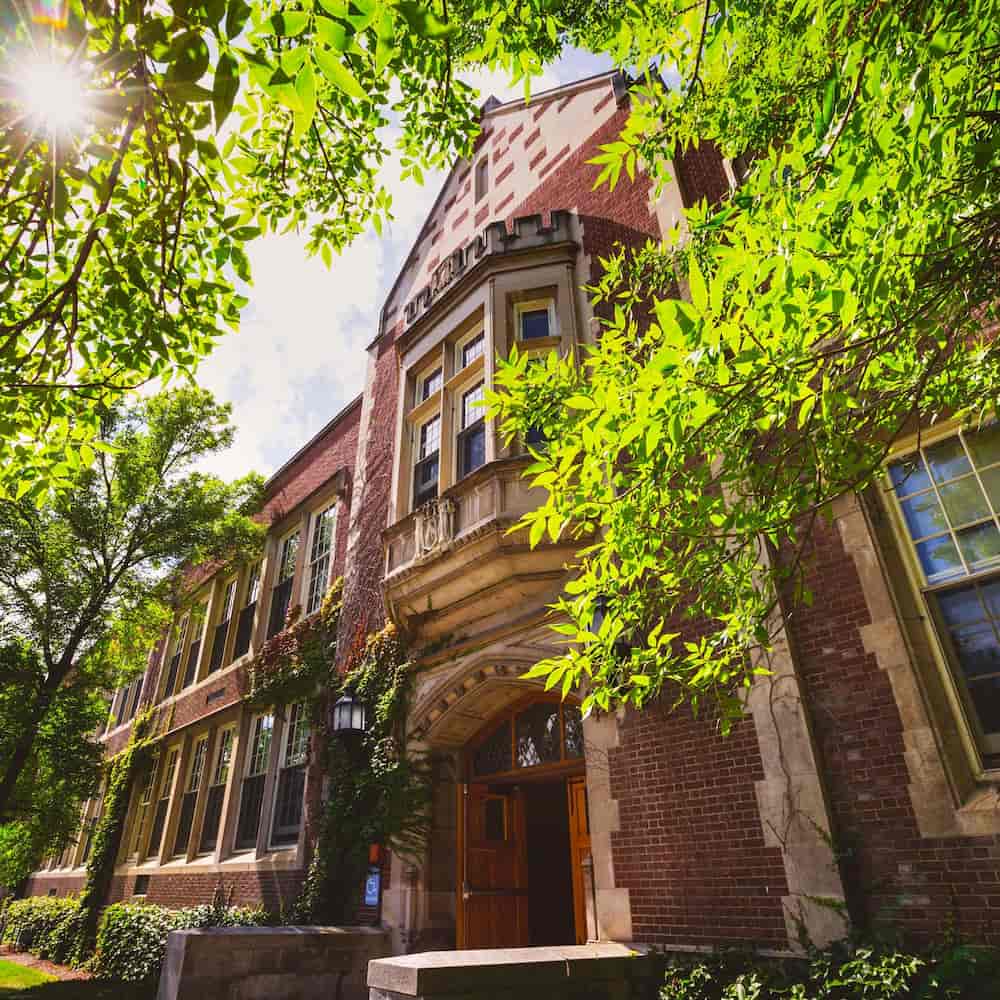
SUNY College at Geneseo seal · sourceSUNY Geneseo Campus Tour · sourceOffice of Admissions - SUNY Geneseo · sourceSUNY Geneseo Home - SUNY Geneseo · source