Admit rate has ranged 67%–82% over the last 5 years — notably volatile. Source: IPEDS via Urban Institute.
Acceptance & SAT from Common Data Set / IPEDS; net price, earnings & graduation from the U.S. Dept. of Education College Scorecard. Figures lag ~1–2 years — verify with the school.
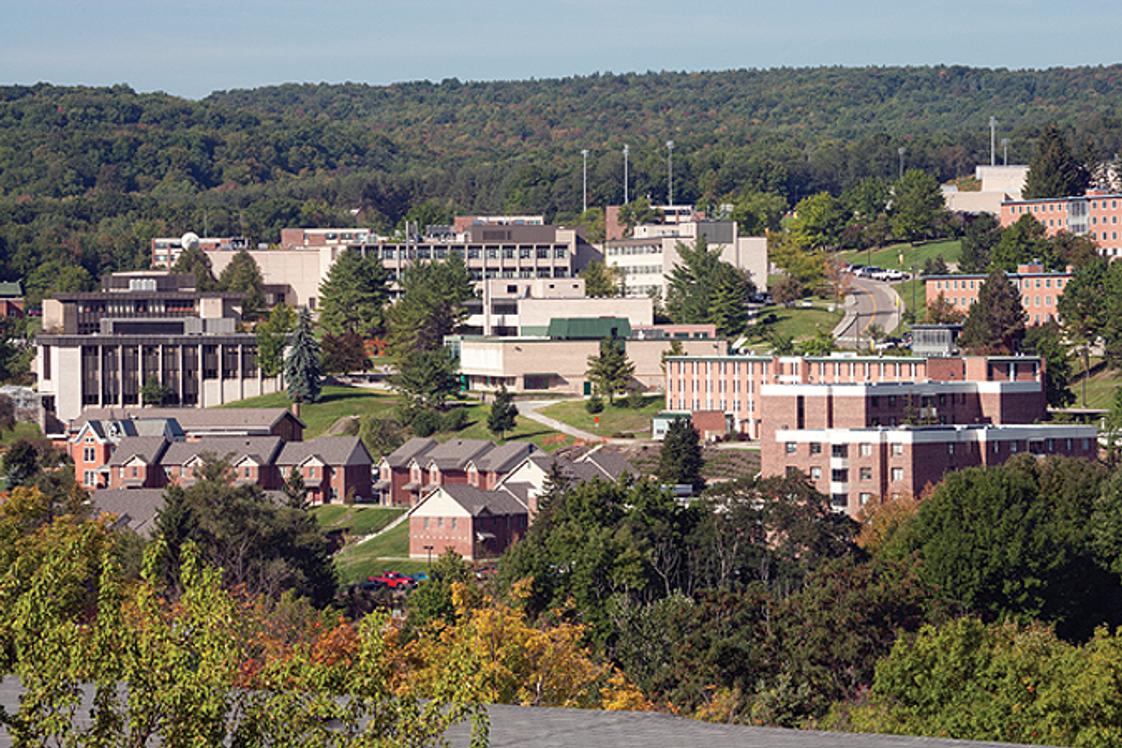
Alfred State College is a public, hands-on technical college in the SUNY system that operates with a refreshingly straightforward mission: to turn out graduates who are ready to work. Nestled in a small, rural town in western New York, its identity is built on applied learning, industry-standard facilities, and a practical, career-focused curriculum across more than 70 majors. This isn't a place for abstract theory; it's where you learn to build, code, manage, and design with a toolbelt—literal or figurative—at the ready.
Admission requirements
Test-optional — scores considered if submitted
Required
High school transcript
Grade point average
TOEFL (non-native English)
Considered (not required)
Letters of recommendation
Test scores (SAT/ACT)
College-prep program
Demonstrated competencies
Source: IPEDS Admissions survey (2022) via Urban Institute. Covers formal factors only — it does not reflect essays, extracurriculars, or other holistic criteria.
More details
Undergrad enrollment
3,563
In-state tuition
$8,892
Out-of-state tuition
$16,837
Graduation Rate
55%
Student-Faculty Ratio
17:1
Median Earnings (10yr)
$50,445
Classes Under 20 Students
60.3%
Students Receiving Financial Aid
95%
Outcomes & value
Outcomes & value
Median earnings (10 yr)
$50,445
Value (earnings ÷ net price)
3.4×
Median debt at graduation
$13,750
Graduation rate
55%
First-year retention
65%
Reducing loan balance (3 yr)
67%
Pell (lower-income) share
45%
First-gen share (among federal-aid recipients)
33%
Top-earning majors
Median earnings by field of study (highest credential), ~2 years after completion.
Construction Management$56,776
Mechanical Engineering Related Technologies/Technicians$56,302
Computer/Information Technology Administration and Management$49,625
Computer Engineering Technologies/Technicians
Campus & location
Campus safety
On-campus violent crimes (2024)
3
On-campus criminal offenses classed as violent (murder/non-negligent manslaughter, rape, robbery, aggravated assault) for the most recent reported year. Source: U.S. Dept. of Education Campus Safety and Security (Clery Act). Counts reflect what’s reported to the school, and urban campuses often report more partly due to non-student incidents nearby — read alongside campus size and setting, not as a standalone safety verdict.
Climate
Pleasant days / yr
94
Summer high
75°F
Winter low
20°F
Annual rain
40.7"
Annual snow
51.6"
Natural-hazard risk
Relatively Low
Pleasant days counts days per year with a mean temperature of 55–75°F, a high at or below 90°F, a low at or above 45°F, and little precipitation — a transparent comfort measure, not a weighting we invented. Computed from Open-Meteo ERA5 daily history (2019–2023). Natural-hazard risk is the county’s composite rating from the FEMA National Risk Index.
Deep dive — research, future-scholar output & economic mobility▾
Economic mobility
Mobility rate
2.1%
Bottom → top quintile
17%
From bottom quintile
12%
Mobility rate = the share of students who both start in the bottom household-income quintile and reach the top quintile; bottom → top is that chance conditional on starting at the bottom. Source: Opportunity Insights Mobility Report Cards (Chetty, Friedman, Saez, Turner & Yagan). Reflects 1980–82 birth cohorts, so it’s directional, not current.
Quick answers
What is the acceptance rate at SUNY College of Technology at Alfred?
SUNY College of Technology at Alfred's acceptance rate is approximately 76% (Alfred, NY), based on the most recent figures we compiled from public and primary sources.
What SAT score do you need for SUNY College of Technology at Alfred?
Admitted students at SUNY College of Technology at Alfred typically score 990–1200 on the SAT (the middle-50% range). Scores outside this band are still admitted, especially with strong applications.
How much does SUNY College of Technology at Alfred cost?
At SUNY College of Technology at Alfred, the average net price (after aid) is about $15,016 per year. Actual cost varies with financial aid and residency.
How many undergraduates attend SUNY College of Technology at Alfred?
SUNY College of Technology at Alfred enrolls approximately 3,563 undergraduate students.
Where is SUNY College of Technology at Alfred located?
SUNY College of Technology at Alfred is located in Alfred, NY.
Admissions
Alfred State's admissions process is accessible, designed to welcome students ready for its hands-on, career-oriented programs. The college accepts the Common Application and maintains a policy, meaning SAT or ACT scores are not required for admission consideration. The middle 50% SAT range for admitted students is 990–1200, and the middle 50% ACT range is 20–24. While the school is not highly selective, it does consider academic factors; about 23% of admitted students had a high school GPA of 3.75 or higher. The admissions office continues to review applications on a rolling basis even after standard deadlines. Sources do not provide explicit information on whether Alfred State tracks or considers demonstrated interest in its admissions decisions.
The academic experience at Alfred State is defined by applied, project-based learning with a direct line to the workforce. The college offers more than 70 degrees, with a sharp focus on technology, skilled trades, and applied sciences. The most specialized majors, by volume of degrees awarded, are Construction, Communication Technologies, and Engineering. The student-faculty ratio is reported as 17:1 by the institution and 15:1 by external sources, facilitating personalized attention. This focus on practical skill-building is reflected in the classroom structure, where 60.3% of classes have fewer than 20 students. The curriculum is explicitly "designed with your future in mind," taught by faculty characterized as industry experts.
Earnings = median of students working ~10 years after entry; debt = median of graduates. Value divides 10-yr earnings by one year’s net price — read it as earnings per dollar of annual cost, not a full lifetime ROI; it favors lower-cost schools. Source: U.S. Dept. of Education College Scorecard. Figures lag ~2 years and reflect all students, not your intended major.
Source: U.S. Dept. of Education College Scorecard (field-of-study earnings). Figures cover graduates who received federal aid and lag ~2 years; not all programs report data.
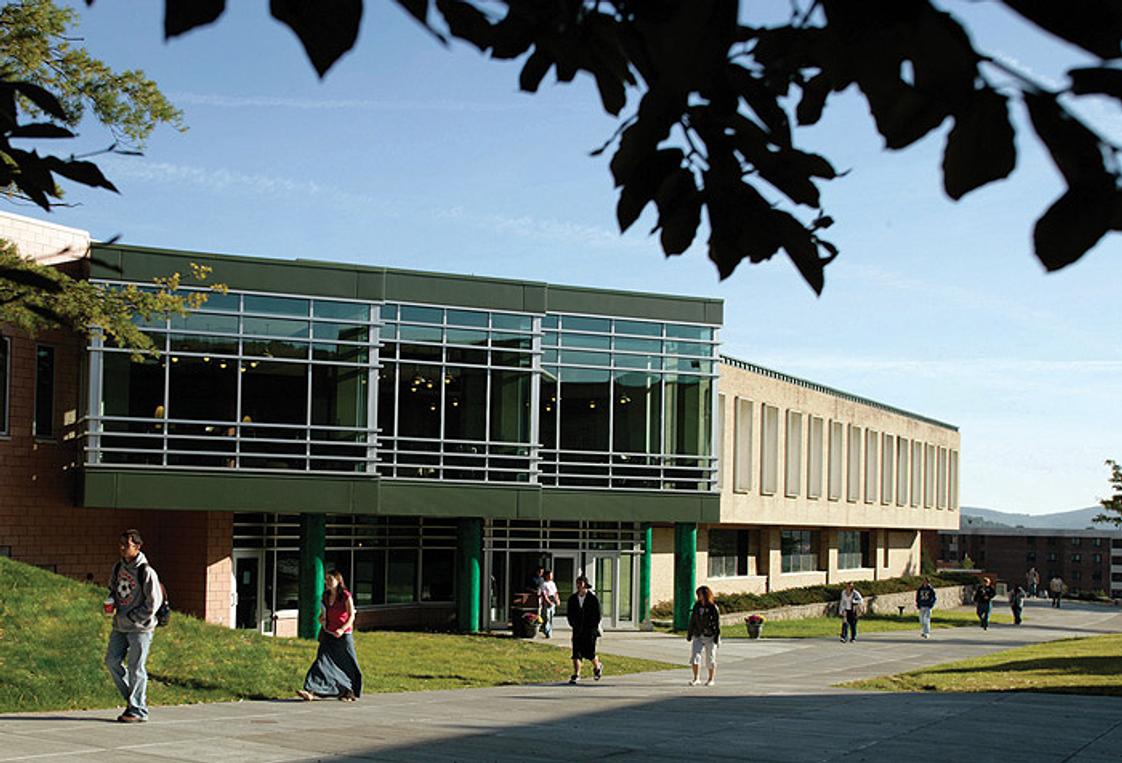
Life at Alfred State is a classic small-college, rural experience with a strong emphasis on community and campus involvement. A majority of students—61%—live in college-owned, -operated, or -affiliated housing, creating a residential core. The campus atmosphere is described as welcoming and inclusive, supported by various clubs and organizations focused on cultural life and inclusion. Alfred itself is promoted by the college as the "#1 Ultimate College Town in the US," though this claim is not independently verified in the provided sources. Student life is rounded out by typical collegiate activities, from rock climbing and drama club to movie nights, all aimed at creating "unforgettable memories."
The ultimate measure of Alfred State's pragmatic mission is what happens after graduation. The college's focus on direct career preparation aims to translate into stable, middle-class earnings. The median earnings for alumni ten years after entry are reported as $50,445. The six-year graduation rate is 55.1%. A significant majority of students receive financial aid, with 76.58% of students receiving aid and an average aid package that brings the down considerably.
As a public SUNY school, Alfred State offers a relatively affordable pathway to a career-focused degree, especially for New York residents. The average after aid—the actual cost a typical student pays—is $15,016. Financial aid is widespread, with 95% of full-time beginning undergraduates receiving some form of grant or scholarship aid. The aid package typically includes a combination of scholarships, grants, loans, and federal work-study opportunities. The college provides a Net Price Calculator to help families estimate their out-of-pocket costs. There is no indication in the provided sources that Alfred State has a "no-loan" policy or that it meets 100% of demonstrated financial need solely with grants.
Alfred State stands out in the crowded higher education landscape by unapologetically embracing its identity as a polytechnic institution. It doesn't try to be a miniature liberal arts college or a research university. Its value proposition is clear and concrete: industry-standard equipment, faculty with real-world expertise, and a curriculum laser-focused on employable skills. This creates an environment where a student in construction management isn't just reading case studies; they're likely working on a build site. The college's strength lies in this clarity of purpose—it's for the hands-on learner, the future tradesperson, the aspiring technician, and the practical engineer. It offers the camaraderie and support of a small, residential campus while preparing students not just for a first job, but for a sustained career with solid earning potential, as evidenced by its graduate outcomes.
SUNY College of Technology at Alfred seal · sourceSUNY College of Technology at Alfred - Alfred, NY · sourceAlfred State College - SUNY · sourceSUNY College of Technology at Alfred - Alfred, NY · source