Loading…
← All schools
Talmudical Seminary of Bobov
Brooklyn, NYprivate nonprofitwww.independentrabbinicalcolleges.org/
Acceptance
98%
Avg net price
$2,840
Earnings (10 yr)
$22,432
Graduation rate
39%
Admit rate has ranged 76%–98% over the last 5 years — notably volatile. Source: IPEDS via Urban Institute.
Acceptance & SAT from Common Data Set / IPEDS; net price, earnings & graduation from the U.S. Dept. of Education College Scorecard. Figures lag ~1–2 years — verify with the school.
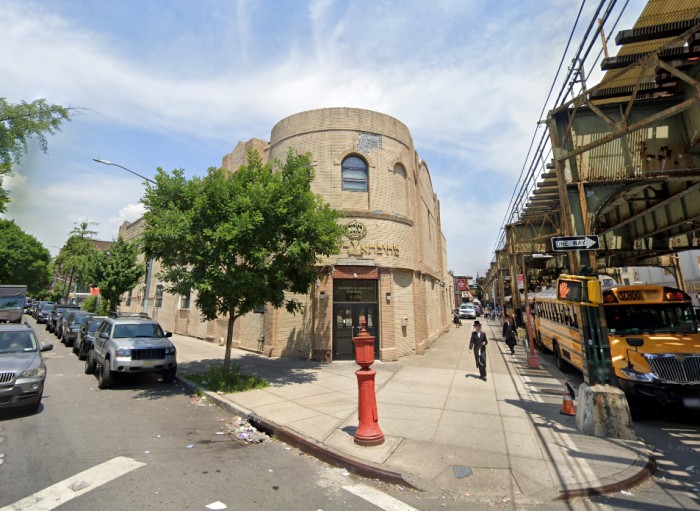
The Talmudical Seminary of Bobov is a singular institution: a private, Orthodox Jewish rabbinical college in the heart of Brooklyn dedicated exclusively to Talmudic and Rabbinical Studies. It operates less like a conventional American university and more like a deeply immersive yeshiva, where a cohort of just over 500 undergraduate men pursue a rigorous, singular curriculum rooted in Talmud, Jewish Law, and Chassidic teachings. With an acceptance rate near universal and a cost of attendance rendered minimal by substantial aid, its mission is to cultivate rabbinic scholarship within a specific community, resulting in academic and financial outcomes that defy typical higher-education benchmarks.
Admission requirements
Test-blind — scores not considered
Required
- Letters of recommendation
- College-prep program
Considered (not required)
- High school transcript
Source: IPEDS Admissions survey (2022) via Urban Institute. Covers formal factors only — it does not reflect essays, extracurriculars, or other holistic criteria.
More details
- Undergrad enrollment
- 602
- In-state tuition
- $13,200
- Out-of-state tuition
- $13,200
- Setting
- Urban (Brooklyn, NY)
- No-Loan Policy
- Information not provided in sources
- Graduation Rate
- 39%
- Meets Full Need
- Information not provided in sources
- ED Share of Class
- No Early Decision option
- Student Body Size
- 515 undergraduates
- Standardized Tests
- Not required/recommended
- First-Year Retention
- 77%
- Single Major Offered
Outcomes & value
Outcomes & value
- Median earnings (10 yr)
- $22,432
- Value (earnings ÷ net price)
- 7.9×
- Graduation rate
- 39%
- First-year retention
- 69%
- Pell (lower-income) share
- 97%
- First-gen share (among federal-aid recipients)
- 85%
Earnings = median of students working ~10 years after entry; debt = median of graduates. Value divides 10-yr earnings by one year’s net price — read it as earnings per dollar of annual cost, not a full lifetime ROI; it favors lower-cost schools. Source: U.S. Dept. of Education College Scorecard. Figures lag ~2 years and reflect all students, not your intended major.
Financial health
1.6 / 3.0Meets the federal financial-responsibility standard
U.S. Dept. of Education Financial Responsibility Composite Score (FY2022-23). Scale −1.0 to 3.0; ≥1.5 meets the standard. Reported for private nonprofit & for-profit institutions only — public universities are state-backed and not scored, so this is a stability signal, not a ranking.
Top-earning majors
Median earnings by field of study (highest credential), ~2 years after completion.
- Religion/Religious Studies$10,673
Source: U.S. Dept. of Education College Scorecard (field-of-study earnings). Figures cover graduates who received federal aid and lag ~2 years; not all programs report data.
Campus & location
Campus safety
- On-campus violent crimes (2024)
- 0
On-campus criminal offenses classed as violent (murder/non-negligent manslaughter, rape, robbery, aggravated assault) for the most recent reported year. Source: U.S. Dept. of Education Campus Safety and Security (Clery Act). Counts reflect what’s reported to the school, and urban campuses often report more partly due to non-student incidents nearby — read alongside campus size and setting, not as a standalone safety verdict.
Climate
- Pleasant days / yr
- 96
- Summer high
- 80°F
- Winter low
- 31°F
- Annual rain
- 51.1"
- Annual snow
- 15.9"
- Natural-hazard risk
- Relatively High
Pleasant days counts days per year with a mean temperature of 55–75°F, a high at or below 90°F, a low at or above 45°F, and little precipitation — a transparent comfort measure, not a weighting we invented. Computed from Open-Meteo ERA5 daily history (2019–2023). Natural-hazard risk is the county’s composite rating from the FEMA National Risk Index.
Quick answers
- What is the acceptance rate at Talmudical Seminary of Bobov?
- Talmudical Seminary of Bobov's acceptance rate is approximately 98% (Brooklyn, NY), based on the most recent figures we compiled from public and primary sources.
- How much does Talmudical Seminary of Bobov cost?
- At Talmudical Seminary of Bobov, the average net price (after aid) is about $2,840 per year. Actual cost varies with financial aid and residency.
- How many undergraduates attend Talmudical Seminary of Bobov?
- Talmudical Seminary of Bobov enrolls approximately 602 undergraduate students.
- Where is Talmudical Seminary of Bobov located?
- Talmudical Seminary of Bobov is located in Brooklyn, NY.
Admissions
Admissions at the Talmudical Seminary of Bobov is categorically non-selective, functioning as an open door for students from its target Orthodox community. The school admitted 98% of its 235 applicants in 2024, a figure that represents a 13.5% annual growth in applications. This near-universal is paired with an exceptionally high —the percentage of admitted students who enroll—reported at 94.35%. In practical terms, of 230 admitted students, 203 enrolled. The process is test-blind; SAT and ACT scores are neither required nor recommended. The admissions office does not offer an Early Decision option, and there is no indication from available sources that demonstrated interest is a considered factor. The profile of the typical applicant and enrollee is inherently specific: young men seeking advanced rabbinical training within the Bobov Chassidic tradition.
Compare Talmudical Seminary of Bobov
vs Grove City Collegevs Dean Collegevs Livingstone Collegevs EDP University of Puerto Rico Inc-San Juan
See colleges similar to Talmudical Seminary of Bobov →Sources
- Talmudical Seminary of Bobov - College Scorecard
- Talmudical Seminary Of Bobov - BigFuture College Search
- Talmudical Seminary of Bobov - Data USA
- Rankings Data for Talmudical Seminary of Bobov - College Raptor
- Common Data Set: Home
- Talmudical Seminary of Bobov Tuition, Acceptance Rate, & Academics
- Talmudical Seminary Of Bobov Admissions - BigFuture
- Talmudical Seminary of Bobov Acceptance Rate and SAT/ACT Scores
- Talmudical Seminary of Bobov | My Future
- Talmudical Seminary of Bobov Admissions & Acceptance - Niche