Loading…
← All schools
Texas College
Tyler, TXprivate nonprofitwww.texascollege.edu/
Avg net price
$10,958
Earnings (10 yr)
$33,752
Graduation rate
14%
Acceptance & SAT from Common Data Set / IPEDS; net price, earnings & graduation from the U.S. Dept. of Education College Scorecard. Figures lag ~1–2 years — verify with the school.
Texas College, a small, historically Black institution in Tyler, operates on a different plane than the state's sprawling public universities. With an acceptance rate hovering around 43%, it's moderately selective, but its defining characteristics are a starkly intimate scale—just over 600 undergraduates—and a foundational mission rooted in the liberal arts and general studies. The college's academic profile is marked by a notably low freshman retention rate, suggesting significant challenges in student persistence, yet it offers a low-cost, residential experience focused on personal development and cultural understanding.
More details
- Undergrad enrollment
- 614
- In-state tuition
- $10,008
- Out-of-state tuition
- $10,008
- Graduation Rate
- 41.6%
- Gender Distribution
- 65.2% Male / 34.8% Female
- First-Year Retention Rate
- 40%
- Average Financial Aid Package
- $9,041
Outcomes & value
Outcomes & value
- Median earnings (10 yr)
- $33,752
- Value (earnings ÷ net price)
- 3.1×
- Median debt at graduation
- $31,000
- Graduation rate
- 14%
- First-year retention
- 34%
- Reducing loan balance (3 yr)
- 18%
- Pell (lower-income) share
- 84%
- First-gen share (among federal-aid recipients)
- 45%
Financial health
3.0 / 3.0Meets the federal financial-responsibility standard
U.S. Dept. of Education Financial Responsibility Composite Score (FY2022-23). Scale −1.0 to 3.0; ≥1.5 meets the standard. Reported for private nonprofit & for-profit institutions only — public universities are state-backed and not scored, so this is a stability signal, not a ranking.
Top-earning majors
Median earnings by field of study (highest credential), ~2 years after completion.
- Business/Commerce, General$30,409
- Biology, General$22,999
- Teacher Education and Professional Development, Specific Levels and Methods$22,771
- Criminal Justice and Corrections$22,766
Source: U.S. Dept. of Education College Scorecard (field-of-study earnings). Figures cover graduates who received federal aid and lag ~2 years; not all programs report data.
Compare on earnings: best colleges for Business · best colleges for Biology · best colleges for Criminal Justice
Campus & location
Campus safety
- On-campus violent crimes (2024)
- 1
On-campus criminal offenses classed as violent (murder/non-negligent manslaughter, rape, robbery, aggravated assault) for the most recent reported year. Source: U.S. Dept. of Education Campus Safety and Security (Clery Act). Counts reflect what’s reported to the school, and urban campuses often report more partly due to non-student incidents nearby — read alongside campus size and setting, not as a standalone safety verdict.
Climate
- Pleasant days / yr
- 94
- Summer high
- 94°F
- Winter low
- 42°F
- Annual rain
- 49.7"
- Annual snow
- 2"
- Natural-hazard risk
- Relatively Moderate
Pleasant days counts days per year with a mean temperature of 55–75°F, a high at or below 90°F, a low at or above 45°F, and little precipitation — a transparent comfort measure, not a weighting we invented. Computed from Open-Meteo ERA5 daily history (2019–2023). Natural-hazard risk is the county’s composite rating from the FEMA National Risk Index.
Deep dive — research, future-scholar output & economic mobility
Research output
- Institutional h-index
- 205
- Scholarly works
- 8,863
Institutional research volume and impact from OpenAlex. The h-index reflects large research universities and will be low for teaching-focused liberal-arts colleges — not a measure of undergraduate quality.
Quick answers
- How much does Texas College cost?
- At Texas College, the average net price (after aid) is about $10,958 per year. Actual cost varies with financial aid and residency.
- How many undergraduates attend Texas College?
- Texas College enrolls approximately 614 undergraduate students.
- Where is Texas College located?
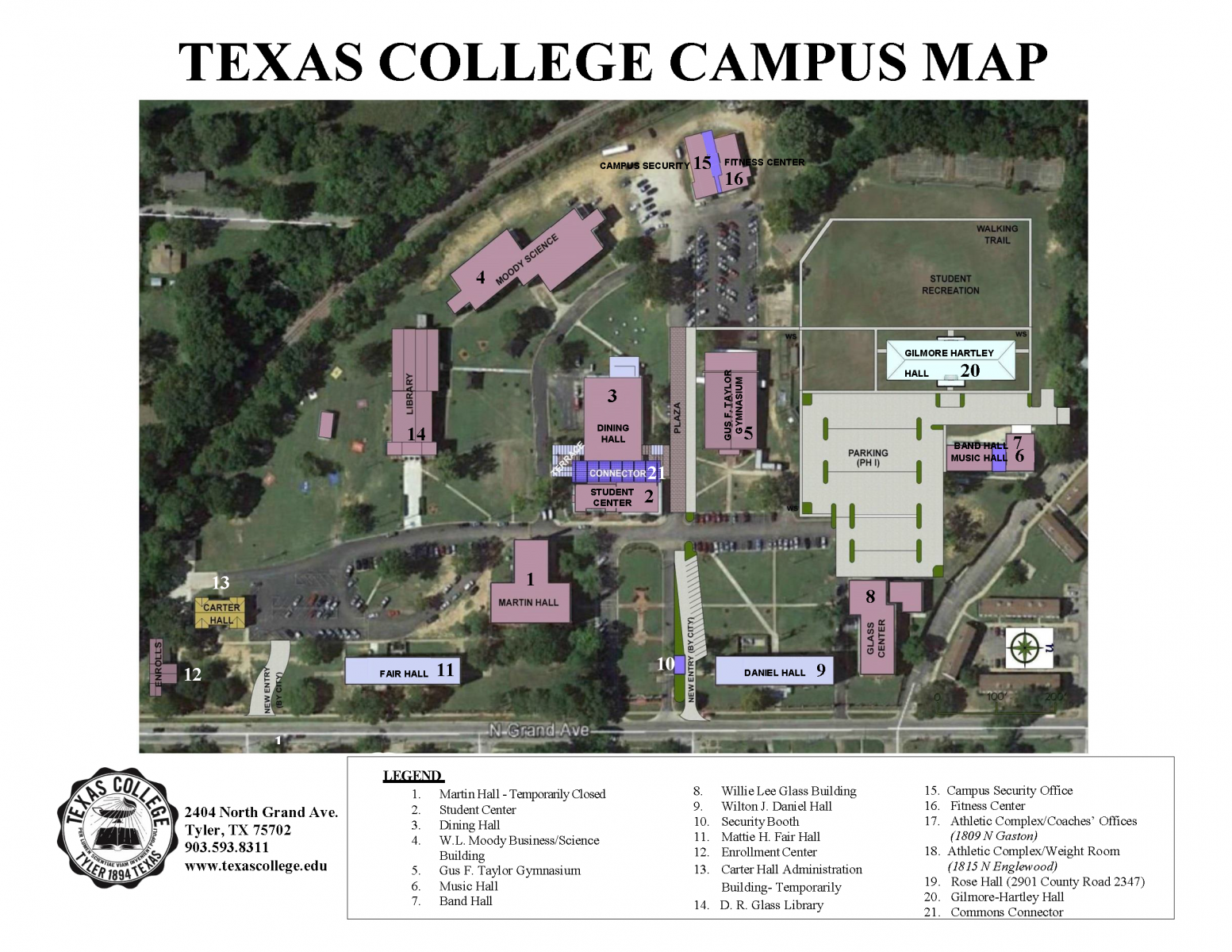
- Texas College is located in Tyler, TX.
Admissions
Texas College presents a moderately selective admissions landscape, accepting about 43 out of every 100 applicants. This 42.6% positions it as more accessible than flagship public universities like Texas A&M (57%) but far more selective than large regional publics like Texas State University, which admits over 90% of applicants. The college does not appear to participate in binding Early Decision programs, and the provided sources do not indicate any specific policy on considering demonstrated interest in its review process. Applicants should be aware of Texas's automatic admission rules for top-ranked high school students at public universities, though these policies are not explicitly detailed for Texas College itself. The admissions data suggests the college serves a niche, drawing a specific subset of students seeking its particular mission and intimate scale.
Compare Texas College
vs Livingstone Collegevs EDP University of Puerto Rico Inc-San Juanvs Inter American University of Puerto Rico-Fajardovs Inter American University of Puerto Rico-Metro
See colleges similar to Texas College →Sources
- Common Data Set - Data, Analytics & Institutional Research
- [PDF] Common Data Set 2025-2026 - [email protected]
- Common Data Set: Home
- How To Use a Common Data Set - The College Solution
- Common Data Set | Institutional Success and Decision Support - oisds
- Common Data Set - TCU Institutional Research
- Texas College Requirements for Admission
- Texas A&M University--College Station Admissions Stats
- Texas State University Admissions - BigFuture College Search
- Automatic Admission at Texas Colleges for 2025-2026
- College Admissions Testing: SAT and ACT