Loading…
← All schools
Texas Tech University Health Scienes Center El Paso
El Paso, TXpublicelpaso.ttuhsc.edu/
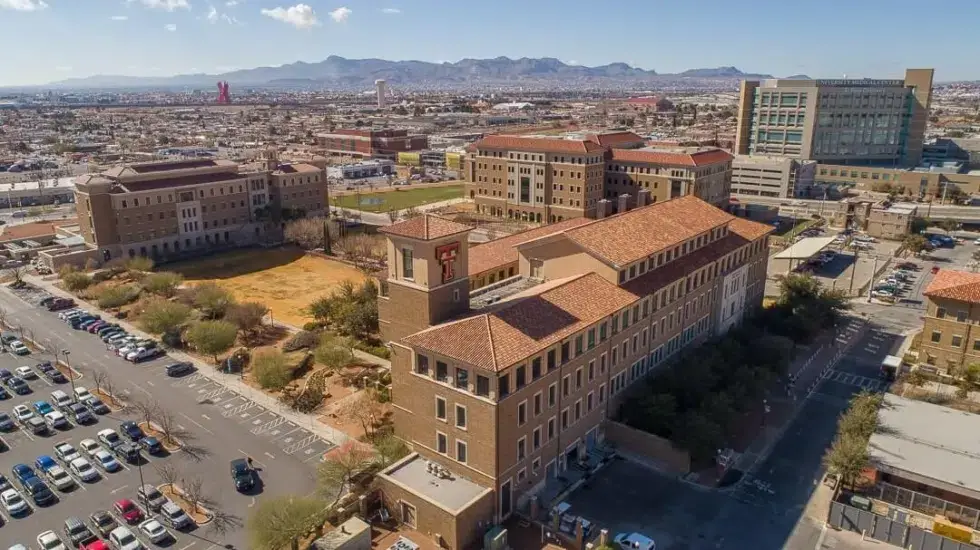
Texas Tech University Health Sciences Center El Paso isn't your typical university; it's a focused, high-stakes health sciences campus built on the border. Its singular mission is to train the next generation of doctors, nurses, and researchers specifically for the unique needs of the Paso del Norte region, creating a deeply immersive, interprofessional environment where students learn side-by-side. This is a place where academic intensity meets a profound sense of community purpose, producing graduates who are statistically likely to stay and serve.
More details
- Undergrad enrollment
- 242
- Early Decision Program
- Yes (AAMC EDP)
- Medical School Class Size
- 130
- Average Medical Student MCAT
- 509
- Median Earnings 1yr After Graduation
- $36,427
- On-Time Graduation Rate (TTUHSC System)
- 88.8%
Outcomes & value
Outcomes & value
- Median debt at graduation
- $12,500
- Pell (lower-income) share
- 53%
- Endowment / student
- $175,014
Earnings = median of students working ~10 years after entry; debt = median of graduates. Value divides 10-yr earnings by one year’s net price — read it as earnings per dollar of annual cost, not a full lifetime ROI; it favors lower-cost schools. Source: U.S. Dept. of Education College Scorecard. Figures lag ~2 years and reflect all students, not your intended major.
Campus & location
Campus safety
- On-campus violent crimes (2024)
- 0
- Per 1,000 students
- 0.00
On-campus criminal offenses classed as violent (murder/non-negligent manslaughter, rape, robbery, aggravated assault) for the most recent reported year. Source: U.S. Dept. of Education Campus Safety and Security (Clery Act). Counts reflect what’s reported to the school, and urban campuses often report more partly due to non-student incidents nearby — read alongside campus size and setting, not as a standalone safety verdict.
Climate
- Pleasant days / yr
- 89
- Summer high
- 96°F
- Winter low
- 36°F
- Annual rain
- 7.4"
- Annual snow
- 1.9"
- Natural-hazard risk
- Relatively High
Pleasant days counts days per year with a mean temperature of 55–75°F, a high at or below 90°F, a low at or above 45°F, and little precipitation — a transparent comfort measure, not a weighting we invented. Computed from Open-Meteo ERA5 daily history (2019–2023). Natural-hazard risk is the county’s composite rating from the FEMA National Risk Index.
Quick answers
- How many undergraduates attend Texas Tech University Health Scienes Center El Paso?
- Texas Tech University Health Scienes Center El Paso enrolls approximately 242 undergraduate students.
- Where is Texas Tech University Health Scienes Center El Paso located?
- Texas Tech University Health Scienes Center El Paso is located in El Paso, TX.
Admissions
Admission to TTUHSC El Paso is a highly selective, program-specific gauntlet, particularly for its flagship Paul L. Foster School of Medicine. The medical school is intensely competitive, with reported between approximately 2.7% and 6.5%. For the most recent class, matriculants boasted formidable academic credentials: an average overall GPA of 3.84, an average science GPA of 3.81, and an average MCAT score of 509. The class size is tightly controlled at 130 students, with a slight male majority (73 men to 57 women).
The school participates in the AAMC Early Decision Program (EDP), allowing applicants to signal an exclusive, first-choice commitment to the institution. While general undergraduate admissions data is not readily published for the health sciences center, the process is clearly oriented toward identifying candidates with exceptional academic preparation and a demonstrated alignment with the school's mission. Standardized test requirements for specific pipeline programs, like the Undergraduate to Medical School Initiative, are strict, mandating a minimum score of 30 on the ACT or 1360 on the SAT, with superscores not accepted.
Compare Texas Tech University Health Scienes Center El Paso
vs University of Science and Arts of Oklahomavs West Virginia University Institute of Technologyvs University of Virginia's College at Wisevs Northwestern Oklahoma State University
See colleges similar to Texas Tech University Health Scienes Center El Paso →Sources
- Interactive Common Data Set - El Paso - UTEP
- Common Data Sets (CDS) | Institutional Research | TTU
- Common Data Set: Home
- Common Data Sets - UTEP
- DFR Report PDF - Department of Education
- Data Requests | Texas Tech Health El Paso
- Office of Admissions PLFSOM Statistics
- Texas Tech Health Sciences Center at El Paso - College
- Texas Tech University Health Sciences Center-El Paso ...
- Undergraduate to Medical School Initiative | Texas Tech ...