Admit rate has ranged 42%–62% over the last 5 years — notably volatile, though the latest figure above (69%) falls outside that window. Source: IPEDS via Urban Institute.
Acceptance & SAT from Common Data Set / IPEDS; net price, earnings & graduation from the U.S. Dept. of Education College Scorecard. Figures lag ~1–2 years — verify with the school.
Texas Wesleyan University is a small, private liberal arts institution in Fort Worth that operates with the scrappy, pragmatic energy of a regional underdog. It's a place where a 13:1 student-faculty ratio promises personal attention, and the academic focus is squarely on building 'employable skills' like critical thinking and communication. The vibe is less about ivy-covered prestige and more about providing a direct, accessible path to a degree—particularly in business, STEM, and the arts—for a student body that often needs significant financial aid and academic support to cross the finish line.
Admission requirements
Test-optional — scores considered if submitted
Required
High school transcript
Grade point average
TOEFL (non-native English)
Considered (not required)
Class rank
Letters of recommendation
Test scores (SAT/ACT)
College-prep program
Source: IPEDS Admissions survey (2022) via Urban Institute. Covers formal factors only — it does not reflect essays, extracurriculars, or other holistic criteria.
More details
Undergrad enrollment
1,741
In-state tuition
$39,582
Out-of-state tuition
$39,582
Graduation Rate
32%
Student-Faculty Ratio
13:1
Median Earnings (10yr)
$54,053
Average Freshman Retention Rate
60%
Students Receiving Financial Aid
90%
Outcomes & value
Outcomes & value
Median earnings (10 yr)
$54,053
Value (earnings ÷ net price)
2.2×
Median debt at graduation
$23,125
Graduation rate
32%
First-year retention
61%
Reducing loan balance (3 yr)
44%
Pell (lower-income) share
45%
First-gen share (among federal-aid recipients)
48%
Financial health
2.5 / 3.0Meets the federal financial-responsibility standard
U.S. Dept. of Education Financial Responsibility Composite Score (FY2022-23). Scale −1.0 to 3.0; ≥1.5 meets the standard. Reported for private nonprofit & for-profit institutions only — public universities are state-backed and not scored, so this is a stability signal, not a ranking.
Top-earning majors
Median earnings by field of study (highest credential), ~2 years after completion.
Bilingual, Multilingual, and Multicultural Education$46,321
Management Sciences and Quantitative Methods$41,565
Multi/Interdisciplinary Studies, Other$39,741
Music$38,289
Political Science and Government$35,060
Business Administration, Management and Operations
Campus & location
Campus safety
On-campus violent crimes (2024)
2
Per 1,000 students
0.82
On-campus criminal offenses classed as violent (murder/non-negligent manslaughter, rape, robbery, aggravated assault) for the most recent reported year. Source: U.S. Dept. of Education Campus Safety and Security (Clery Act). Counts reflect what’s reported to the school, and urban campuses often report more partly due to non-student incidents nearby — read alongside campus size and setting, not as a standalone safety verdict.
Climate
Pleasant days / yr
93
Summer high
95°F
Winter low
40°F
Annual rain
46.2"
Annual snow
1.5"
Natural-hazard risk
Relatively High
Pleasant days counts days per year with a mean temperature of 55–75°F, a high at or below 90°F, a low at or above 45°F, and little precipitation — a transparent comfort measure, not a weighting we invented. Computed from Open-Meteo ERA5 daily history (2019–2023). Natural-hazard risk is the county’s composite rating from the FEMA National Risk Index.
Deep dive — research, future-scholar output & economic mobility▾
Research output
Institutional h-index
60
Scholarly works
672
Institutional research volume and impact from OpenAlex. The h-index reflects large research universities and will be low for teaching-focused liberal-arts colleges — not a measure of undergraduate quality.
Economic mobility
Mobility rate
1.3%
Bottom → top quintile
10%
From bottom quintile
13%
Mobility rate = the share of students who both start in the bottom household-income quintile and reach the top quintile; bottom → top is that chance conditional on starting at the bottom. Source: Opportunity Insights Mobility Report Cards (Chetty, Friedman, Saez, Turner & Yagan). Reflects 1980–82 birth cohorts, so it’s directional, not current.
Quick answers
What is the acceptance rate at Texas Wesleyan University?
Texas Wesleyan University's acceptance rate is approximately 69% (Fort Worth, TX), based on the most recent figures we compiled from public and primary sources.
What SAT score do you need for Texas Wesleyan University?
Admitted students at Texas Wesleyan University typically score 1020–1100 on the SAT (the middle-50% range). Scores outside this band are still admitted, especially with strong applications.
How much does Texas Wesleyan University cost?
At Texas Wesleyan University, the average net price (after aid) is about $24,066 per year. Actual cost varies with financial aid and residency.
How many undergraduates attend Texas Wesleyan University?
Texas Wesleyan University enrolls approximately 1,741 undergraduate students.
Where is Texas Wesleyan University located?
Texas Wesleyan University is located in Fort Worth, TX.
Admissions
Texas Wesleyan's admissions process is designed to be accessible, with a focus on academic preparation over hyper-selectivity. The university is 'less selective,' with an overall of 69%. For freshmen, the baseline requirement is a 2.75 high school GPA on a 4.0 scale. While SAT or ACT scores are not mandatory, submitting them 'can help boost your chances of admission.' For those who do submit, the middle 50% SAT range is 1020–1100, and the ACT range is 16–23. The admissions office does not appear to have an Early Decision plan, focusing instead on a standard admissions cycle. The process is not about weeding out applicants but identifying those prepared to succeed, with a notable majority of admitted students being women (71% of female applicants were admitted versus 67% of male applicants).
Test-Optional Policy: Students can choose to submit SAT/ACT scores.
Academic Focus: High school GPA is the primary academic benchmark.
Accessibility: The high acceptance rate and policy lower barriers to application.
Earnings = median of students working ~10 years after entry; debt = median of graduates. Value divides 10-yr earnings by one year’s net price — read it as earnings per dollar of annual cost, not a full lifetime ROI; it favors lower-cost schools. Source: U.S. Dept. of Education College Scorecard. Figures lag ~2 years and reflect all students, not your intended major.
$33,993
Criminal Justice and Corrections$32,925
Psychology, General$23,803
Source: U.S. Dept. of Education College Scorecard (field-of-study earnings). Figures cover graduates who received federal aid and lag ~2 years; not all programs report data.
Academics at Texas Wesleyan are built around a classic liberal arts core, aimed at teaching 'critical thinking, effective communication and research skills,' but with a distinctly practical, career-oriented bent. The university offers over 30 undergraduate majors and interdisciplinary programs, with notable emphasis in Business, STEAM, and STEM fields. A key strength is the 13:1 student-faculty ratio, which the university promotes as enabling the 'one-on-one attention that helps them thrive.' This intimate scale is central to the institutional identity. The curriculum is evolving to meet market demands, exemplified by the launch of a new Bachelor of Applied Arts and Sciences (BAAS) degree with specializations in high-need areas like Technology, Human Resources, Healthcare Administration, and Criminal Justice. The strategic plan frames the academic mission around 'dependability, integrity-driven leadership, and accountability,' suggesting a focus on producing graduates who are not just educated but reliably employable. However, student satisfaction indicators, like the average freshman retention rate, are reported at 60%, pointing to potential challenges in maintaining student engagement through to graduation.
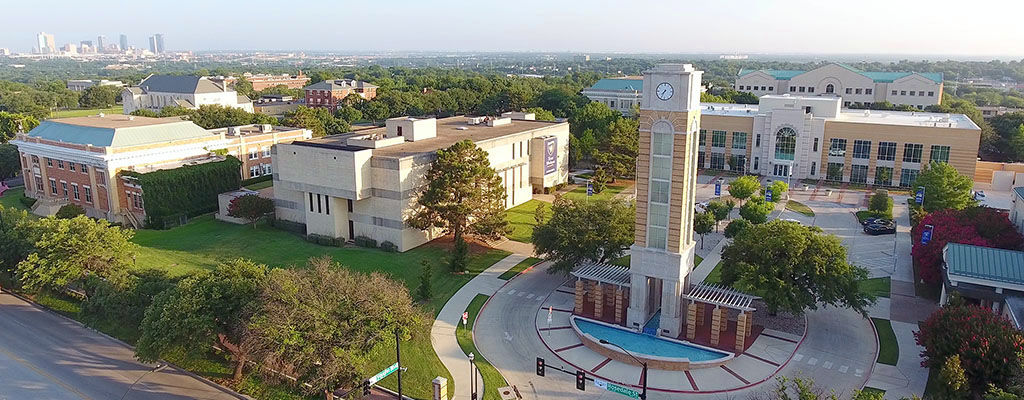
Life on the Fort Worth campus is actively curated by the Division of Student Affairs, which aims to 'intentionally engage students in a healthy, safe and inclusive co-curricular environment.' The goal is to create a full residential experience, with 'plenty to do outside' the classroom. Student activities and clubs are varied, with music, theatre, and arts programs receiving strong support from both faculty and students. The programming has a deliberate, homegrown feel, ranging from casual weekly traditions like Waffle Night in Stella Hall to board game sessions in office hours. The university has made concerted efforts to revitalize campus life post-pandemic, signaling a priority on rebuilding community. While specific details on Greek life or housing are not extensively detailed in the provided sources, the overall picture is of a small campus working hard to foster connection and involvement through structured, accessible events and a wide array of student-led organizations.
Outcomes data reveals a university grappling with the challenges of graduation rates while pointing toward solid earning potential for those who persist. The four-year graduation rate is low, with one source noting only 22% of students graduate within 'normal time' (4 years) and another citing a 23.8% four-year rate. The six-year graduation rate improves to 31.5%. These figures underscore the non-traditional or academically underprepared profile of a significant portion of the student body, for whom the path to a degree is longer and requires substantial support. For graduates, however, the financial payoff appears meaningful. Median earnings four years after graduation are reported at $57,671, which is noted as slightly above the national average. The longer-term median earnings, 10 years after entry, are $54,053. This suggests that while getting students across the finish line is a persistent challenge, the career-oriented education provided does translate into competitive salaries in the regional Texas economy.
Affordability is a central pillar of Texas Wesleyan's pitch. A robust 90% of students receive financial aid to help cover tuition, fees, and housing. The university encourages all families to use its Calculator to get an individualized estimate of cost after grants and scholarships. The average net price after aid is $24,066. Aid packages are a mix of merit and need-based support; the university offers 'need-based grants for lower-income families' and promotes grants for completing steps like visiting campus and filing the FAFSA. Unlike some elite private institutions, Texas Wesleyan does not have a universal 'no-loan' policy for undergraduates. Federal loans remain a standard part of the aid landscape for those who need to borrow, with graduate students specifically eligible for Federal Unsubsidized Loans. The financial strategy is clearly geared toward making the sticker price manageable for a broad swath of students through significant discounting, rather than through eliminating debt entirely.
Texas Wesleyan stands out as a purposefully unpretentious, high-touch regional university that knows its niche. It doesn't compete with the state's flagship giants or elite liberal arts colleges on selectivity or resources. Instead, it offers a specific value proposition: close faculty mentorship (thanks to that 13:1 ratio) and a practical, skills-forward liberal arts education, all delivered in the context of a supportive, if sometimes struggling, community. Its identity is rooted in Fort Worth—a major city that provides a professional backdrop for its career-focused majors in business, health, and technology. The school is transparent about its challenges, particularly around graduation rates, which reflects its mission of serving students who might not have a straight path to a degree. It's a university built for the striver, not the superstar—a place that bets on personal attention and pragmatic programs to help a diverse, often student body build a stable, middle-class professional life. In a higher education landscape obsessed with rankings, Texas Wesleyan's distinctiveness lies in its grounded, workmanlike commitment to accessible transformation.
Texas Wesleyan University seal · sourceVisit for a Campus Tour - Texas Wesleyan University · sourceTexas Wesleyan University - Profile, Rankings and Data | US News Best Colleges · sourceTexas Wesleyan Recognized by U.S. News & World Report – Texas Wesleyan University · source
.jpg?width=1600)


.jpg)