Admit rate has ranged 7%–33% over the last 2 years — notably volatile, though the latest figure above (34%) falls outside that window. Source: IPEDS via Urban Institute.
Acceptance & SAT from Common Data Set / IPEDS; net price, earnings & graduation from the U.S. Dept. of Education College Scorecard. Figures lag ~1–2 years — verify with the school.
The Chicago School at Chicago is a specialized, graduate-focused institution that has carved out a distinct niche in the professional psychology and behavioral sciences landscape. With a flagship campus in the heart of the city, it operates more like a professional training ground than a traditional liberal arts college, emphasizing hands-on, multicultural training for students 'culturally competent, compassionate, and compelled to make a difference.' Its identity is defined by a tight 8:1 student-faculty ratio and a curriculum that blends theory with intensive practical experience, preparing graduates for direct impact in clinical and counseling fields.
Admission requirements
Test-optional — scores considered if submitted
Required
High school transcript
Grade point average
Class rank
Letters of recommendation
Considered (not required)
Test scores (SAT/ACT)
College-prep program
TOEFL (non-native English)
Source: IPEDS Admissions survey (2022) via Urban Institute. Covers formal factors only — it does not reflect essays, extracurriculars, or other holistic criteria.
More details
Undergrad enrollment
21
In-state tuition
$21,780
Out-of-state tuition
$21,780
Student:Faculty Ratio
8:1
Highest Degree Offered
Doctorate
Median Earnings (10yr)
$56,899
Outcomes & value
Outcomes & value
Median earnings (10 yr)
$56,899
Median debt at graduation
$20,000
Pell (lower-income) share
55%
First-gen share (among federal-aid recipients)
46%
Endowment / student
$7,764
Earnings = median of students working ~10 years after entry; debt = median of graduates. Value divides 10-yr earnings by one year’s net price — read it as earnings per dollar of annual cost, not a full lifetime ROI; it favors lower-cost schools. Source: U.S. Dept. of Education College Scorecard. Figures lag ~2 years and reflect all students, not your intended major.
Campus & location
Campus safety
On-campus violent crimes (2024)
0
Per 1,000 students
0.00
On-campus criminal offenses classed as violent (murder/non-negligent manslaughter, rape, robbery, aggravated assault) for the most recent reported year. Source: U.S. Dept. of Education Campus Safety and Security (Clery Act). Counts reflect what’s reported to the school, and urban campuses often report more partly due to non-student incidents nearby — read alongside campus size and setting, not as a standalone safety verdict.
Climate
Pleasant days / yr
88
Summer high
79°F
Winter low
23°F
Annual rain
47.2"
Annual snow
30.1"
Natural-hazard risk
Very High
Pleasant days counts days per year with a mean temperature of 55–75°F, a high at or below 90°F, a low at or above 45°F, and little precipitation — a transparent comfort measure, not a weighting we invented. Computed from Open-Meteo ERA5 daily history (2019–2023). Natural-hazard risk is the county’s composite rating from the FEMA National Risk Index.
Quick answers
What is the acceptance rate at The Chicago School at Chicago?
The Chicago School at Chicago's acceptance rate is approximately 34% (Chicago, IL), based on the most recent figures we compiled from public and primary sources.
How many undergraduates attend The Chicago School at Chicago?
The Chicago School at Chicago enrolls approximately 21 undergraduate students.
Where is The Chicago School at Chicago located?
The Chicago School at Chicago is located in Chicago, IL.
Admissions
Admissions at The Chicago School are selective, with an of 34% (per canonical figures). While specific SAT/ACT ranges for the Chicago campus are not detailed in the provided sources, data from its Los Angeles campus suggests that test scores are considered but not required to apply. The institution's small undergraduate population—just 31 students according to one source—indicates a highly focused and likely competitive applicant pool for its limited undergraduate offerings. The admissions process appears to prioritize alignment with the school's mission in psychology and behavioral sciences over sheer numerical benchmarks.
Selectivity Context: For comparison, its Los Angeles campus reports an acceptance rate of 46%, and another source lists it at 40.2%.
Academics are intensely specialized, revolving almost entirely around the fields of psychology, behavioral sciences, counseling, and related health professions. The school offers over 40 academic programs, with its highest degree offered being a doctorate. It claims a significant national footprint, awarding the most U.S. doctoral degrees (7.75%) in the fields of clinical, counseling, and applied psychology. The learning model is explicitly practical and immersive, fostering 'innovative learning environments that blend theoretical preparation with multicultural training and intensive hands-on learning.' This is not a school for broad exploration; it's for targeted, professional preparation. The intimate 8:1 student-faculty ratio ensures close mentorship, a stark contrast to the national average of 21:1.
Student life is inextricably linked to its urban setting and professional mission. The flagship Chicago Campus promises 'unmatched access to a vibrant city,' suggesting that much of the social and cultural experience extends beyond a traditional campus quad. The school actively cultivates a specific student ethos, describing its students as 'culturally competent, compassionate, and compelled to make a difference.' This points to a community self-selected for service-oriented careers in mental health. The school promotes 'exciting campus events' focused on 'conversations that inspire growth, connection, and meaningful impact,' aligning with its professional focus. With a total student population of 1,243 (only 31 of whom are undergraduates), the graduate student experience dominates the campus culture, likely fostering a more focused, collegial, and less traditional 'campus life' atmosphere compared to large undergraduate universities.
Outcomes data specific to The Chicago School at Chicago is sparse in the provided sources. The canonical figure for median earnings 10 years after entry is $56,899. For context, data from its Los Angeles campus shows a 21% graduation rate, which is significantly below the 59% midpoint for four-year colleges. This low rate may reflect the challenges non-traditional, graduate, and professional students face in completing degrees while managing other life commitments, rather than the performance of traditional undergraduates. The school's core mission is to train practitioners, so successful outcomes are likely measured more by licensure rates, clinical placement success, and career advancement in the psychology field than by standard undergraduate graduation metrics.
The Chicago School provides information on financing education through scholarships, grants, loans, and financial aid options. However, the provided sources lack specific details about the school's , average aid packages, or the percentage of students receiving aid. There is no information indicating the presence of a no-loan policy or a commitment to meet 100% of demonstrated financial need for all students, which are policies associated with some other Chicago-area institutions. Prospective students are directed to the school's financial aid resources for clear information on their financing options.
The Chicago School stands out for its uncompromising, single-minded focus on professional psychology and behavioral health. It is not a liberal arts college with a psychology department; it is a professional school where the entire ecosystem is designed to produce practitioners. Its claim to awarding the highest percentage of clinical and counseling psychology doctorates in the country is a powerful testament to its scale and influence in that specific niche. The 8:1 student-faculty ratio and the 'hands-on learning' mandate create a training environment more akin to a clinical apprenticeship than a lecture-based graduate program. It attracts a specific type of student: one already committed to a helping profession, eager for practical experience, and looking to embed their education in the dynamic, real-world context of Chicago. It's a place for doing, not just studying.
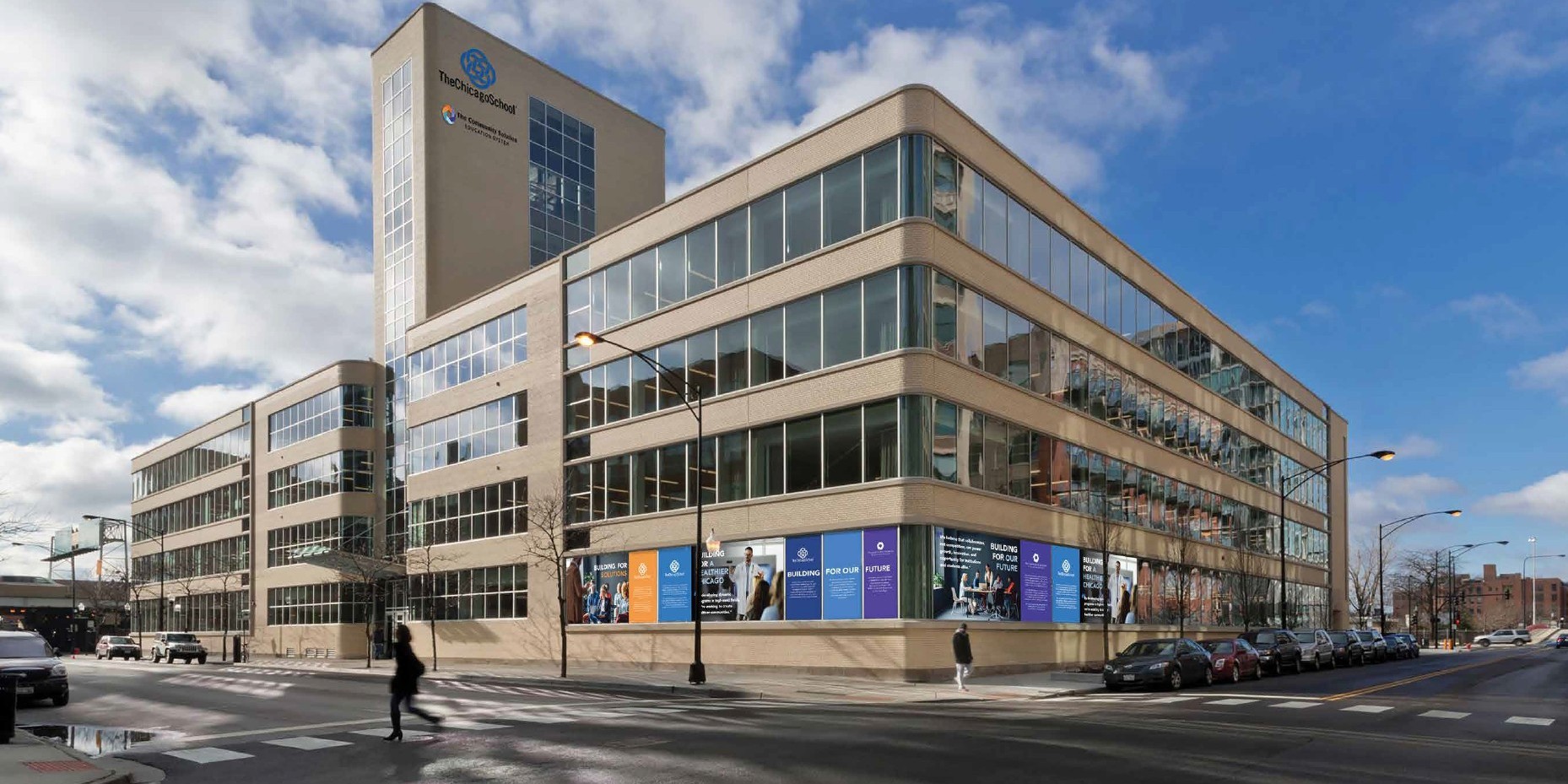
The Chicago School at Chicago seal · sourceThe Chicago School - Wikipedia · sourceRedefining Health Education at 400 S. JeffersonInsight Digital Magazine · sourceThe Chicago School - Wikipedia · source