Admit rate has ranged 15%–22% over the last 5 years. Source: IPEDS via Urban Institute.
Acceptance & SAT from Common Data Set / IPEDS; net price, earnings & graduation from the U.S. Dept. of Education College Scorecard. Figures lag ~1–2 years — verify with the school.
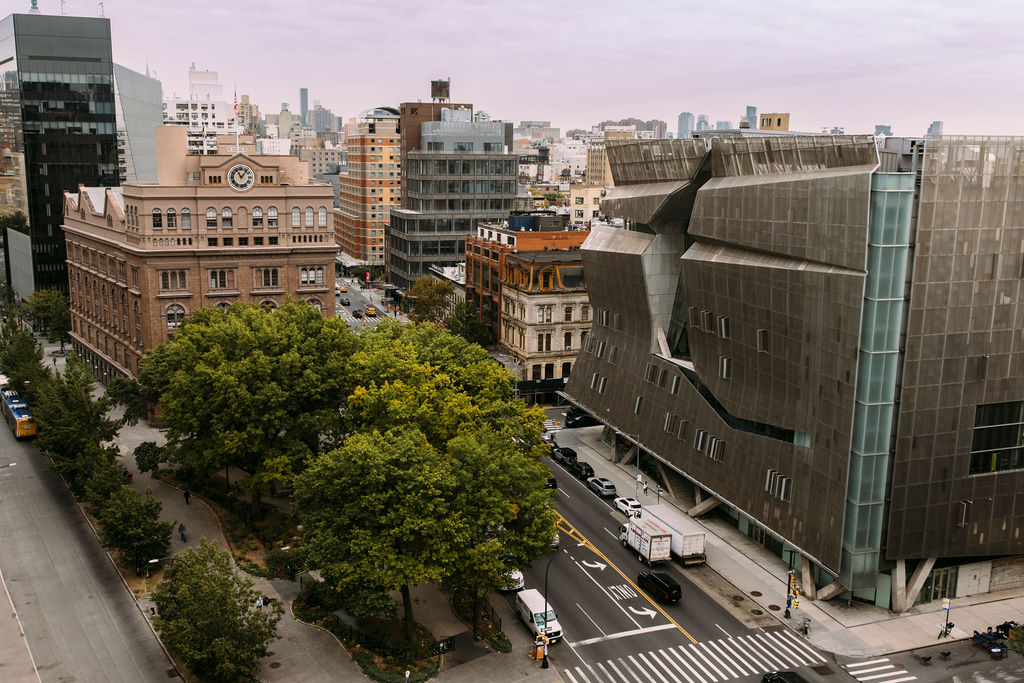
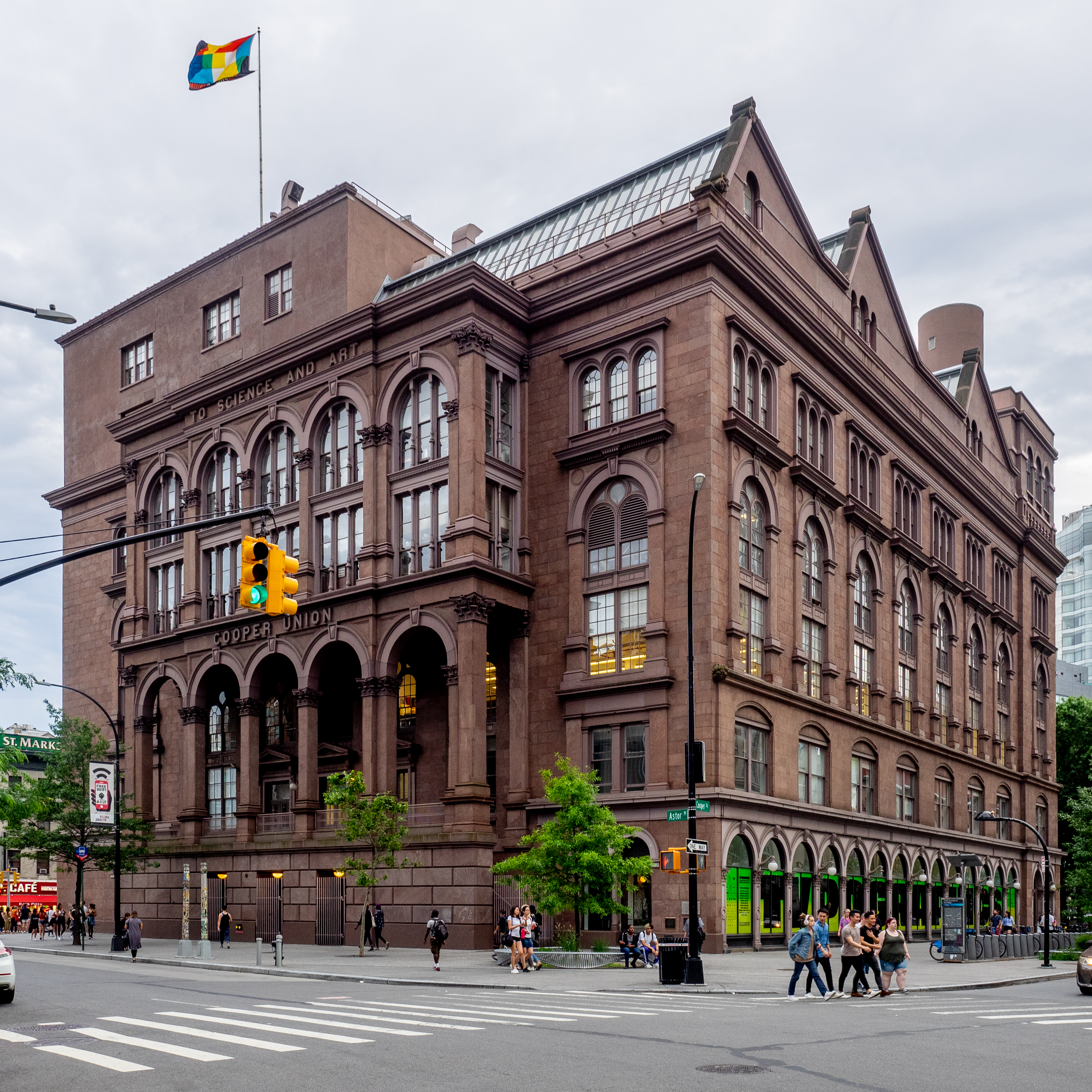
The Cooper Union isn't just a college; it's a fiercely selective, tuition-subsidized atelier embedded in New York City's East Village, where the intensity of art, architecture, and engineering studios meets the grit of urban life. Founded in 1859 on Peter Cooper's radical vision of free education, it now offers every undergraduate a half-tuition scholarship, creating a meritocratic pressure cooker for under 1,000 students who live and breathe their craft. The result is a small, insular community of future professionals whose early-career earnings often defy the starving-artist stereotype.
Admission requirements
Test-optional — scores considered if submitted
Required
High school transcript
Grade point average
Letters of recommendation
Demonstrated competencies
TOEFL (non-native English)
Considered (not required)
Class rank
Test scores (SAT/ACT)
College-prep program
Source: IPEDS Admissions survey (2022) via Urban Institute. Covers formal factors only — it does not reflect essays, extracurriculars, or other holistic criteria.
More details
Undergrad enrollment
842
In-state tuition
$46,820
Out-of-state tuition
$46,820
Top Majors
Engineering (56%), Art (32%), Architecture (12%)
Graduation Rate
81%
On-Campus Housing
20% of students
Student Body Size
Fewer than 1,000
Student-Faculty Ratio
8:1
Median Earnings (10yr)
$83,847
Outcomes & value
Outcomes & value
Median earnings (10 yr)
$83,847
Value (earnings ÷ net price)
6.3×
Median debt at graduation
$15,000
Graduation rate
81%
First-year retention
92%
Reducing loan balance (3 yr)
75%
Pell (lower-income) share
28%
First-gen share (among federal-aid recipients)
19%
Top-earning majors
Median earnings by field of study (highest credential), ~2 years after completion.
Astronomy and Astrophysics$43,798
Source: U.S. Dept. of Education College Scorecard (field-of-study earnings). Figures cover graduates who received federal aid and lag ~2 years; not all programs report data.
On-campus criminal offenses classed as violent (murder/non-negligent manslaughter, rape, robbery, aggravated assault) for the most recent reported year. Source: U.S. Dept. of Education Campus Safety and Security (Clery Act). Counts reflect what’s reported to the school, and urban campuses often report more partly due to non-student incidents nearby — read alongside campus size and setting, not as a standalone safety verdict.
Climate
Pleasant days / yr
90
Summer high
83°F
Winter low
29°F
Annual rain
54.4"
Annual snow
18.3"
Natural-hazard risk
Relatively High
Pleasant days counts days per year with a mean temperature of 55–75°F, a high at or below 90°F, a low at or above 45°F, and little precipitation — a transparent comfort measure, not a weighting we invented. Computed from Open-Meteo ERA5 daily history (2019–2023). Natural-hazard risk is the county’s composite rating from the FEMA National Risk Index.
Deep dive — research, future-scholar output & economic mobility▾
Future-scholar output
Science & engineering PhDsper-capita yield 8.4
Share of this school’s graduates who go on to earn research doctorates (2010–20), by national rank and per-capita yield (NSF institutional-yield ratio). A signal of a research-oriented student culture — not a causal promise, since it partly reflects who enrolls. Only top producers appear. Source: NSF NCSES, Baccalaureate Origins of U.S. Research Doctorate Recipients.
Quick answers
What is the acceptance rate at The Cooper Union for the Advancement of Science and Art?
The Cooper Union for the Advancement of Science and Art's acceptance rate is approximately 21% (New York, NY), based on the most recent figures we compiled from public and primary sources.
What SAT score do you need for The Cooper Union for the Advancement of Science and Art?
Admitted students at The Cooper Union for the Advancement of Science and Art typically score 1295–1501 on the SAT (the middle-50% range). Scores outside this band are still admitted, especially with strong applications.
How much does The Cooper Union for the Advancement of Science and Art cost?
At The Cooper Union for the Advancement of Science and Art, the average net price (after aid) is about $13,269 per year. Actual cost varies with financial aid and residency.
How many undergraduates attend The Cooper Union for the Advancement of Science and Art?
The Cooper Union for the Advancement of Science and Art enrolls approximately 842 undergraduate students.
Where is The Cooper Union for the Advancement of Science and Art located?
The Cooper Union for the Advancement of Science and Art is located in New York, NY.
Admissions
Gaining admission to Cooper Union is a high-stakes, portfolio-driven endeavor, with selectivity that varies dramatically by school. The institution reports an overall as low as 11% for Fall 2025, but this masks a brutal hierarchy: the School of Architecture admits only about 4% of applicants, the School of Art about 8%, while the School of Engineering is relatively more accessible at around 23%. This makes Cooper Union one of the most selective art and architecture programs in the country. The student body is small, with fewer than 1,000 total undergraduates, ensuring each admission spot is intensely contested.
Early Decision is a critical pathway, especially for engineering. The school admitted 36 engineering students from 110 Early Decision candidates in a recent cycle, suggesting a significantly higher acceptance rate for ED applicants in that school. While specific data on the overall ED share of the class isn't provided in the sources, the implication is that applying early can be a strategic advantage. Demonstrated interest is a factor colleges report on via the (C7), though the specific rating for Cooper Union is not detailed in the provided sources. The middle 50% SAT range for admitted students is highly competitive, reflecting the academic rigor expected alongside exceptional artistic or technical portfolios.
Earnings = median of students working ~10 years after entry; debt = median of graduates. Value divides 10-yr earnings by one year’s net price — read it as earnings per dollar of annual cost, not a full lifetime ROI; it favors lower-cost schools. Source: U.S. Dept. of Education College Scorecard. Figures lag ~2 years and reflect all students, not your intended major.
Cooper Union's academic identity is ruthlessly focused, offering degrees in only three areas: art, architecture, and engineering. There is no liberal arts college here; students dive immediately into their professional discipline. The breakdown of graduates reflects this tripartite structure: approximately 56% graduate from engineering, 32% from visual and performing arts, and 12% from architecture. This hyper-specialization is a defining feature.
The environment is intensely hands-on and studio-based, with a remarkably low student-to-faculty ratio of 8:1, fostering close mentorship. A high percentage of classes have fewer than 20 students. This focus translates into national recognition; the school is routinely ranked among the best colleges for art and architecture in the country. The curriculum is demanding and project-heavy, designed to produce not just graduates but practicing professionals from day one.
Life at Cooper Union is defined by a profound contrast: a tiny, insular academic community housed within the sprawling, chaotic energy of New York City's East Village. With fewer than 1,000 students total, it's a small village of "professionals-in-training." This creates an intense, almost familial atmosphere where everyone is deeply immersed in their work—studio lights burn late into the night in the Foundation Building, and engineering labs are hubs of constant activity.
Only about 20% of students live in college-owned or affiliated housing, meaning the vast majority (80%) live off-campus, scattering into the surrounding Manhattan neighborhoods. This forces students to engage with the city as their campus, using its museums, galleries, fabricators, and firms as extensions of their education. The social scene is largely shaped by this work-centric, commuter-heavy dynamic and the shared pressure-cooker experience of the curriculum. There are no sprawling quads or big sports culture; the vibe is more akin to a highly selective, urban guild.
A Cooper Union degree is a direct pipeline to professional practice, and the outcomes data reflects this. The four-year graduation rate is strong, and the overall graduation rate places it in the top 15% nationally. More importantly, the financial return is significant, especially given the school's arts-heavy focus. Recent graduates report an average early-career salary of $61,000, which is noted as 13% higher than predicted based on their fields of study. This suggests the school's reputation and rigor command a premium in the job market.
The long-term payoff is even more compelling. The median earnings for graduates ten years after enrollment is a robust figure, indicating that Cooper Union alumni don't just get jobs—they build sustainable, high-earning careers. This combination of high graduation rates and strong earnings defies the typical narrative for art and architecture schools, underscoring the unique value of the Cooper Union credential.
Cooper Union's financial model is its most distinctive and transformative feature. While it famously offered a full-tuition scholarship for over a century, today it guarantees every admitted undergraduate student a half-tuition scholarship, valued at $22,275 per year. This is not based on need or merit—it's automatic. On top of this foundational award, students are eligible for additional need-based and .
This policy dramatically reduces the . The average need-based scholarship or grant awarded to first-year students is substantial, helping to cover remaining costs. A significant majority of students (over 60%) receive financial aid. While the sources do not specify a formal "no-loan" policy or a commitment to meet 100% of demonstrated need without loans, the combination of the universal half-tuition scholarship and additional aid creates a far more accessible financial picture than the sticker price would suggest. The key takeaway is that no one pays full price, making this elite, NYC-based education financially plausible for a wider range of talented students.
Cooper Union stands apart as a singular institution in American higher education. It is not merely a good school; it is a unique proposition. First, its historic mission, rooted in Peter Cooper's ideal of free education, persists in the form of a universal half-tuition scholarship—a level of financial commitment to accessibility that is virtually unheard of among elite, specialized colleges. Second, its tripartite focus on only art, architecture, and engineering creates a concentrated, studio-and-lab-driven culture where every student is a dedicated practitioner from day one. There are no distractions or secondary majors.
Third, its scale and location produce an irreplicable dynamic: a tiny, work-obsessed community of under 1,000 students embedded in the heart of New York City's creative and industrial ecosystem. This isn't a cloistered campus; it's a professional atelier that uses the city as its workshop. Finally, it delivers on the promise of its rigor. The outcomes—high graduation rates and strong, often surprising earnings—prove that this intense model produces graduates who are not only skilled but also financially successful, making it a compelling and rare bet for students committed to these fields.
The Cooper Union for the Advancement of Science and Art seal · sourceCooper Union - Wikipedia · sourceAbout Cooper Union | cooperedu · sourceCooper Union - Wikipedia · source