Laredo, TXprivate forprofittpcalaredo.com
The Professional Cosmetology Academy (TPCA) in Laredo, Texas, is a small, hyper-focused trade school that operates on a completely different axis than a traditional university. It's a direct pipeline into the beauty industry, offering a continuous, hands-on curriculum in cosmetology, esthetics, and nail technology with a near-open admissions policy. The school's entire identity is built on practical skill acquisition, licensure exam preparation, and launching students into careers, not on campus life or academic exploration.
More details
Campus & location
On-campus criminal offenses classed as violent (murder/non-negligent manslaughter, rape, robbery, aggravated assault) for the most recent reported year. Source: U.S. Dept. of Education Campus Safety and Security (Clery Act). Counts reflect what’s reported to the school, and urban campuses often report more partly due to non-student incidents nearby — read alongside campus size and setting, not as a standalone safety verdict.
Pleasant days counts days per year with a mean temperature of 55–75°F, a high at or below 90°F, a low at or above 45°F, and little precipitation — a transparent comfort measure, not a weighting we invented. Computed from Open-Meteo ERA5 daily history (2019–2023). Natural-hazard risk is the county’s composite rating from the FEMA National Risk Index.
Admission to TPCA is straightforward and non-selective, reflecting its mission as a career-focused trade school. Unlike traditional colleges that weigh a complex matrix of GPA, test scores, and essays, TPCA appears to have an open admission policy for qualified applicants. While a specific Common Data Set (CDS)A standardized report most colleges publish each year with admissions, test-score, and financial-aid figures, making schools easier to compare. for TPCA is not provided in the sources, the general definition of open admission is a policy "under which virtually all secondary school graduates or students with GED equivalency certificates are admitted" [https://commondataset.org/wp-content/uploads/2024/11/CDS-2024-2025-TEMPLATE.pdf]. This aligns with data from similar cosmetology academies, where one reports a 100% Acceptance rateThe share of applicants a college admits in a given year. A 10% acceptance rate means it admits about 1 in 10 applicants. [https://www.niche.com/colleges/the-salon-professional-academy-appleton/]. The process is transactional: prospective students are provided with information to "make an informed decision in taking the next steps to a beautiful career" [https://www.tpcalaredo.com/admission]. Concepts like Early Decision, YieldThe share of admitted students who actually choose to enroll. Colleges watch it closely, which is why some weigh how interested you seem. rates, and demonstrated interest—which dominate discussions at four-year colleges [https://www.facebook.com/JeffSelingo/videos/everyones-talking-about-acceptance-rates-but-the-number-colleges-really-care-abo/786532137529038/]—are irrelevant here. The primary gatekeeper is not the admissions office but a student's commitment to completing the program and passing the state board exams.
The academic model at TPCA is singular and intensive: hands-on vocational training for state licensure. The school offers a limited number of programs, with cosmetology being the most popular concentration [https://american-school-search.com/review/the-professional-cosmetology-academy]. It is a certificate-granting institution, offering "at least 1, but less than 2 academic yrs" worth of education [https://www.collegeraptor.com/colleges/The-Professional-Cosmetology-Academy-TX--495305]. The calendar is continuous, not broken into traditional semesters, allowing students to progress through the required clock hours without extended breaks [https://www.collegeraptor.com/colleges/The-Professional-Cosmetology-Academy-TX--495305]. The curriculum is explicitly "hands-on" [https://www.tpcalaredo.com/], focused on the practical skills of a "Cosmetology Operator"—which includes hair, skin, and nail care techniques [https://www.tpcalaredo.com/cosmetology-operator]. There are no general education requirements, liberal arts courses, or majors outside the beauty field. The workload is the mastery of technical skills, and the ultimate academic benchmark is the state licensure exam, for which TPCA claims a " >95% Passing Rate" for its students [https://www.facebook.com/TPCALaredo/]. This is a school where the classroom is a salon, and the final exam is administered by the Texas Department of Licensing and Regulation.
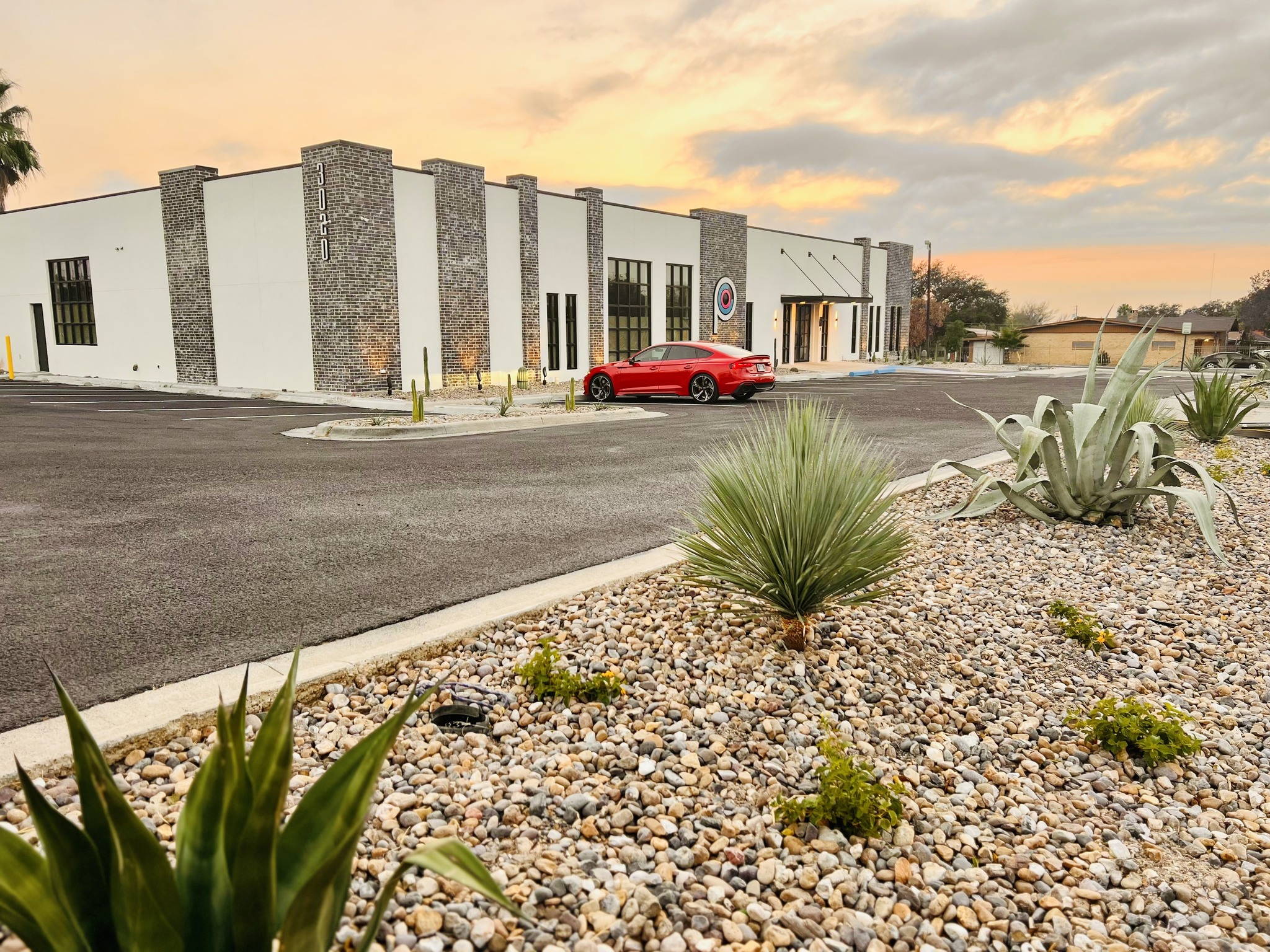
Don't expect a typical college experience. TPCA is a commuter career school with a small, focused student body. Total undergraduate enrollment is reported at 146 students, with 65 attending full-time and 81 part-time [https://www.niche.com/colleges/the-professional-cosmetology-academy/]. The student population at similar professional cosmetology academies is often diverse; one report shows a population that is 57.1% Black or African American, 14.3% White, and 14.3% Hispanic or Latino [https://datausa.io/profile/university/professional-academy-of-cosmetology]. There is no mention of dormitories, dining halls, student organizations, or athletic teams. The "campus" is the school's facility in Laredo, a large city [https://www.collegeraptor.com/colleges/The-Professional-Cosmetology-Academy-TX--495305]. Student life revolves around the clinic floor, where students practice on mannequins and eventually real clients, mirroring the environment of other cosmetology schools where students learn "makeup application, hair styling, [and] event styling" in a salon-like setting [https://www.tricociuniversity.edu/campuses/illinois/normal/]. The social fabric is likely built among cohorts training side-by-side in a high-touch, practical environment, not through extracurriculars.
Outcomes are measured in licenses, jobs, and earnings, not graduate school placements. The school's advertised success metric is a " >95% Passing Rate" on state licensure exams [https://www.facebook.com/TPCALaredo/]. For cosmetology schools, standard outcome reports include graduation rates, placement rates (in-field employment), and licensure rates. One cosmetology school annual report lists rates for its Cosmetology Operator program as: 95.00% Graduation Rate, 84.78% Placement Rate, and 100% Licensure Rate [https://charlesandsues.com/financial-aid/annual-report-outcomes/]. Another school reports a cosmetology graduation rate of 80.95% for students expected to graduate [https://www.frenchacademyofcosmetology.com/outcomes]. These figures starkly contrast with the often-cited average graduation rate for cosmetology schools of 76 percent, which a trade report notes makes "four-year university leaders blush with envy" [https://myaacs.org/wp-content/uploads/2022/10/AACS_Cosmetology_Report_10-2022.pdf]. For earnings, data from a similar Academy of Professional Cosmetology shows a median earnings figure of $36,427 one year after graduation [https://www.niche.com/colleges/academy-of-professional-cosmetology/after-college/]. The goal is clear: complete the program, pass the state board, and begin working in the field.
As a for-profit career school, TPCA's cost structure is defined by program tuition and fees. The average Net priceWhat a family actually pays after grants and scholarships are subtracted from the sticker price — usually far less than the published cost.—the out-of-pocket cost after grants and scholarships—is reported as $14,416 per year [https://www.niche.com/colleges/the-professional-cosmetology-academy/cost/]. The school provides a Net Price Calculator on its website for prospective students to get a personalized estimate based on their financial information [https://www.tpcalaredo.com/net-price-calculator]. Like many cosmetology schools, TPCA likely participates in federal financial aid programs for those who qualify. The broader beauty school industry emphasizes that "a lot of cosmetology programs are eligible for federal financial aid" [https://www.instagram.com/reel/DaK_1adu2OZ/], which can include federal grants and both subsidized and unsubsidized student loans [https://paulmitchell.edu/phoenix/financial-aid]. Some schools also offer institutional scholarships; one academy notes it has "$50,000 in scholarships that we offer each year" [https://innovatesalonacademy.com/how-to-pay-for-beauty-school/]. There is no indication of a no-loan policy or meeting full demonstrated need, which are concepts associated with elite four-year institutions. The financial aid process is geared toward career financing, not need-blind admission or debt-free graduation promises.
TPCA stands out precisely because it rejects the conventional college model. It is not a miniature liberal arts college; it's a focused trade academy. Its singularity lies in its clarity of purpose and efficiency. While universities sell a holistic "experience," TPCA sells a specific skill set and a license. It boasts high licensure pass rates (>95%) [https://www.facebook.com/TPCALaredo/] and, according to industry data, likely achieves graduation rates that rival or exceed those of many universities [https://myaacs.org/wp-content/uploads/2022/10/AACS_Cosmetology_Report_10-2022.pdf]. The school serves a demographic often seeking a faster, more direct, and less expensive path to a professional career than a four-year degree provides. Its student body is typically diverse [https://datausa.io/profile/university/professional-academy-of-cosmetology], and its location in Laredo makes it the "premier school in South Texas" for this type of hands-on training [https://www.tpcalaredo.com/]. In a higher education landscape obsessed with rankings and selectivity, TPCA represents a different, pragmatic track: a short-term, high-return investment in a trade where demand is steady and success is measured by technical competence and clientele, not diplomas.