Loading…
← All schools
The Salon Professional Academy-San Jose
San Jose, CAprivate forprofitwww.tspasanjose.com/
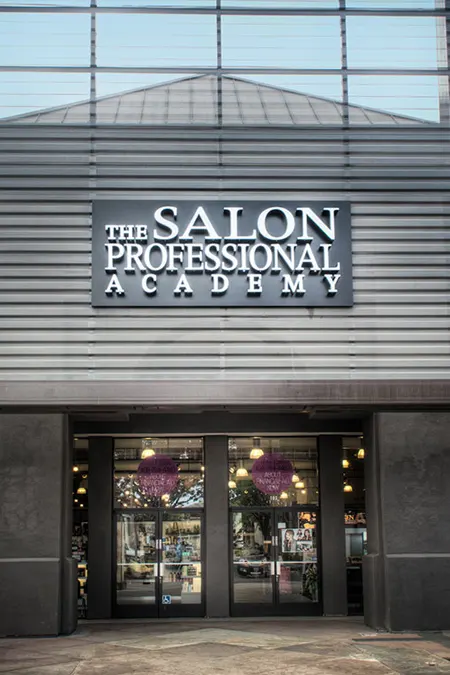
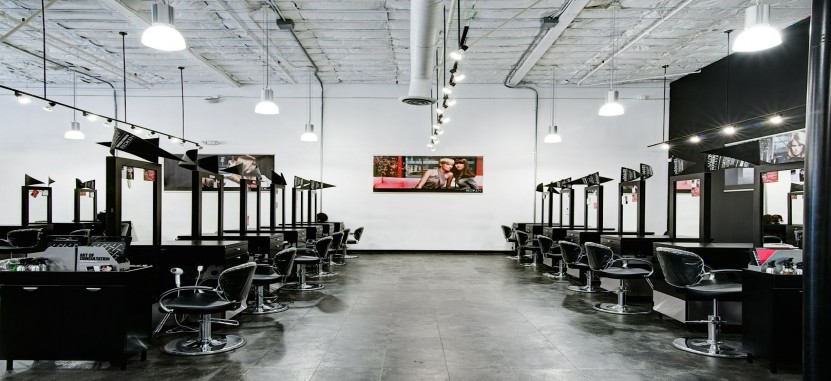
The Salon Professional Academy-San Jose is a hyper-focused, for-profit trade school that operates with the intensity of a startup bootcamp, but for beauty. It’s a single-purpose institution where the curriculum is the cosmetology or esthetics license, the campus is a working salon, and the student body is a diverse, career-switching cohort united by a desire for a hands-on, fast-tracked trade education. This isn't a place for exploration or a traditional college experience; it's a direct pipeline into the beauty industry, with all the practical rigor and financial calculus that implies.
More details
- Undergrad enrollment
- 196
- Location
- San Jose, CA (1600 Saratoga Ave, Ste 103)
- Graduation Rate
- 92.5%
- Institution Type
- Private, for-profit, less-than-2-year
- New Class Starts
- Every 4 weeks
- Programs Offered
- Cosmetology, Esthetics
- Student Demographics
- 54.1% Hispanic/Latino, 20.4% White, 7.65% Asian, 7.14% Two or More Races
- Median Earnings (1yr Post-Grad)
- $36,427
- % Students Receiving Pell Grants
- 45%
- % Students Receiving Financial Aid
- 84%
Outcomes & value
Outcomes & value
- Median debt at graduation
- $6,333
- Pell (lower-income) share
- 45%
- First-gen share (among federal-aid recipients)
- 48%
Earnings = median of students working ~10 years after entry; debt = median of graduates. Value divides 10-yr earnings by one year’s net price — read it as earnings per dollar of annual cost, not a full lifetime ROI; it favors lower-cost schools. Source: U.S. Dept. of Education College Scorecard. Figures lag ~2 years and reflect all students, not your intended major.
Campus & location
Campus safety
- On-campus violent crimes (2024)
- 0
On-campus criminal offenses classed as violent (murder/non-negligent manslaughter, rape, robbery, aggravated assault) for the most recent reported year. Source: U.S. Dept. of Education Campus Safety and Security (Clery Act). Counts reflect what’s reported to the school, and urban campuses often report more partly due to non-student incidents nearby — read alongside campus size and setting, not as a standalone safety verdict.
Climate
- Pleasant days / yr
- 191
- Summer high
- 84°F
- Winter low
- 43°F
- Annual rain
- 19"
- Annual snow
- 0.6"
- Natural-hazard risk
- Very High
Pleasant days counts days per year with a mean temperature of 55–75°F, a high at or below 90°F, a low at or above 45°F, and little precipitation — a transparent comfort measure, not a weighting we invented. Computed from Open-Meteo ERA5 daily history (2019–2023). Natural-hazard risk is the county’s composite rating from the FEMA National Risk Index.
Quick answers
- How much does The Salon Professional Academy-San Jose cost?
- At The Salon Professional Academy-San Jose, the average net price (after aid) is about $18,418 per year. Actual cost varies with financial aid and residency.
- How many undergraduates attend The Salon Professional Academy-San Jose?
- The Salon Professional Academy-San Jose enrolls approximately 196 undergraduate students.
- Where is The Salon Professional Academy-San Jose located?
- The Salon Professional Academy-San Jose is located in San Jose, CA.
Admissions
Admissions at TSPA-San Jose is best understood as an open-enrollment process for a vocational program, not a selective undergraduate college admissions cycle. The school operates on a rolling basis with new classes starting every four weeks, emphasizing accessibility over selectivity. One source explicitly states the admission process has a 0% acceptance rate, which in the context of a trade school likely indicates an open-admission policy where all applicants who meet basic requirements are admitted, rather than a competitive selection. Prospective students are encouraged to apply early and highlight their strengths through transcripts and recommendations, though the process is far less formalized than at traditional colleges. The admissions team actively recruits via text message and social media, with a dedicated phone line for inquiries. The enrolled student population is notably diverse: 54.1% Hispanic or Latino, 20.4% White, 7.65% Asian, 7.14% Two or More Races, 3.57% Black or African American, and 1.7% American Indian or Alaska Native. There is no indication that standardized test scores are required for admission.
Academics
Compare The Salon Professional Academy-San Jose
See colleges similar to The Salon Professional Academy-San Jose →Sources
- The Salon Professional Academy-San Jose Download Profile
- Common Data Set | Institutional Research and Strategic ...
- Common Data Set 202
- The Salon Professional Academy-San Jose
- The Salon Professional Academy - San Jose
- The Salon Professional Academy-San Jose - EDsmart
- The Salon Professional Academy-San Jose | Class of 2030 ...
- Financial Aid | The Salon Professional Academy
- The Salon Professional Academy San Jose
- The Salon Professional Academy-San Jose (off-campus)