Loading…
← All schools
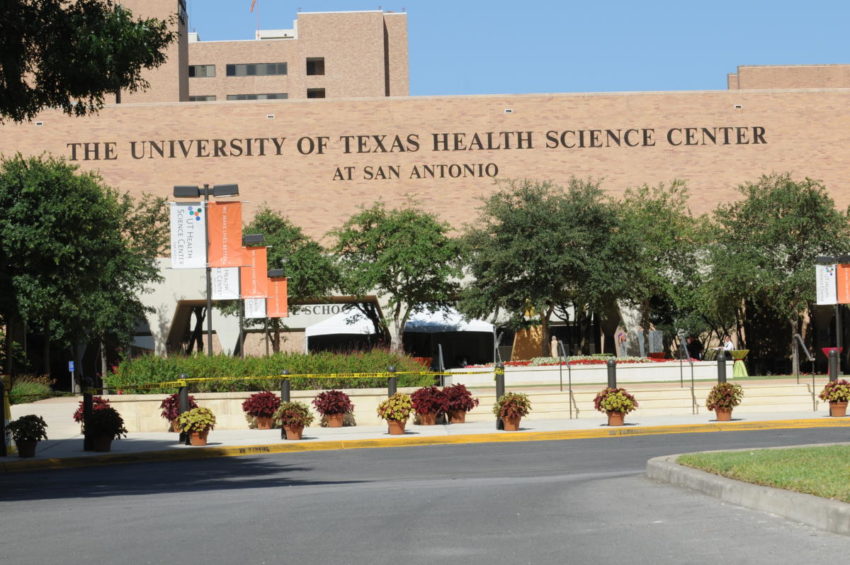
The University of Texas Health Science Center at San Antonio
San Antonio, TXpublicwww.uthscsa.edu/
The University of Texas Health Science Center at San Antonio (UT Health San Antonio) isn't a typical university. It's a sprawling, mission-driven academic health center where the primary currency is clinical skill and biomedical discovery, not undergraduate football or dorm life. This is a place for aspiring health professionals—doctors, dentists, nurses, researchers—who want to train in a major city while serving the diverse health needs of South Texas. The vibe is intensely focused and collaborative, with students diving into hands-on clinical work from day one, supported by a tight-knit campus community that balances rigorous training with wellness initiatives and city life.
More details
- Undergrad enrollment
- 930
- Average Med School MCAT
- 517.6
- Average Total Aid Award
- $10,457
- Medical Lab Sci. Grad Rate (2024)
- 100%
Outcomes & value
Outcomes & value
- Median earnings (10 yr)
- $82,206
- Median debt at graduation
- $15,000
- Reducing loan balance (3 yr)
- 83%
- Pell (lower-income) share
- 33%
- First-gen share (among federal-aid recipients)
- 37%
- Endowment / student
- $220,547
Earnings = median of students working ~10 years after entry; debt = median of graduates. Value divides 10-yr earnings by one year’s net price — read it as earnings per dollar of annual cost, not a full lifetime ROI; it favors lower-cost schools. Source: U.S. Dept. of Education College Scorecard. Figures lag ~2 years and reflect all students, not your intended major.
Top-earning majors
Median earnings by field of study (highest credential), ~2 years after completion.
- Dental Support Services and Allied Professions$60,358
- Registered Nursing, Nursing Administration, Nursing Research and Clinical Nursing$58,929
- Allied Health Diagnostic, Intervention, and Treatment Professions$57,318
- Clinical/Medical Laboratory Science/Research and Allied Professions$56,415
Source: U.S. Dept. of Education College Scorecard (field-of-study earnings). Figures cover graduates who received federal aid and lag ~2 years; not all programs report data.
Compare on earnings: best colleges for Nursing
Campus & location
Campus safety
- On-campus violent crimes (2024)
- 0
- Per 1,000 students
- 0.00
On-campus criminal offenses classed as violent (murder/non-negligent manslaughter, rape, robbery, aggravated assault) for the most recent reported year. Source: U.S. Dept. of Education Campus Safety and Security (Clery Act). Counts reflect what’s reported to the school, and urban campuses often report more partly due to non-student incidents nearby — read alongside campus size and setting, not as a standalone safety verdict.
Climate
- Pleasant days / yr
- 108
- Summer high
- 95°F
- Winter low
- 46°F
- Annual rain
- 37.8"
- Annual snow
- 1"
- Natural-hazard risk
- Relatively High
Pleasant days counts days per year with a mean temperature of 55–75°F, a high at or below 90°F, a low at or above 45°F, and little precipitation — a transparent comfort measure, not a weighting we invented. Computed from Open-Meteo ERA5 daily history (2019–2023). Natural-hazard risk is the county’s composite rating from the FEMA National Risk Index.
Quick answers
- How many undergraduates attend The University of Texas Health Science Center at San Antonio?
- The University of Texas Health Science Center at San Antonio enrolls approximately 930 undergraduate students.
- Where is The University of Texas Health Science Center at San Antonio located?
- The University of Texas Health Science Center at San Antonio is located in San Antonio, TX.
Admissions
Admissions at UT Health San Antonio is a story of two tiers: highly selective, ultra-competitive graduate programs and more accessible undergraduate pathways. The institution's flagship program, the Joe R. & Teresa Lozano Long School of Medicine, is fiercely competitive. For the 2023-2024 cycle, it received over 6,100 applications for approximately 215 spots, resulting in an of roughly 4.5%. Admitted students boast formidable credentials, with an average MCAT score of 517.6, an overall GPA of 3.87, and a science GPA of 3.84. The class is notably diverse, with 28% identifying as underrepresented in medicine (UIM).
For the university overall, acceptance rates are significantly higher, reflecting its broader mission to train a wide range of health professionals. One source reports an overall acceptance rate of 80.2% for the 2024 application year, accepting 1,551 out of 1,935 applicants. Another source lists an 80% acceptance rate with 8,239 acceptances from 8,746 applications, resulting in an enrolled class of 930 students. The Princeton Review reports a 14% acceptance rate for the medical school specifically, with an average undergraduate GPA of 3.58. There is no mention of Early Decision policies or the consideration of demonstrated interest in the provided sources for UT Health San Antonio itself; the provided links point to the University of Texas at San Antonio (UTSA), a separate undergraduate institution, and are not applicable here.
Compare The University of Texas Health Science Center at San Antonio
vs Florida Polytechnic Universityvs Virginia Military Institutevs United States Coast Guard Academyvs New Mexico Institute of Mining and Technology
See colleges similar to The University of Texas Health Science Center at San Antonio →Sources
- Common Data Set (CDS) - San Antonio - UTSA
- Dashboards - Office of Strategic Planning & Business Development
- Common Data Set: Home
- The University of Texas Health Science Center at San Antonio - IPEDS
- [XLS] 2023-2024 - UTSA
- Common Data Set - Data, Analytics & Institutional Research
- The University of Texas at San Antonio Health Science Center - Niche
- The University of Texas Health Science Center at San Antonio
- Admissions | Long School of Medicine - UT Health San Antonio
- University of Texas Health Science Center at San Antonio