Loading…
← All schools
The University of Texas MD Anderson Cancer Center
Houston, TXpublicwww.mdanderson.org/
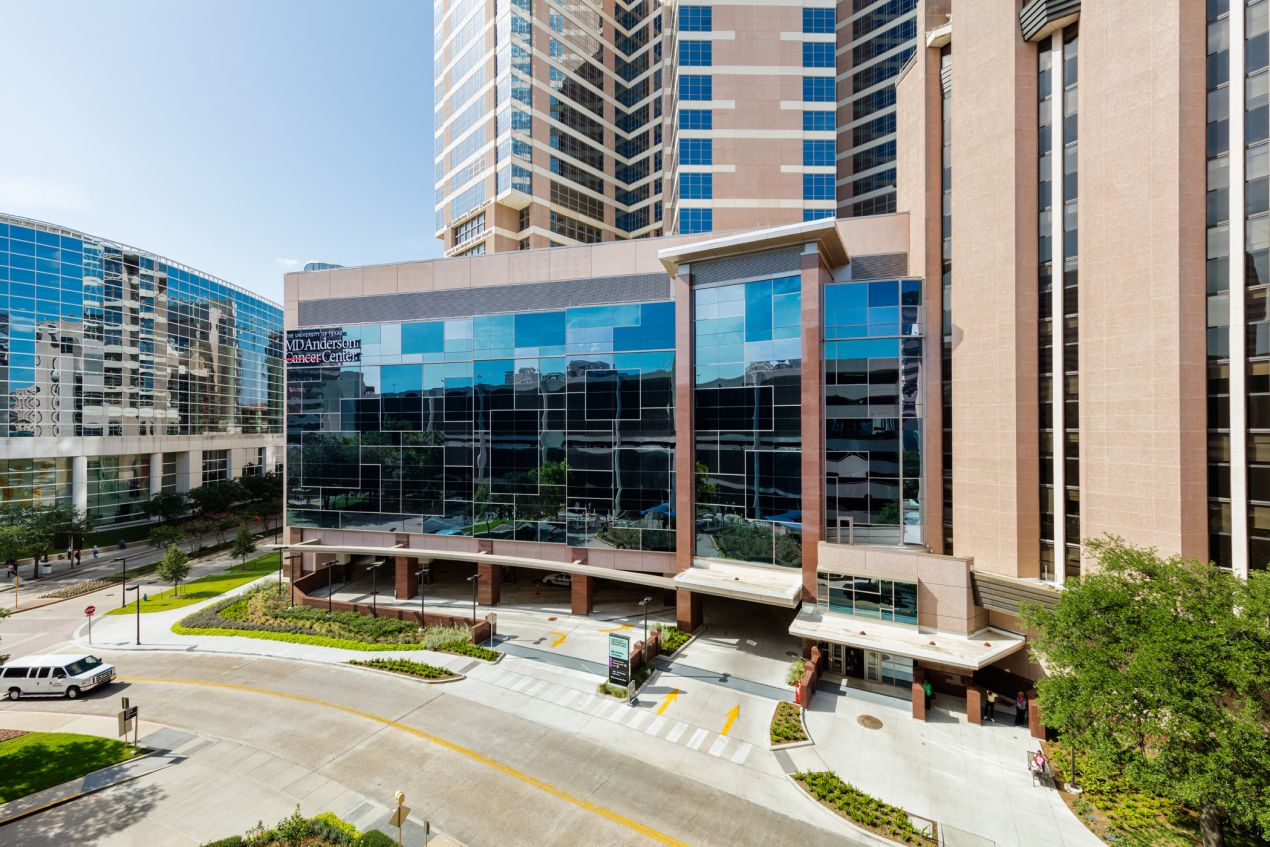
The University of Texas MD Anderson Cancer Center is not a typical undergraduate institution; it is a hyper-specialized, world-renowned cancer hospital and research juggernaut that also houses a small, intensely focused School of Health Professions. Students here train directly alongside the world's leading oncologists and researchers in a high-stakes, clinical environment, trading a conventional college experience for an unparalleled, career-launching immersion in the fight against cancer. It's a place for those who know, with absolute certainty, that their future lies in the precise, technical fields of cancer diagnostics and therapy.
More details
- Undergrad enrollment
- 334
- Popular Majors
- Radiation Therapy, Medical Laboratory Technician, Medical Technician
- Graduation Rate
- 91%
- Student-Faculty Ratio
- 9:1
- Median Earnings (10yr)
- $90,232
- Students Receiving Aid
- 66%
Outcomes & value
Outcomes & value
- Median earnings (10 yr)
- $90,232
- Median debt at graduation
- $12,500
- Reducing loan balance (3 yr)
- 79%
- Pell (lower-income) share
- 34%
- First-gen share (among federal-aid recipients)
- 46%
- Endowment / student
- $25,871
Earnings = median of students working ~10 years after entry; debt = median of graduates. Value divides 10-yr earnings by one year’s net price — read it as earnings per dollar of annual cost, not a full lifetime ROI; it favors lower-cost schools. Source: U.S. Dept. of Education College Scorecard. Figures lag ~2 years and reflect all students, not your intended major.
Campus & location
Campus safety
- On-campus violent crimes (2024)
- 4
- Per 1,000 students
- 11.14
On-campus criminal offenses classed as violent (murder/non-negligent manslaughter, rape, robbery, aggravated assault) for the most recent reported year. Source: U.S. Dept. of Education Campus Safety and Security (Clery Act). Counts reflect what’s reported to the school, and urban campuses often report more partly due to non-student incidents nearby — read alongside campus size and setting, not as a standalone safety verdict.
Climate
- Pleasant days / yr
- 107
- Summer high
- 92°F
- Winter low
- 48°F
- Annual rain
- 55.8"
- Natural-hazard risk
- Very High
Pleasant days counts days per year with a mean temperature of 55–75°F, a high at or below 90°F, a low at or above 45°F, and little precipitation — a transparent comfort measure, not a weighting we invented. Computed from Open-Meteo ERA5 daily history (2019–2023). Natural-hazard risk is the county’s composite rating from the FEMA National Risk Index.
Quick answers
- How many undergraduates attend The University of Texas MD Anderson Cancer Center?
- The University of Texas MD Anderson Cancer Center enrolls approximately 334 undergraduate students.
- Where is The University of Texas MD Anderson Cancer Center located?
- The University of Texas MD Anderson Cancer Center is located in Houston, TX.
Admissions
Admission to MD Anderson's School of Health Professions is a selective, targeted process for students pursuing specific allied health bachelor's degrees. The is highly competitive, with sources reporting figures ranging from approximately 22% to 49.7% for recent application cycles. One source cites an overall admission rate of 22% from a pool of 74 applicants, with a higher rate for men (29%) than women (16%). Another source reports a 21.6% admit rate, while a different dataset notes a 49.7% acceptance rate for 2024 from 378 applicants. The wide variance underscores the specialized, small-cohort nature of the programs. The institution does not have an open admissions policy, and admissions data applies to first-time, degree-seeking undergraduates. Applicants should consult the for standardized statistics on factors considered in admissions, though the specific CDS for MD Anderson is not provided in the sources. There is no mention of an Early Decision program or a policy regarding demonstrated interest in the provided sources.
Compare The University of Texas MD Anderson Cancer Center
vs Florida Polytechnic Universityvs Maine Maritime Academyvs United States Merchant Marine Academyvs United States Coast Guard Academy
See colleges similar to The University of Texas MD Anderson Cancer Center →Sources
- Common Data Set: Home
- Data Management & Sharing Plans | Research Medical Library
- Common Data Set Explorer 2026: Compare 100 Colleges
- The University of Texas MD Anderson Cancer Center - DFR Report PDF
- Where to find Common Data Set (CDS) for college admission statistics
- The Common Data Set: What It Is & How to Use It In College Applications
- The University of Texas MD Anderson Cancer Center Acceptance Rate
- University of Texas - MD Anderson Cancer Center Admissions
- The University of Texas MD Anderson Cancer Center SAT Scores, ACT ...
- University of Texas M.D. Anderson Cancer Center Acceptance Rate