Loading…
← All schools
Thomas More College of Liberal Arts
Merrimack, NHprivate nonprofitwww.thomasmorecollege.edu/
Avg net price
$18,489
Earnings (10 yr)
$53,565
Graduation rate
63%
Admit rate has ranged 90%–94% over the last 2 years. Source: IPEDS via Urban Institute.
Acceptance & SAT from Common Data Set / IPEDS; net price, earnings & graduation from the U.S. Dept. of Education College Scorecard. Figures lag ~1–2 years — verify with the school.
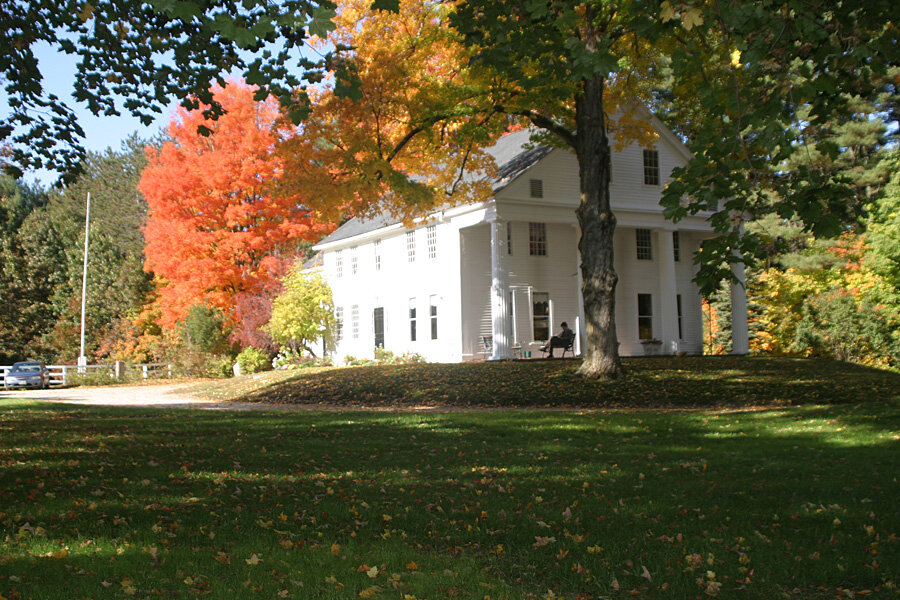
Thomas More College of Liberal Arts is a defiantly singular institution—a tiny, private Catholic college in Merrimack, New Hampshire, that operates less like a modern university and more like an intellectual monastery. Founded in 1978, its entire identity is built around a single, mandatory 'Great Books' curriculum, immersing students in a rigorous, classical education grounded in philosophy, theology, and the humanities. This is a place for students who want a deeply formative, communal life of the mind, where discussions from Plato's *Republic* spill over into shared meals prepared and served by the students themselves.
More details
- Undergrad enrollment
- 97
- In-state tuition
- $30,400
- Out-of-state tuition
- $30,400
- Aid Policy
- Need-based
- Graduation Rate
- 63%
- Median Earnings (10yr)
- $53,565
- First-Year Retention Rate
- 77%
Outcomes & value
Outcomes & value
- Median earnings (10 yr)
- $53,565
- Value (earnings ÷ net price)
- 2.9×
- Median debt at graduation
- $25,000
- Graduation rate
- 63%
- First-year retention
- 88%
- Reducing loan balance (3 yr)
- 61%
- Pell (lower-income) share
- 45%
Earnings = median of students working ~10 years after entry; debt = median of graduates. Value divides 10-yr earnings by one year’s net price — read it as earnings per dollar of annual cost, not a full lifetime ROI; it favors lower-cost schools. Source: U.S. Dept. of Education College Scorecard. Figures lag ~2 years and reflect all students, not your intended major.
Financial health
2.8 / 3.0Meets the federal financial-responsibility standard
U.S. Dept. of Education Financial Responsibility Composite Score (FY2022-23). Scale −1.0 to 3.0; ≥1.5 meets the standard. Reported for private nonprofit & for-profit institutions only — public universities are state-backed and not scored, so this is a stability signal, not a ranking.
Campus & location
Campus safety
- On-campus violent crimes (2024)
- 0
On-campus criminal offenses classed as violent (murder/non-negligent manslaughter, rape, robbery, aggravated assault) for the most recent reported year. Source: U.S. Dept. of Education Campus Safety and Security (Clery Act). Counts reflect what’s reported to the school, and urban campuses often report more partly due to non-student incidents nearby — read alongside campus size and setting, not as a standalone safety verdict.
Climate
- Pleasant days / yr
- 93
- Summer high
- 82°F
- Winter low
- 23°F
- Annual rain
- 39.6"
- Annual snow
- 44.1"
- Natural-hazard risk
- Relatively Moderate
Pleasant days counts days per year with a mean temperature of 55–75°F, a high at or below 90°F, a low at or above 45°F, and little precipitation — a transparent comfort measure, not a weighting we invented. Computed from Open-Meteo ERA5 daily history (2019–2023). Natural-hazard risk is the county’s composite rating from the FEMA National Risk Index.
Deep dive — research, future-scholar output & economic mobility
Research output
- Institutional h-index
- 2
- Scholarly works
- 12
Institutional research volume and impact from OpenAlex. The h-index reflects large research universities and will be low for teaching-focused liberal-arts colleges — not a measure of undergraduate quality.
Quick answers
- How much does Thomas More College of Liberal Arts cost?
- At Thomas More College of Liberal Arts, the average net price (after aid) is about $18,489 per year. Actual cost varies with financial aid and residency.
- How many undergraduates attend Thomas More College of Liberal Arts?
- Thomas More College of Liberal Arts enrolls approximately 97 undergraduate students.
- Where is Thomas More College of Liberal Arts located?
- Thomas More College of Liberal Arts is located in Merrimack, NH.
Admissions
Admissions at Thomas More College is described as 'competitive,' though its varies significantly across reporting sources, painting a picture of a small, selective liberal arts college. Multiple sources report an acceptance rate of 78%, with one noting that 3,262 students were accepted from 4,165 applicants. Other sources cite rates as high as 90% or even 100%, and as low as 89.6% (43 admissions from 48 applications). This wide variance likely stems from the college's small applicant pool and year-to-year fluctuations. The admissions policy is . For those who submit scores, the middle 50% SAT range for admitted students is reported as 1120-1300, with a critical reading range of 633-700 and a math range of 535-610. The middle 50% ACT composite range is 21-24. The rate—the percentage of admitted students who enroll—is notably low; one source indicates that only 97 students enrolled from the 3,262 accepted, a yield of roughly 3%. The college states that all financial assistance is determined by calculating a student's demonstrated financial need.
Compare Thomas More College of Liberal Arts
See colleges similar to Thomas More College of Liberal Arts →Sources
- Thomas More College of Liberal Arts Overview
- Thomas More College of Liberal Arts - Profile, Rankings ...
- Enrollment Data & Student Analytics 2023
- Frequently Asked Questions | Thomas More College
- MCLA-Common-Data-Set-2023-2024. ...
- Thomas More College of Liberal Arts
- Thomas More College of Liberal Arts SAT Scores and GPA
- Thomas More College of Liberal Arts
- Thomas More College of Liberal Arts