Admit rate has ranged 29%–46% over the last 5 years — notably volatile. Source: IPEDS via Urban Institute.
Acceptance & SAT from Common Data Set / IPEDS; net price, earnings & graduation from the U.S. Dept. of Education College Scorecard. Figures lag ~1–2 years — verify with the school.
Thomas University is a small, career-focused institution in Thomasville, Georgia, that operates with a distinctly practical, access-oriented mission. It's a place where a 990–1220 SAT score is the norm, nursing and business dominate the academic landscape, and the 28% graduation rate signals a student body often balancing education with work and life obligations. The vibe is less about ivy-covered quads and more about providing a direct, supportive pathway to a professional credential for a regional population.
Admission requirements
Test-optional — scores considered if submitted
Required
High school transcript
Grade point average
TOEFL (non-native English)
Considered (not required)
Test scores (SAT/ACT)
Source: IPEDS Admissions survey (2022) via Urban Institute. Covers formal factors only — it does not reflect essays, extracurriculars, or other holistic criteria.
More details
Undergrad enrollment
998
In-state tuition
$11,640
Out-of-state tuition
$11,640
Graduation Rate
28%
Most Popular Major
Registered Nursing (43% of grads)
Median Earnings (10yr)
$49,716
Outcomes & value
Outcomes & value
Median earnings (10 yr)
$49,716
Value (earnings ÷ net price)
2.7×
Median debt at graduation
$21,198
Graduation rate
28%
First-year retention
49%
Reducing loan balance (3 yr)
42%
Pell (lower-income) share
55%
First-gen share (among federal-aid recipients)
46%
Financial health
2.4 / 3.0Meets the federal financial-responsibility standard
U.S. Dept. of Education Financial Responsibility Composite Score (FY2022-23). Scale −1.0 to 3.0; ≥1.5 meets the standard. Reported for private nonprofit & for-profit institutions only — public universities are state-backed and not scored, so this is a stability signal, not a ranking.
Top-earning majors
Median earnings by field of study (highest credential), ~2 years after completion.
Clinical/Medical Laboratory Science/Research and Allied Professions$64,493
Registered Nursing, Nursing Administration, Nursing Research and Clinical Nursing$60,839
Criminal Justice and Corrections$38,289
Teacher Education and Professional Development, Specific Levels and Methods$33,637
Social Work$30,228
Multi-/Interdisciplinary Studies, General
Campus & location
Campus safety
On-campus violent crimes (2024)
0
Per 1,000 students
0.00
On-campus criminal offenses classed as violent (murder/non-negligent manslaughter, rape, robbery, aggravated assault) for the most recent reported year. Source: U.S. Dept. of Education Campus Safety and Security (Clery Act). Counts reflect what’s reported to the school, and urban campuses often report more partly due to non-student incidents nearby — read alongside campus size and setting, not as a standalone safety verdict.
Climate
Pleasant days / yr
121
Summer high
91°F
Winter low
47°F
Annual rain
49.5"
Natural-hazard risk
Relatively Low
Pleasant days counts days per year with a mean temperature of 55–75°F, a high at or below 90°F, a low at or above 45°F, and little precipitation — a transparent comfort measure, not a weighting we invented. Computed from Open-Meteo ERA5 daily history (2019–2023). Natural-hazard risk is the county’s composite rating from the FEMA National Risk Index.
Deep dive — research, future-scholar output & economic mobility▾
Research output
Institutional h-index
110
Scholarly works
3,202
Institutional research volume and impact from OpenAlex. The h-index reflects large research universities and will be low for teaching-focused liberal-arts colleges — not a measure of undergraduate quality.
Quick answers
What is the acceptance rate at Thomas University?
Thomas University's acceptance rate is approximately 38% (Thomasville, GA), based on the most recent figures we compiled from public and primary sources.
What SAT score do you need for Thomas University?
Admitted students at Thomas University typically score 990–1220 on the SAT (the middle-50% range). Scores outside this band are still admitted, especially with strong applications.
How much does Thomas University cost?
At Thomas University, the average net price (after aid) is about $18,499 per year. Actual cost varies with financial aid and residency.
How many undergraduates attend Thomas University?
Thomas University enrolls approximately 998 undergraduate students.
Where is Thomas University located?
Thomas University is located in Thomasville, GA.
Admissions
Thomas University's admissions process is best described as accessible and moderately selective. The university reports an of 38%, meaning a significant majority of applicants are offered admission. The middle 50% SAT range for admitted students is 990–1220, indicating a student body with a broad range of academic preparation. The admissions office does not appear to offer a binding Early Decision program, and none of the provided sources mention such a policy for this specific institution. Similarly, while the is a standard resource for understanding admissions factors like demonstrated interest, the provided sources do not include Thomas University's specific CDS to confirm whether they consider it. The process seems geared toward evaluating a student's readiness for its career-focused programs rather than engaging in hyper-selective screening.
The academic identity of Thomas University is unequivocally pragmatic. It offers associate, bachelor's, and master's degrees "in a wide variety of majors in some of today's hottest career fields." The curriculum is built not for abstract exploration but for direct professional application. While a full list of majors isn't detailed in the snippets, the most popular programs clearly point to its strengths: Registered Nursing is the undisputed leader, accounting for 43% of 2024 graduates. Business Administration and related fields form the other major pillar, collectively representing a significant portion of the student body. This focus is reinforced by external recognition; the university recently earned a 4-star rating in a national ranking, cited for "Academic Excellence Across Disciplines." The academic experience is likely characterized by small classes, hands-on learning, and faculty focused on translating theory into practice for immediate career impact.
Earnings = median of students working ~10 years after entry; debt = median of graduates. Value divides 10-yr earnings by one year’s net price — read it as earnings per dollar of annual cost, not a full lifetime ROI; it favors lower-cost schools. Source: U.S. Dept. of Education College Scorecard. Figures lag ~2 years and reflect all students, not your intended major.
$28,598
Biology, General$24,421
Source: U.S. Dept. of Education College Scorecard (field-of-study earnings). Figures cover graduates who received federal aid and lag ~2 years; not all programs report data.
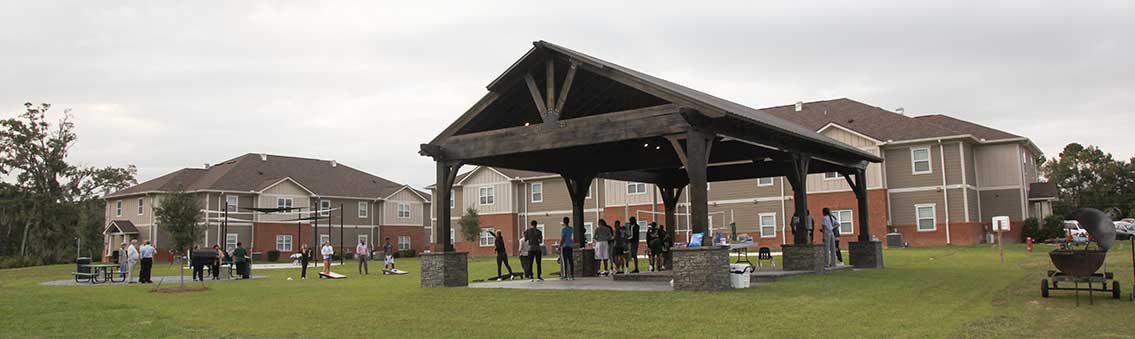
Student life at Thomas University is centrally managed by an Office of Student Life committed to "student engagement through services, programs, and experiences to enhance student academic and personal success." The campus offers a variety of clubs, organizations, and activities, though the specifics are not enumerated in the provided sources. A dedicated Student Activities Office holds events on campus for students to enjoy. The university also fields varsity and junior varsity athletic teams, providing a competitive outlet. A notable development is the planned opening of a new "Woodlands Campus" in Fall 2026, suggesting growth and investment in the physical student experience. The social media presence of the Student Life office on platforms like Facebook and Instagram indicates an active effort to build community and communicate with students. The overall atmosphere appears to be one of a close-knit, supportive environment where extracurriculars complement the strong career focus of the academics.
Outcomes for Thomas University graduates tell a story of economic mobility for a specific student population. The six-year graduation rate is reported at 28%, a figure that places the institution in the bottom tier nationally and reflects the challenges faced by its often non-traditional, working student body. However, the payoff for those who persist is tangible. According to the provided data, median earnings ten years after entry are $49,716, which is on par with the average college graduate's salary. It's crucial to note that this earnings figure represents a significant lift from the reported average early-career earnings of $26,341 for some graduates, highlighting the long-term financial benefit of the degree. The most reliable data points suggest that while graduation is a hurdle for many, those who cross the finish line from its flagship nursing and business programs achieve solid, middle-class earning potential.
Affordability is a central part of Thomas University's value proposition. The average after grants and scholarships are applied is $18,499, which is below the national midpoint for four-year colleges. The university encourages prospective students to use its online Net Price Calculator to get a preliminary, personalized estimate of costs and aid eligibility. The net price is officially defined as the institution's minus any grants and scholarships for which the student qualifies. None of the provided sources indicate that Thomas University has a "no-loan" policy or commits to meeting 100% of demonstrated financial need without loans, which are policies typically associated with wealthier, more selective institutions. Instead, its aid approach appears to be a mix of federal, state, and institutional grants aimed at making its career-focused programs accessible at a competitive net cost.
Thomas University stands out for its unwavering, no-frills commitment to serving a specific educational niche. It is not a liberal arts college, nor does it pretend to be. Its distinction lies in its laser focus on high-demand, middle-skill professions—most notably nursing—and its success in placing graduates from those programs into the workforce with competitive salaries. The 4-star rating it recently earned speaks to recognized quality within its mission. The upcoming expansion to a new Woodlands Campus in 2026 signals ambition and growth. It serves students who might be overlooked by more traditional residential colleges: those with modest test scores, those who need to work, and those seeking a direct, efficient route to a career. In a higher education landscape often obsessed with prestige and selectivity, Thomas University's value is its practicality, its accessibility, and its clear-eyed focus on delivering a return on investment for the students it admits.
Thomas University seal · sourceThomas College: 4-Year Private College: Central Maine · sourceCampus Life - Thomas University · sourceCorporate Partners - Thomas University · source