Admit rate has ranged 62%–83% over the last 5 years — notably volatile. Source: IPEDS via Urban Institute.
Acceptance & SAT from Common Data Set / IPEDS; net price, earnings & graduation from the U.S. Dept. of Education College Scorecard. Figures lag ~1–2 years — verify with the school.
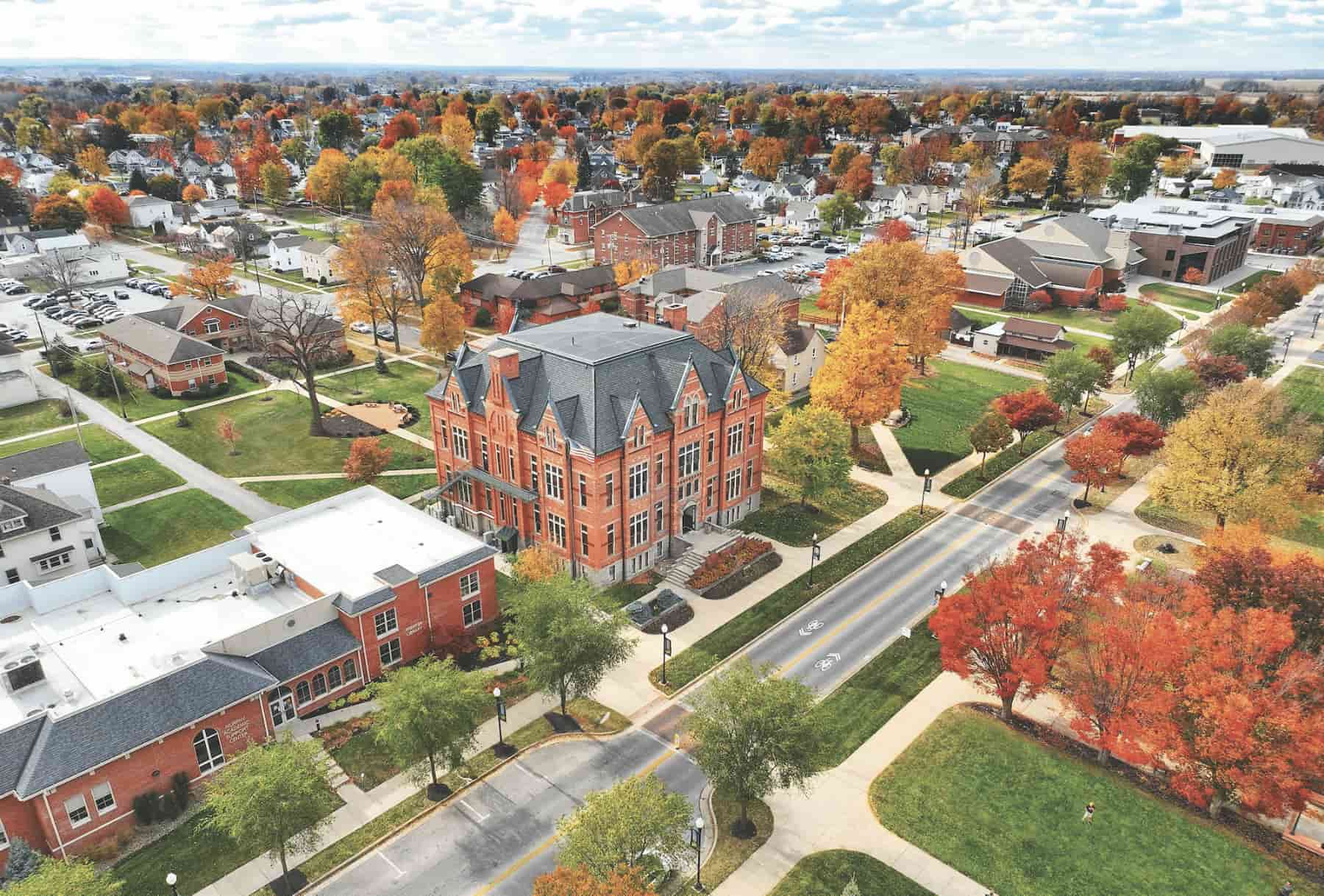
Tiffin University is a small, private university in rural Ohio that punches above its weight with career-focused programs and a tight-knit campus vibe. With an 80% acceptance rate and median ACT scores in the 15-22 range, it's accessible to students who might not thrive at more selective schools—but its 45% graduation rate suggests academic support is still a work in progress. What sets TU apart are its niche strengths in criminal justice, business, and new programs like global sports culture, all delivered with a personal touch (20:1 student-faculty ratio) and a strong emphasis on real-world outcomes.
Admission requirements
Test-optional — scores considered if submitted
Required
High school transcript
Grade point average
Considered (not required)
Class rank
Letters of recommendation
Test scores (SAT/ACT)
College-prep program
TOEFL (non-native English)
Source: IPEDS Admissions survey (2022) via Urban Institute. Covers formal factors only — it does not reflect essays, extracurriculars, or other holistic criteria.
More details
Undergrad enrollment
2,051
In-state tuition
$34,790
Out-of-state tuition
$34,790
Location
Tiffin, OH
Notable Programs
Criminal Justice, Business, Computer Science, Global Sports Culture
U.S. News Ranking
#138 Regional Universities Midwest
Student-Faculty Ratio
20:1
6-Year Graduation Rate
49%
Outcomes & value
Outcomes & value
Median earnings (10 yr)
$35,942
Value (earnings ÷ net price)
1.4×
Median debt at graduation
$27,000
Graduation rate
40%
First-year retention
72%
Reducing loan balance (3 yr)
23%
Pell (lower-income) share
31%
First-gen share (among federal-aid recipients)
38%
Financial health
2.8 / 3.0Meets the federal financial-responsibility standard
U.S. Dept. of Education Financial Responsibility Composite Score (FY2022-23). Scale −1.0 to 3.0; ≥1.5 meets the standard. Reported for private nonprofit & for-profit institutions only — public universities are state-backed and not scored, so this is a stability signal, not a ranking.
Top-earning majors
Median earnings by field of study (highest credential), ~2 years after completion.
Business Administration, Management and Operations$39,369
Homeland Security, Law Enforcement, Firefighting and Related Protective Services, Other$38,871
Criminal Justice and Corrections$30,988
Source: U.S. Dept. of Education College Scorecard (field-of-study earnings). Figures cover graduates who received federal aid and lag ~2 years; not all programs report data.
On-campus criminal offenses classed as violent (murder/non-negligent manslaughter, rape, robbery, aggravated assault) for the most recent reported year. Source: U.S. Dept. of Education Campus Safety and Security (Clery Act). Counts reflect what’s reported to the school, and urban campuses often report more partly due to non-student incidents nearby — read alongside campus size and setting, not as a standalone safety verdict.
Climate
Pleasant days / yr
90
Summer high
82°F
Winter low
25°F
Annual rain
39.2"
Annual snow
23.4"
Natural-hazard risk
Relatively Low
Pleasant days counts days per year with a mean temperature of 55–75°F, a high at or below 90°F, a low at or above 45°F, and little precipitation — a transparent comfort measure, not a weighting we invented. Computed from Open-Meteo ERA5 daily history (2019–2023). Natural-hazard risk is the county’s composite rating from the FEMA National Risk Index.
Deep dive — research, future-scholar output & economic mobility▾
Research output
Institutional h-index
25
Scholarly works
254
Institutional research volume and impact from OpenAlex. The h-index reflects large research universities and will be low for teaching-focused liberal-arts colleges — not a measure of undergraduate quality.
Economic mobility
Mobility rate
0.5%
Bottom → top quintile
7%
From bottom quintile
8%
Mobility rate = the share of students who both start in the bottom household-income quintile and reach the top quintile; bottom → top is that chance conditional on starting at the bottom. Source: Opportunity Insights Mobility Report Cards (Chetty, Friedman, Saez, Turner & Yagan). Reflects 1980–82 birth cohorts, so it’s directional, not current.
Quick answers
What is the acceptance rate at Tiffin University?
Tiffin University's acceptance rate is approximately 80% (Tiffin, OH), based on the most recent figures we compiled from public and primary sources.
What SAT score do you need for Tiffin University?
Admitted students at Tiffin University typically score 910–1110 on the SAT (the middle-50% range). Scores outside this band are still admitted, especially with strong applications.
How much does Tiffin University cost?
At Tiffin University, the average net price (after aid) is about $26,500 per year. Actual cost varies with financial aid and residency.
How many undergraduates attend Tiffin University?
Tiffin University enrolls approximately 2,051 undergraduate students.
Where is Tiffin University located?
Tiffin University is located in Tiffin, OH.
Admissions
Tiffin University is decidedly not a hyper-selective institution—and that's by design. With a 79-80% acceptance rate (4,756 admits from 5,940 applicants in recent cycles), TU positions itself as an accessible option for students with modest academic profiles. The middle 50% of admitted students score between 15-22 on the ACT, while SAT scores typically fall in the 910-1120 range. Notably, the only hard requirement is a minimum 2.0 high school GPA; test scores are used for placement but aren't gatekeepers for admission.
79.77% acceptance rate (2022-23)
Median ACT range: 15-22
Median SAT range: 910-1120
Minimum GPA requirement: 2.0
The admissions process emphasizes accessibility over exclusivity, aligning with TU's mission to serve students who benefit from smaller class sizes and hands-on faculty attention.
Earnings = median of students working ~10 years after entry; debt = median of graduates. Value divides 10-yr earnings by one year’s net price — read it as earnings per dollar of annual cost, not a full lifetime ROI; it favors lower-cost schools. Source: U.S. Dept. of Education College Scorecard. Figures lag ~2 years and reflect all students, not your intended major.
Tiffin leans hard into career-ready programs with a practical bent, particularly in criminal justice, business, and computer science. The university offers 67 majors across undergraduate, graduate, and doctoral levels, including newer additions like a BA in Global Sports and Culture and a BS in Computer Science. With a 20:1 student-faculty ratio, classes skew small and interactive—a stark contrast to lecture-hall anonymity at larger schools.
Ranked #138 in Regional Universities Midwest (U.S. News)
45% graduation rate (6-year rate: 49%)
20:1 student-faculty ratio
Signature programs: Criminal Justice, Business Admin, Psychology, Computer Science
While not a research powerhouse, TU emphasizes applied learning through internships and faculty with industry experience. The academic vibe is supportive rather than cutthroat, catering to students who thrive with close mentorship.
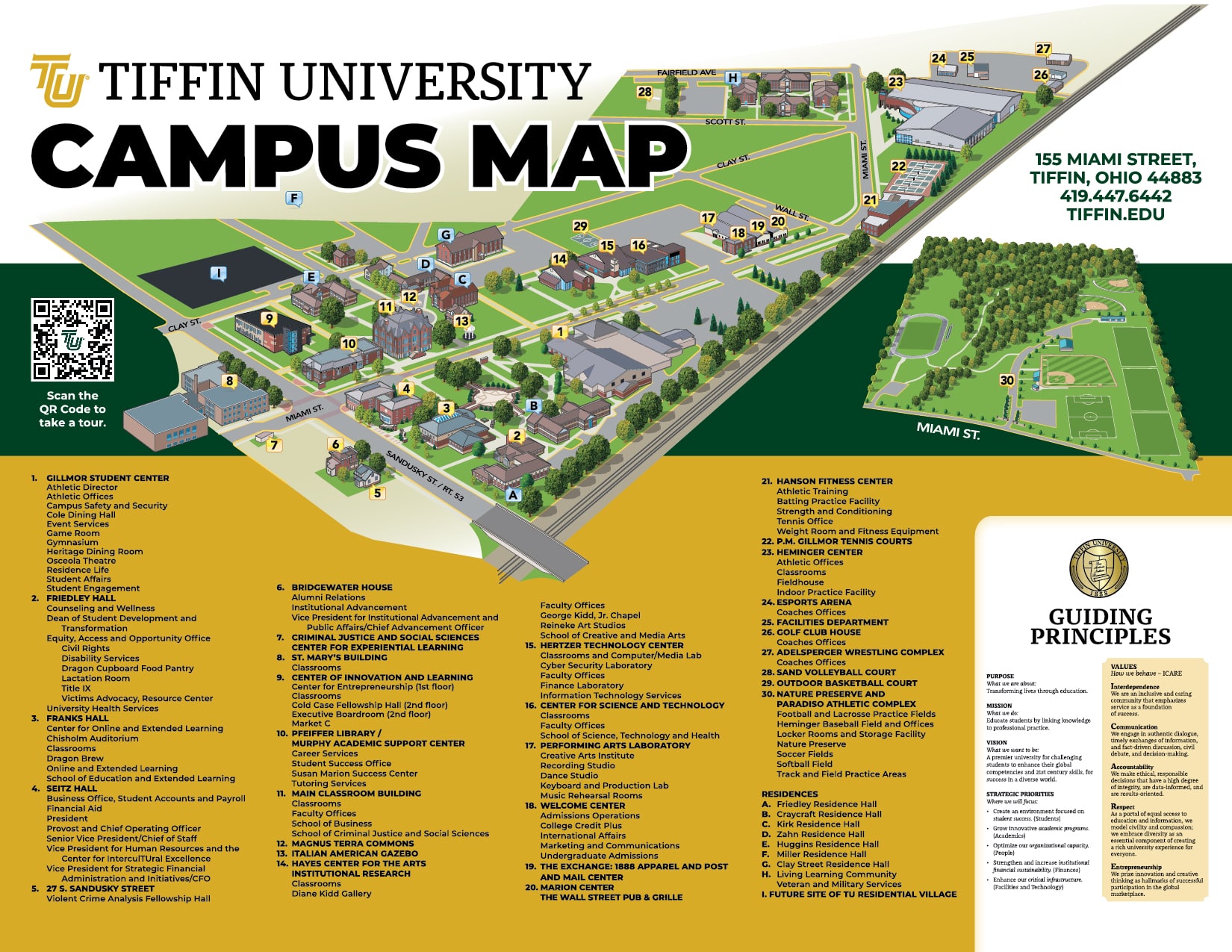
Life at TU revolves around close-knit community and small-town charm. Located in Tiffin, Ohio (population ~17,000), the campus offers a "sweet spot" between rural quiet and just-enough activity—think local coffee shops, indie theaters, and hiking trails along the Sandusky River. A whopping 93% of students report feeling "extremely safe" on campus, per Niche surveys.
93% feel "extremely safe" on campus
Strong emphasis on intercultural engagement (Center for InterculTUral Excellence)
Residence life: Traditional dorms and apartment-style housing
Student orgs: 50+ clubs, from esports to DECA
The vibe is collaborative rather than competitive, with heavy investment in student support services like the Office of Student Development. Weekends mix campus events (Dragon Days, guest speakers) with low-key exploration of Tiffin's mom-and-pop diners and riverside parks.
TU talks a big game about career ROI, though outcomes data is mixed. The university touts structured career guidance linked to higher earnings, with graduate degree holders reportedly earning $86,372 median annual income. However, graduation rates lag behind national averages:
41% 4-year graduation rate (51% at 6 years)
72% first-year retention rate
Median 10-year earnings: $35,942 (per Varsity Tutors)
The school emphasizes employer partnerships and hands-on experiences (internships, practicums) to boost job placement. While not every graduate lands a six-figure salary, TU's niche programs—especially in law enforcement and business—deliver solid ROI for regional employers.
TU's sticker price is moderate for a private university, but institutional aid brings net costs down significantly. The average net price after aid is $25,636/year, with scholarships up to $17,000 annually for on-campus students.
Average net price: $25,636/year
Merit scholarships: Up to $17,000/year
Financial aid calculator: Tool available to estimate packages
While not the cheapest option in Ohio, TU's aid packages—combining merit awards, need-based grants, and talent scholarships—make it comparatively affordable for students who qualify for institutional support.
Tiffin University doesn't try to be everything to everyone—and that's its strength. While it won't wow Ivy League aspirants, TU delivers three things exceptionally well:
1. Accessibility: With an 80% and minimal barriers to entry, it serves students who need a second-chance institution. 2. Career scaffolding: From criminal justice pipelines to business internships, programs are built around employability. 3. Community feel: The 20:1 student-faculty ratio and rural setting foster close relationships that persist long after graduation.
For students who want hands-on learning without cutthroat competition, TU is a compelling—if understated—choice.
Tiffin University logo · sourceHome | Tiffin University · sourceCampus Map & Directions | Tiffin University · sourceCenter for InterculTUral Excellence | Tiffin University · source