Loading…
← All schools
Tohono O'odham Community College
Sells, AZpublictocc.edu
Avg net price
$4,233
Earnings (10 yr)
$39,229
Acceptance & SAT from Common Data Set / IPEDS; net price, earnings & graduation from the U.S. Dept. of Education College Scorecard. Figures lag ~1–2 years — verify with the school.
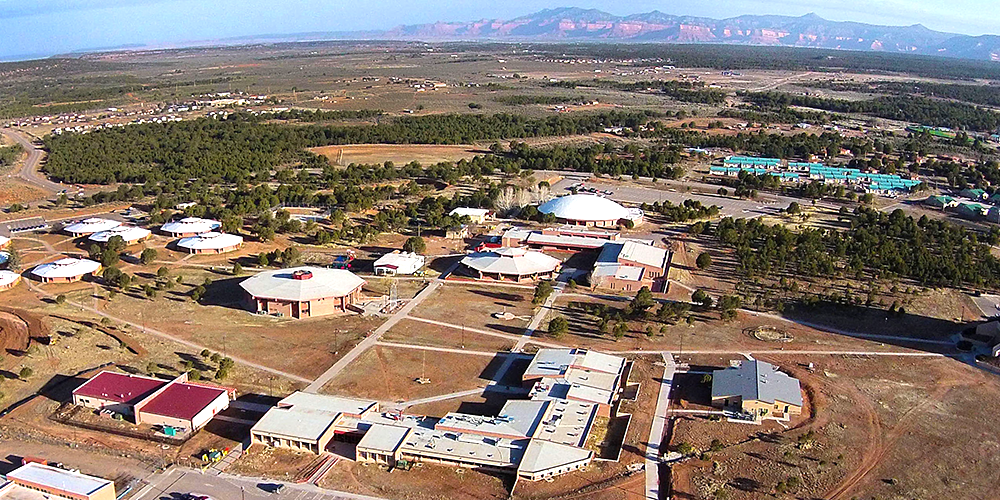
Tohono O'odham Community College is not just a community college; it is the intellectual and cultural heart of the Tohono O'odham Nation, operating with a mission of access and sovereignty. With a 100% acceptance rate and a student body that is overwhelmingly female and Indigenous, TOCC offers a singular educational environment where associate degrees and certificates in fields like agriculture, business, and carpentry are taught through a lens of cultural preservation. Its purpose is defined not by selectivity, but by its commitment to serving its community on its own terms.
More details
- Undergrad enrollment
- 998
- In-state tuition
- $932
- Out-of-state tuition
- $932
- Open Door Policy
- Yes
- Average Student Age
- 33 Years
- Student Body: Female
- 77%
- Median Earnings (10yr)
- $39,229
- Student-to-Faculty Ratio
- 17:1
- Student Body: Native American
- 96%
Outcomes & value
Outcomes & value
- Median earnings (10 yr)
- $39,229
- Value (earnings ÷ net price)
- 9.3×
- Pell (lower-income) share
- 27%
- First-gen share (among federal-aid recipients)
- 58%
Earnings = median of students working ~10 years after entry; debt = median of graduates. Value divides 10-yr earnings by one year’s net price — read it as earnings per dollar of annual cost, not a full lifetime ROI; it favors lower-cost schools. Source: U.S. Dept. of Education College Scorecard. Figures lag ~2 years and reflect all students, not your intended major.
Campus & location
Campus safety
- On-campus violent crimes (2024)
- 0
On-campus criminal offenses classed as violent (murder/non-negligent manslaughter, rape, robbery, aggravated assault) for the most recent reported year. Source: U.S. Dept. of Education Campus Safety and Security (Clery Act). Counts reflect what’s reported to the school, and urban campuses often report more partly due to non-student incidents nearby — read alongside campus size and setting, not as a standalone safety verdict.
Climate
- Pleasant days / yr
- 127
- Summer high
- 96°F
- Winter low
- 44°F
- Annual rain
- 11.4"
- Annual snow
- 1.8"
- Natural-hazard risk
- Relatively High
Pleasant days counts days per year with a mean temperature of 55–75°F, a high at or below 90°F, a low at or above 45°F, and little precipitation — a transparent comfort measure, not a weighting we invented. Computed from Open-Meteo ERA5 daily history (2019–2023). Natural-hazard risk is the county’s composite rating from the FEMA National Risk Index.
Deep dive — research, future-scholar output & economic mobility
Research output
- Institutional h-index
- 31
- Scholarly works
- 45
Institutional research volume and impact from OpenAlex. The h-index reflects large research universities and will be low for teaching-focused liberal-arts colleges — not a measure of undergraduate quality.
Quick answers
- How much does Tohono O'odham Community College cost?
- At Tohono O'odham Community College, the average net price (after aid) is about $4,233 per year. Actual cost varies with financial aid and residency.
- How many undergraduates attend Tohono O'odham Community College?
- Tohono O'odham Community College enrolls approximately 998 undergraduate students.
- Where is Tohono O'odham Community College located?
- Tohono O'odham Community College is located in Sells, AZ.
Admissions
Tohono O'odham Community College operates on a fundamentally open-access model. The institution explicitly states it admits students with an 'open door policy,' meaning it accepts everyone who applies. Multiple independent sources corroborate this, reporting an of 100%. This policy reflects the college's core mission as a Tribal College to serve the educational needs of its community without barriers. There is no available data on SAT or ACT score ranges for enrolled students, as standardized testing does not appear to be a gatekeeping factor in this admissions process. The focus is on providing an entry point, not on crafting a competitive applicant pool.
Academics
The academic structure at TOCC is pragmatic and community-centered, designed to provide clear pathways to either further education or immediate employment. The college offers associate degrees and numerous certificates. Its programs fall into three key categories: transfer programs for students aiming for a four-year university, degrees and certificates for direct employment, and apprenticeships.
Compare Tohono O'odham Community College
vs United States Coast Guard Academyvs University of Science and Arts of Oklahomavs United States Air Force Academyvs University of Virginia's College at Wise
See colleges similar to Tohono O'odham Community College →Sources
- Tohono O'odham Community College |
- Common Data Set: Home
- Common Data Set
- Tohono O'odham Community College
- Tohono O'odham Community College - DFR Report PDF
- Fall 2025 semester registration is now open! Current ...
- Tohono O'odham Community College - BigFuture
- Tohono O'odham Community College
- Institutional Research | Tohono O'odham Community College
- Tohono O'odham Community College Statistics
- Tohono O'odham Community College Admissions