Loading…
← All schools
Tonsorial Arts Barber College
Texarkana, TXprivate forprofittonsorialartsbarbercollege.com
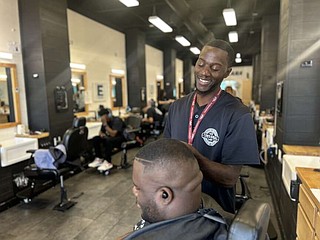
Tonsorial Arts Barber College is a no-frills, intensely practical trade school in Texarkana, Texas, where the mission is singular: turn out licensed barbers, fast. With an open-door admissions policy and a curriculum laser-focused on hands-on skills, it's a place for career-changers and aspiring entrepreneurs who measure success not in diplomas but in the ability to open their own shop. The vibe is less 'campus life' and more a working apprenticeship, where the graduation rate tells a story of grit and the financial aid is designed to keep debt manageable for those serious about the craft.
More details
- Undergrad enrollment
- 170
- Location
- Texarkana, TX
- Popular Majors
- Barbering/Barber, Cosmetology/Cosmetologist
- Institution Type
- Private, For-Profit, Less-than-2-year
- Average Grant Aid
- $5,706
- First-Year Retention Rate
- 57.1%
- Graduation Rate (150% time)
- 58.82%
- Students Receiving Grant Aid
- 92%
Outcomes & value
Outcomes & value
- Median debt at graduation
- $10,667
- Pell (lower-income) share
- 89%
Earnings = median of students working ~10 years after entry; debt = median of graduates. Value divides 10-yr earnings by one year’s net price — read it as earnings per dollar of annual cost, not a full lifetime ROI; it favors lower-cost schools. Source: U.S. Dept. of Education College Scorecard. Figures lag ~2 years and reflect all students, not your intended major.
Campus & location
Campus safety
- On-campus violent crimes (2024)
- 0
On-campus criminal offenses classed as violent (murder/non-negligent manslaughter, rape, robbery, aggravated assault) for the most recent reported year. Source: U.S. Dept. of Education Campus Safety and Security (Clery Act). Counts reflect what’s reported to the school, and urban campuses often report more partly due to non-student incidents nearby — read alongside campus size and setting, not as a standalone safety verdict.
Climate
- Pleasant days / yr
- 98
- Summer high
- 93°F
- Winter low
- 40°F
- Annual rain
- 39.7"
- Annual snow
- 2.4"
- Natural-hazard risk
- Relatively Low
Pleasant days counts days per year with a mean temperature of 55–75°F, a high at or below 90°F, a low at or above 45°F, and little precipitation — a transparent comfort measure, not a weighting we invented. Computed from Open-Meteo ERA5 daily history (2019–2023). Natural-hazard risk is the county’s composite rating from the FEMA National Risk Index.
Quick answers
- How much does Tonsorial Arts Barber College cost?
- At Tonsorial Arts Barber College, the average net price (after aid) is about $20,484 per year. Actual cost varies with financial aid and residency.
- How many undergraduates attend Tonsorial Arts Barber College?
- Tonsorial Arts Barber College enrolls approximately 170 undergraduate students.
- Where is Tonsorial Arts Barber College located?
- Tonsorial Arts Barber College is located in Texarkana, TX.
Admissions
This is not a selective institution in any traditional sense. Tonsorial Arts Barber College operates with an open admission policy, meaning all applicants who apply are accepted. There is no middle 50% SAT or ACT range reported, and the process is not geared toward evaluating a holistic academic profile. The school's own materials suggest the admissions team encourages students to highlight strengths through transcripts, essays, and recommendations, but the fundamental gate is a desire to enter the trade, not a set of test scores or a high school GPA. Notably, one external source claims a 0% and a $100 application fee, but this directly contradicts the authoritative College Scorecard data which confirms the open admission policy. For prospective barbers, the barrier to entry is intention, not competition.
Academics
The academic model here is pure vocational training. The school offers only a handful of tightly focused programs, with sources indicating majors in Barbering/Barber and Cosmetology/Cosmetologist. The experience is described as "intensely practical and career-focused," with the barbering program standing as the school's entire mission. This is not a liberal arts college; there are no general education requirements in the traditional sense. The curriculum is designed to provide the technical skills and state-mandated training hours necessary to pass licensing exams and begin working immediately. Instruction happens in a hands-on, clinic-style environment, prioritizing the mastery of haircuts, shaves, and salon management over theoretical study.
Compare Tonsorial Arts Barber College
See colleges similar to Tonsorial Arts Barber College →Sources
- Tonsorial Arts Barber College
- Common Data Set 2025-2026 | Offices - Vassar College
- Common Data Set: Home
- Tonsorial Arts Barber College College Majors Data
- Tonsorial Arts Barber College - My Future
- Tonsorial Arts Barber College - Tuition, Fees, Aid and Costs
- Tonsorial Arts Barber College Statistics
- Tonsorial Arts Barber College | Class of 2030 Community
- Top of the Line Barber School
- Tonsorial Arts Barber College - EDsmart