Loading…
← All schools
Tricoci University of Beauty Culture-Peoria
Peoria, ILprivate forprofitwww.tricociuniversity.edu/
Avg net price
$23,433
Earnings (10 yr)
$26,236
Acceptance & SAT from Common Data Set / IPEDS; net price, earnings & graduation from the U.S. Dept. of Education College Scorecard. Figures lag ~1–2 years — verify with the school.
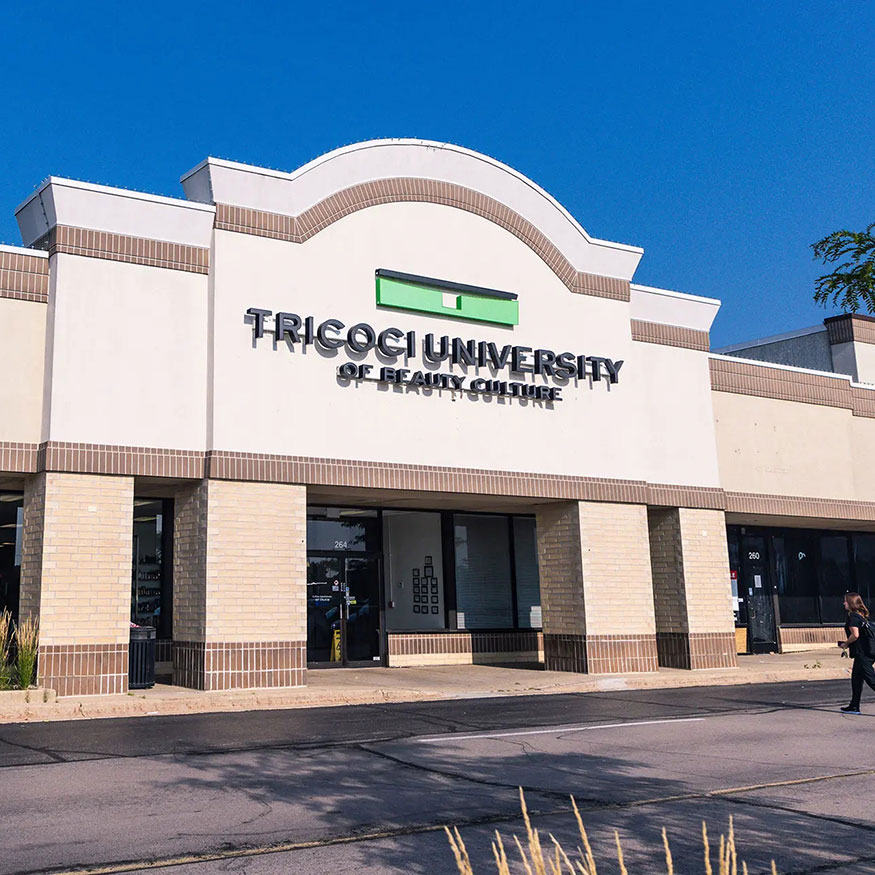
Tricoci University of Beauty Culture-Peoria is a hyper-focused, for-profit trade school that operates on a completely different clock and logic than a traditional college. With open admissions, new classes starting every six weeks, and a student body that is 99% female, it's a direct pipeline into the beauty industry for Central Illinois. The vibe is pragmatic, fast-paced, and intensely hands-on, centered on earning a license—not a degree—with the goal of immediate employment in salons, spas, or behind the chair.
More details
- Undergrad enrollment
- 125
- Popular Majors
- Esthetician and Skin Care, Cosmetology
- Institution Type
- Private, for-profit, less-than-2-year
- Class Start Cycle
- Every 6 weeks
- Most Common Student
- White Female (51.9% of full-time undergraduates)
- Average Annual Loan Amount
- $11,248
- Student Gender Demographics
- 99% Female, 1% Male
- Median Earnings 1 Year After Graduation
- $36,427
Outcomes & value
Outcomes & value
- Median earnings (10 yr)
- $26,236
- Value (earnings ÷ net price)
- 1.1×
- Median debt at graduation
- $7,307
- Reducing loan balance (3 yr)
- 32%
- Pell (lower-income) share
- 57%
- First-gen share (among federal-aid recipients)
- 48%
Earnings = median of students working ~10 years after entry; debt = median of graduates. Value divides 10-yr earnings by one year’s net price — read it as earnings per dollar of annual cost, not a full lifetime ROI; it favors lower-cost schools. Source: U.S. Dept. of Education College Scorecard. Figures lag ~2 years and reflect all students, not your intended major.
Campus & location
Campus safety
- On-campus violent crimes (2024)
- 0
On-campus criminal offenses classed as violent (murder/non-negligent manslaughter, rape, robbery, aggravated assault) for the most recent reported year. Source: U.S. Dept. of Education Campus Safety and Security (Clery Act). Counts reflect what’s reported to the school, and urban campuses often report more partly due to non-student incidents nearby — read alongside campus size and setting, not as a standalone safety verdict.
Climate
- Pleasant days / yr
- 87
- Summer high
- 83°F
- Winter low
- 22°F
- Annual rain
- 39.7"
- Annual snow
- 22.4"
- Natural-hazard risk
- Relatively Moderate
Pleasant days counts days per year with a mean temperature of 55–75°F, a high at or below 90°F, a low at or above 45°F, and little precipitation — a transparent comfort measure, not a weighting we invented. Computed from Open-Meteo ERA5 daily history (2019–2023). Natural-hazard risk is the county’s composite rating from the FEMA National Risk Index.
Quick answers
- How much does Tricoci University of Beauty Culture-Peoria cost?
- At Tricoci University of Beauty Culture-Peoria, the average net price (after aid) is about $23,433 per year. Actual cost varies with financial aid and residency.
- How many undergraduates attend Tricoci University of Beauty Culture-Peoria?
- Tricoci University of Beauty Culture-Peoria enrolls approximately 125 undergraduate students.
- Where is Tricoci University of Beauty Culture-Peoria located?
- Tricoci University of Beauty Culture-Peoria is located in Peoria, IL.
Admissions
Forget the Common App, test scores, and recommendation letters. Tricoci University-Peoria operates on an open admissions policy with a 100% , positioning itself as an accessible gateway for anyone serious about entering the beauty trades. The process is streamlined and continuous: new classes start every six weeks, allowing students to begin their training with minimal delay. The institution does not consider SAT or ACT scores, and there is no available GPA range for admitted students—the focus is on readiness for a career-focused program, not academic pedigree. The student body is exceptionally homogenous and niche: total enrollment sits at 137, with a staggering 99% female and 1% male split. Demographically, the most common student profile is a White female, making up 51.9% of full-time undergraduates, followed by Black students. This isn't a place for a broad liberal arts exploration; it's for those who have already decided on a specific vocational path.
Compare Tricoci University of Beauty Culture-Peoria
vs Hillsdale Collegevs United States Coast Guard Academyvs Drury Universityvs William Woods University
See colleges similar to Tricoci University of Beauty Culture-Peoria →Sources
- Tricoci University of Beauty Culture-Peoria - IPEDS
- Tricoci University of Beauty Culture-Peoria - Sallie
- Beauty School Admissions Process - Tricoci University
- Tricoci University of Beauty Culture-Peoria - Data USA
- [PDF] 2023-2024 Common Data Set Template
- Tricoci University of Beauty Culture Peoria - Niche
- Tricoci University Of Beauty Culture Peoria Admissions
- Tricoci University of Beauty Culture-Chicago NW - School…
- Tricoci University: Cosmetology School in IL, IN & WI
- Tricoci University of Beauty Culture Normal Majors & Degrees - Niche