Loading…
← All schools
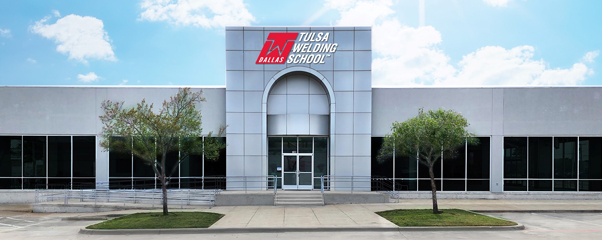
Tulsa Welding School-Dallas Campus
Irving, TXprivate forprofittws.edu
Avg net price
$34,533
Earnings (10 yr)
$41,067
Acceptance & SAT from Common Data Set / IPEDS; net price, earnings & graduation from the U.S. Dept. of Education College Scorecard. Figures lag ~1–2 years — verify with the school.
Tulsa Welding School-Dallas Campus is a no-frills, high-intensity trade school that operates on a fundamentally different logic than a traditional college. It exists to turn out skilled, job-ready technicians for the industrial trades—welding, HVAC/R, electrical, and linework—in as little as seven months. The culture is one of hard hats and hands-on training, where success is measured not by GPAs but by certifications, placement rates, and the starting paychecks of graduates walking directly into the workforce.
More details
- Undergrad enrollment
- 1,020
- Graduation Rate
- 70%
- Program Duration
- As few as 7 months
- Student-Faculty Ratio
- 30:1
- Highest Degree Offered
- Associate degree
- Median Earnings (10yr)
- $41,067
Outcomes & value
Outcomes & value
- Median earnings (10 yr)
- $41,067
- Value (earnings ÷ net price)
- 1.2×
- Median debt at graduation
- $9,500
- Reducing loan balance (3 yr)
- 33%
- Pell (lower-income) share
- 70%
- First-gen share (among federal-aid recipients)
- 52%
Earnings = median of students working ~10 years after entry; debt = median of graduates. Value divides 10-yr earnings by one year’s net price — read it as earnings per dollar of annual cost, not a full lifetime ROI; it favors lower-cost schools. Source: U.S. Dept. of Education College Scorecard. Figures lag ~2 years and reflect all students, not your intended major.
Campus & location
Campus safety
- On-campus violent crimes (2024)
- 0
On-campus criminal offenses classed as violent (murder/non-negligent manslaughter, rape, robbery, aggravated assault) for the most recent reported year. Source: U.S. Dept. of Education Campus Safety and Security (Clery Act). Counts reflect what’s reported to the school, and urban campuses often report more partly due to non-student incidents nearby — read alongside campus size and setting, not as a standalone safety verdict.
Climate
- Pleasant days / yr
- 85
- Summer high
- 94°F
- Winter low
- 40°F
- Annual rain
- 53.8"
- Annual snow
- 1.6"
- Natural-hazard risk
- Very High
Pleasant days counts days per year with a mean temperature of 55–75°F, a high at or below 90°F, a low at or above 45°F, and little precipitation — a transparent comfort measure, not a weighting we invented. Computed from Open-Meteo ERA5 daily history (2019–2023). Natural-hazard risk is the county’s composite rating from the FEMA National Risk Index.
Quick answers
- How much does Tulsa Welding School-Dallas Campus cost?
- At Tulsa Welding School-Dallas Campus, the average net price (after aid) is about $34,533 per year. Actual cost varies with financial aid and residency.
- How many undergraduates attend Tulsa Welding School-Dallas Campus?
- Tulsa Welding School-Dallas Campus enrolls approximately 1,020 undergraduate students.
- Where is Tulsa Welding School-Dallas Campus located?
- Tulsa Welding School-Dallas Campus is located in Irving, TX.
Admissions
Admissions at Tulsa Welding School-Dallas Campus is defined by its open-access mission, not by selectivity. The school reports a 100% , reflecting a policy designed to provide career training to anyone willing to put in the work. There is no mention of SAT or ACT score requirements, and the process appears geared toward assessing a candidate's readiness for a demanding technical program rather than filtering by academic pedigree. The focus is on actionable applications and fulfilling basic requirements for consideration.
Academics
The academic model is pure vocational training: accelerated, immersive, and intensely practical. Programs in welding, HVAC/R, electrical, and lineworker careers can be completed in as few as seven months. Instruction is hands-on from day one, with a student-faculty ratio reported at 30-to-1. The school's stated priority is student success and prosperity, framing education as the direct acquisition of 'industry-focused skills' needed to thrive in the trades. The highest credential offered is an associate degree, but the core value proposition is the rapid pathway to certification and employment.
Compare Tulsa Welding School-Dallas Campus
See colleges similar to Tulsa Welding School-Dallas Campus →Sources
- Common Data Set 2023-2024
- Common Data Set | Institutional Success and Decision Support
- Common Data Set: Home
- Common Data Set Guide: Use it to Find the Right College
- Tulsa Welding School-Houston - DFR Report HTML
- Common Data Set 2023 – 2024
- Tulsa Welding School-Dallas Campus
- Tulsa Welding School – Dallas Metro, TX Campus
- Tulsa Welding School-Dallas Campus
- Tulsa Welding School-Dallas Campus - EDsmart
- Tulsa Welding School-Dallas Campus - Univexatech