Loading…
← All schools
Tulsa Welding School-Jacksonville
Jacksonville, FLprivate forprofittws.edu
Avg net price
$34,714
Earnings (10 yr)
$41,067
Acceptance & SAT from Common Data Set / IPEDS; net price, earnings & graduation from the U.S. Dept. of Education College Scorecard. Figures lag ~1–2 years — verify with the school.
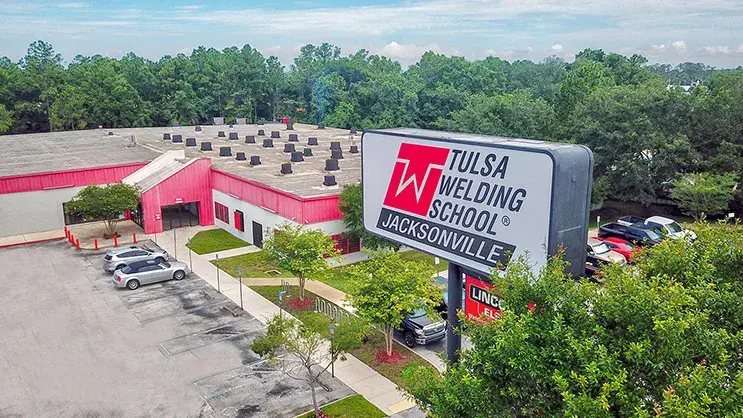
Tulsa Welding School-Jacksonville is a no-frills, open-admission trade school where the entire curriculum is the shop floor. Forget lectures and dorms; this is a seven-month, hands-on bootcamp for welding, HVAC, and electrical work, built for career-changers and high school grads who want a direct, debt-conscious path to the skilled trades. Its culture is pragmatic and supportive, focused entirely on turning out job-ready technicians, with outcomes measured in certifications and employment rates, not diplomas.
More details
- Undergrad enrollment
- 968
- No-Loan Policy
- No
- Meets Full Need
- No
- ED Share of Class
- Not applicable (No Early Decision)
- Most Popular Major
- Welding Technology/Welder
- First-Year Retention
- Not reported in sources
- Demonstrated Interest
- Not considered (Open Admission)
- Median Earnings (10yr)
- $41,067
Outcomes & value
Outcomes & value
- Median earnings (10 yr)
- $41,067
- Value (earnings ÷ net price)
- 1.2×
- Median debt at graduation
- $9,500
- Reducing loan balance (3 yr)
- 33%
- Pell (lower-income) share
- 59%
- First-gen share (among federal-aid recipients)
- 52%
Earnings = median of students working ~10 years after entry; debt = median of graduates. Value divides 10-yr earnings by one year’s net price — read it as earnings per dollar of annual cost, not a full lifetime ROI; it favors lower-cost schools. Source: U.S. Dept. of Education College Scorecard. Figures lag ~2 years and reflect all students, not your intended major.
Campus & location
Campus safety
- On-campus violent crimes (2024)
- 1
On-campus criminal offenses classed as violent (murder/non-negligent manslaughter, rape, robbery, aggravated assault) for the most recent reported year. Source: U.S. Dept. of Education Campus Safety and Security (Clery Act). Counts reflect what’s reported to the school, and urban campuses often report more partly due to non-student incidents nearby — read alongside campus size and setting, not as a standalone safety verdict.
Climate
- Pleasant days / yr
- 136
- Summer high
- 89°F
- Winter low
- 52°F
- Annual rain
- 48.5"
- Natural-hazard risk
- Relatively High
Pleasant days counts days per year with a mean temperature of 55–75°F, a high at or below 90°F, a low at or above 45°F, and little precipitation — a transparent comfort measure, not a weighting we invented. Computed from Open-Meteo ERA5 daily history (2019–2023). Natural-hazard risk is the county’s composite rating from the FEMA National Risk Index.
Quick answers
- How much does Tulsa Welding School-Jacksonville cost?
- At Tulsa Welding School-Jacksonville, the average net price (after aid) is about $34,714 per year. Actual cost varies with financial aid and residency.
- How many undergraduates attend Tulsa Welding School-Jacksonville?
- Tulsa Welding School-Jacksonville enrolls approximately 968 undergraduate students.
- Where is Tulsa Welding School-Jacksonville located?
- Tulsa Welding School-Jacksonville is located in Jacksonville, FL.
Admissions
Admission at TWS-Jacksonville is straightforward and non-selective, operating on an open admission policy. This means virtually all applicants with a high school diploma or GED are admitted without regard to academic records or standardized test scores. The school reports a 100% . There is no Early Decision process, and demonstrated interest is not a factor—the barrier to entry is intention, not achievement. The process is designed for speed and accessibility, with admissions representatives available by phone to guide applicants through the steps to enroll.
Academics
The academic model is singular and intensive: hands-on technical training with one core program. The school's sole major is Welding Technology/Welder, though related trade programs in HVAC/R and electrical work are also offered. Training is highly practical, described as a blend of classroom learning and extensive shop time. The curriculum is designed to prepare students for industry certifications. The school promotes a culture of "kindness, compassion, empathy, [and] teamwork" within its learning environment, and its parent organization, StrataTech Education Group, has been recognized for institutional outcomes. It's a vocational education focused entirely on skill acquisition for immediate employment.
Compare Tulsa Welding School-Jacksonville
See colleges similar to Tulsa Welding School-Jacksonville →Sources
- [PDF] Common Data Set 2023-2024 - Tulsa Community College
- Common Data Set: Home
- Common Data Set Ultimate Guide: Use It to Find the Right College
- Tulsa Welding School-Houston - DFR Report HTML
- Researching Colleges With the Common Data Set
- Common Data Set: University Enrollment
- Tulsa Welding School - Niche
- Tulsa Welding School-Jacksonville — Acceptance Rate, Costs & More
- Tulsa Welding School - MyLiaison
- Is TWS worth it? : r/Welding - Reddit
- How Long is Welding School in Jacksonville?