Admit rate has ranged 60%–81% over the last 5 years — notably volatile. Source: IPEDS via Urban Institute.
Acceptance & SAT from Common Data Set / IPEDS; net price, earnings & graduation from the U.S. Dept. of Education College Scorecard. Figures lag ~1–2 years — verify with the school.
Tusculum University is a small, private institution in the Appalachian foothills of Greeneville, Tennessee, where the academic experience is defined by accessibility and a close-knit community rather than selectivity. Its curriculum is heavily oriented toward practical, career-focused majors like business and kinesiology, and it serves a student body where a significant majority live on its residential campus. While its graduation metrics are modest, the university positions itself as an affordable, supportive gateway to a four-year degree in a region with deep natural and cultural roots.
Admission requirements
Test-optional — scores considered if submitted
Required
High school transcript
Grade point average
College-prep program
TOEFL (non-native English)
Considered (not required)
Class rank
Letters of recommendation
Test scores (SAT/ACT)
Source: IPEDS Admissions survey (2022) via Urban Institute. Covers formal factors only — it does not reflect essays, extracurriculars, or other holistic criteria.
More details
Undergrad enrollment
785
In-state tuition
$29,250
Out-of-state tuition
$29,250
Graduation Rate
25%
On-Campus Housing
90%
Most Popular Major
Business/Commerce, General (28%)
First-Year Retention
63%
Median Earnings (10yr)
$44,367
Outcomes & value
Outcomes & value
Median earnings (10 yr)
$44,367
Value (earnings ÷ net price)
2.1×
Median debt at graduation
$23,250
Graduation rate
25%
First-year retention
63%
Reducing loan balance (3 yr)
52%
Pell (lower-income) share
46%
First-gen share (among federal-aid recipients)
45%
Financial health
2.1 / 3.0Meets the federal financial-responsibility standard
U.S. Dept. of Education Financial Responsibility Composite Score (FY2022-23). Scale −1.0 to 3.0; ≥1.5 meets the standard. Reported for private nonprofit & for-profit institutions only — public universities are state-backed and not scored, so this is a stability signal, not a ranking.
Top-earning majors
Median earnings by field of study (highest credential), ~2 years after completion.
Registered Nursing, Nursing Administration, Nursing Research and Clinical Nursing$45,361
Business Administration, Management and Operations$40,346
Teacher Education and Professional Development, Specific Subject Areas$37,208
Psychology, General$28,327
English Language and Literature, General$25,194
Sports, Kinesiology, and Physical Education/Fitness
Campus & location
Campus safety
On-campus violent crimes (2024)
0
Per 1,000 students
0.00
On-campus criminal offenses classed as violent (murder/non-negligent manslaughter, rape, robbery, aggravated assault) for the most recent reported year. Source: U.S. Dept. of Education Campus Safety and Security (Clery Act). Counts reflect what’s reported to the school, and urban campuses often report more partly due to non-student incidents nearby — read alongside campus size and setting, not as a standalone safety verdict.
Climate
Pleasant days / yr
102
Summer high
85°F
Winter low
34°F
Annual rain
48.5"
Annual snow
9.5"
Natural-hazard risk
Relatively Low
Pleasant days counts days per year with a mean temperature of 55–75°F, a high at or below 90°F, a low at or above 45°F, and little precipitation — a transparent comfort measure, not a weighting we invented. Computed from Open-Meteo ERA5 daily history (2019–2023). Natural-hazard risk is the county’s composite rating from the FEMA National Risk Index.
Quick answers
What is the acceptance rate at Tusculum University?
Tusculum University's acceptance rate is approximately 72% (Greeneville, TN), based on the most recent figures we compiled from public and primary sources.
How much does Tusculum University cost?
At Tusculum University, the average net price (after aid) is about $21,131 per year. Actual cost varies with financial aid and residency.
How many undergraduates attend Tusculum University?
Tusculum University enrolls approximately 785 undergraduate students.
Where is Tusculum University located?
Tusculum University is located in Greeneville, TN.
Admissions
Tusculum's admissions process is designed to be accessible, with a stated policy of admitting students with an overall ACT score of 18 or higher (or the SAT equivalent) and a high school GPA of at least 2.0. This open approach is reflected in its . The university's admissions and standards committee reviews applications, examining academic records, class rank, and standardized test scores. While the provided sources discuss the as a tool for understanding admissions factors, none of the provided Tusculum-specific CDS links contain the C7 factor importance grid that would clarify the official weight given to elements like demonstrated interest, interviews, or extracurriculars for this specific school.
Admission Requirements: Students with an ACT score of 18+ and a GPA of 2.0+ are admitted.
Application Review: The Admissions and Standards Committee reviews academic records, class rank, and SAT/ACT scores.
The academic offering at Tusculum is broad and career-oriented, with over 60 majors and minors spanning associate, bachelor's, and master's degrees. The curriculum is not built around a traditional liberal arts core but rather on providing a "robust education" designed to equip graduates for the 21st-century workforce. The most popular majors dominate the student body: Business/Commerce, General, accounts for 28% of undergraduates, while Parks, Recreation, Leisure, Fitness, and Kinesiology makes up another 14%. Other popular majors include Multi-/Interdisciplinary Studies and Psychology. The university markets its programs as covering a wide range of fields from the arts and sciences to humanities and professional studies like sports management, with a focus on practical application and collaboration.
Earnings = median of students working ~10 years after entry; debt = median of graduates. Value divides 10-yr earnings by one year’s net price — read it as earnings per dollar of annual cost, not a full lifetime ROI; it favors lower-cost schools. Source: U.S. Dept. of Education College Scorecard. Figures lag ~2 years and reflect all students, not your intended major.
$23,538
Biology, General$20,140
Visual and Performing Arts, General$16,786
Source: U.S. Dept. of Education College Scorecard (field-of-study earnings). Figures cover graduates who received federal aid and lag ~2 years; not all programs report data.
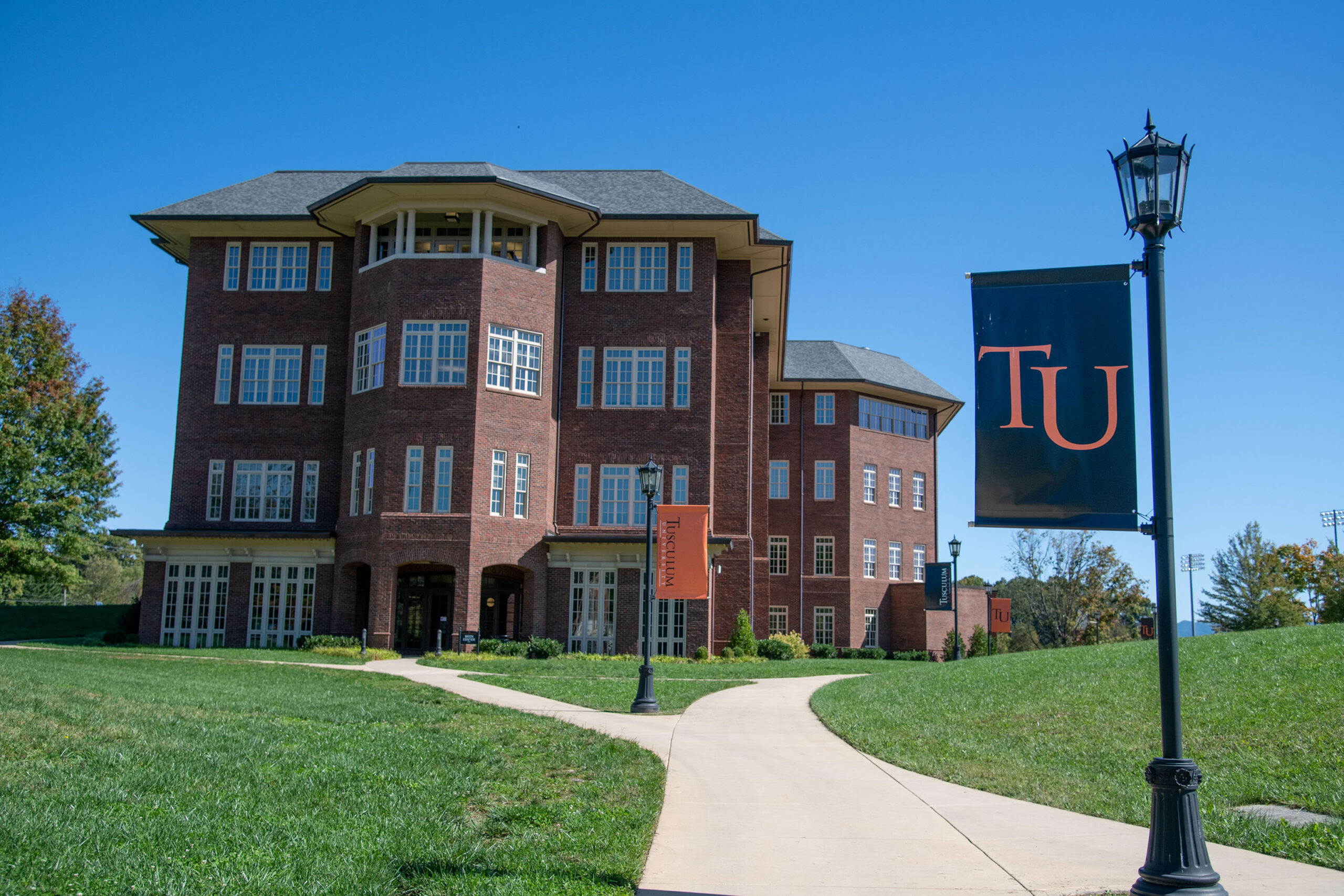
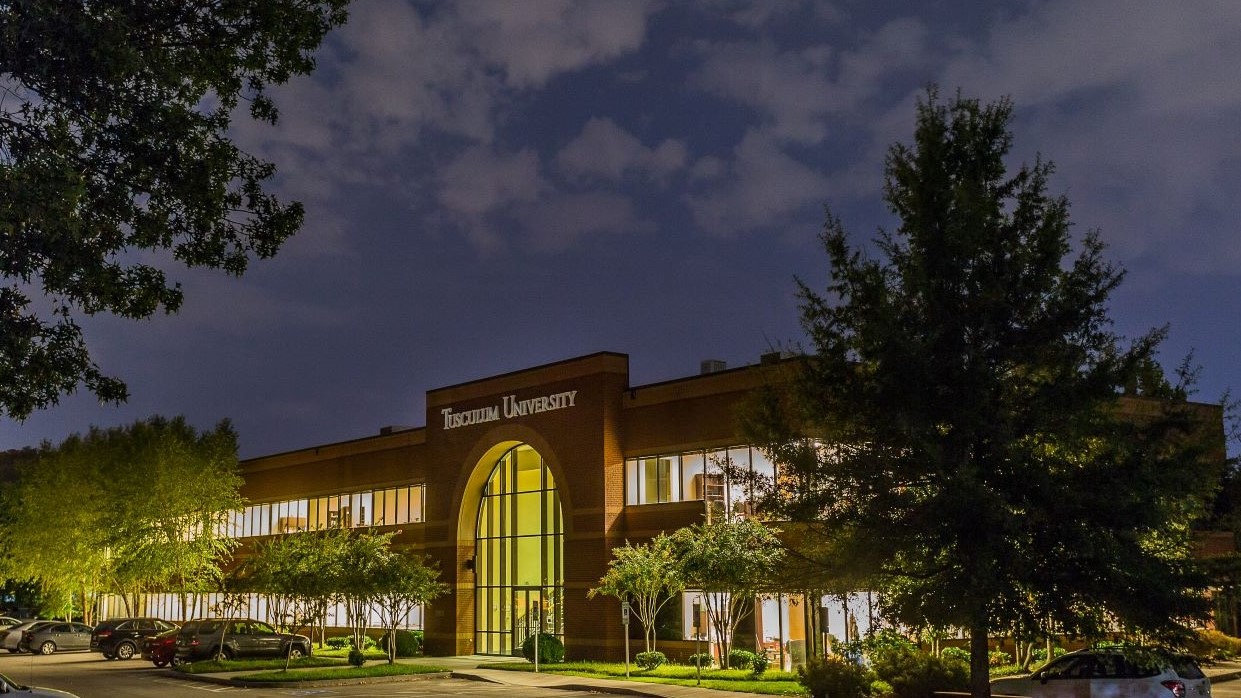
Life at Tusculum is intensely residential and defined by its small, close-knit campus community. A full 90% of students live in college-owned, -operated, or -affiliated housing, creating a highly immersive environment. The university promotes this small-campus vibe as a place where students can "be who they are and try new things" without getting lost in the crowd. The campus itself is described as inviting and set in the scenic foothills of Northeast Tennessee. Students report feeling generally safe on the well-lit campus, which features emergency phones. Beyond campus, the location provides access to the cultural and natural landmarks of the Appalachians, including the Great Smoky Mountains National Park. Student affairs supports a range of robust programs, clubs, and dining options to foster growth academically, socially, and spiritually.
Outcomes data paints a picture of a university serving a student population that often faces challenges in persistence and earning power post-graduation. The six-year graduation rate is reported at 35%, and the four-year graduation rate is 39%. Retention of first-year students is 63%. In terms of career results, a 2021 analysis ranked Tusculum eighth in Tennessee for bachelor's degree graduates based on a "Salary Score" evaluation. The median earnings for alumni ten years after entry is $44,367. Other sources cite a median alumni salary of $39,705. These figures suggest graduates typically enter mid-tier earning fields, consistent with the university's popular majors in business and kinesiology.
Tusculum positions itself as an affordable private option, with a significant emphasis on financial aid to reduce the sticker price. The university encourages all students to complete the FAFSA, even those seeking only merit awards or loans. It offers scholarships, grants, and loans, with eligible students potentially receiving up to $4,000 per academic year in certain aid programs. The —the average cost after aid and scholarships—is a key metric. One source notes the average aid package is $17,301. The university provides a net price calculator for prospective students to receive a personalized aid estimate. The provided financial aid fact sheet indicates that students who do not demonstrate financial need still qualify for unsubsidized loans, with interest accruing while enrolled. None of the provided sources indicate the university has a policy of meeting full demonstrated need without loans.
Tusculum University stands out for its unambiguous mission: to be an accessible, supportive, and residential college for students in Appalachia and beyond who are seeking a direct path to a career-oriented degree. It doesn't pretend to be highly selective or a bastion of pure liberal arts. Instead, it leans into its strengths—a small, safe, and immersive campus where almost everyone lives on-site, and a practical curriculum dominated by business and health/wellness fields. Its location is both a backdrop and a benefit, offering a tight-knit community on campus and proximity to the vast natural playground of the Smokies. For students who thrive in a personal environment and want a university experience focused on applied learning and community, Tusculum offers a distinct alternative to larger, more impersonal state schools or more academically intense private colleges.