Loading…
← All schools
UEI College-Riverside
Riverside, CAprivate forprofituei.edu
Avg net price
$29,702
Earnings (10 yr)
$30,848
Acceptance & SAT from Common Data Set / IPEDS; net price, earnings & graduation from the U.S. Dept. of Education College Scorecard. Figures lag ~1–2 years — verify with the school.
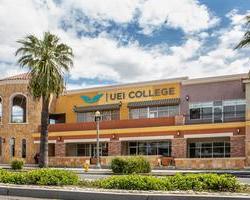
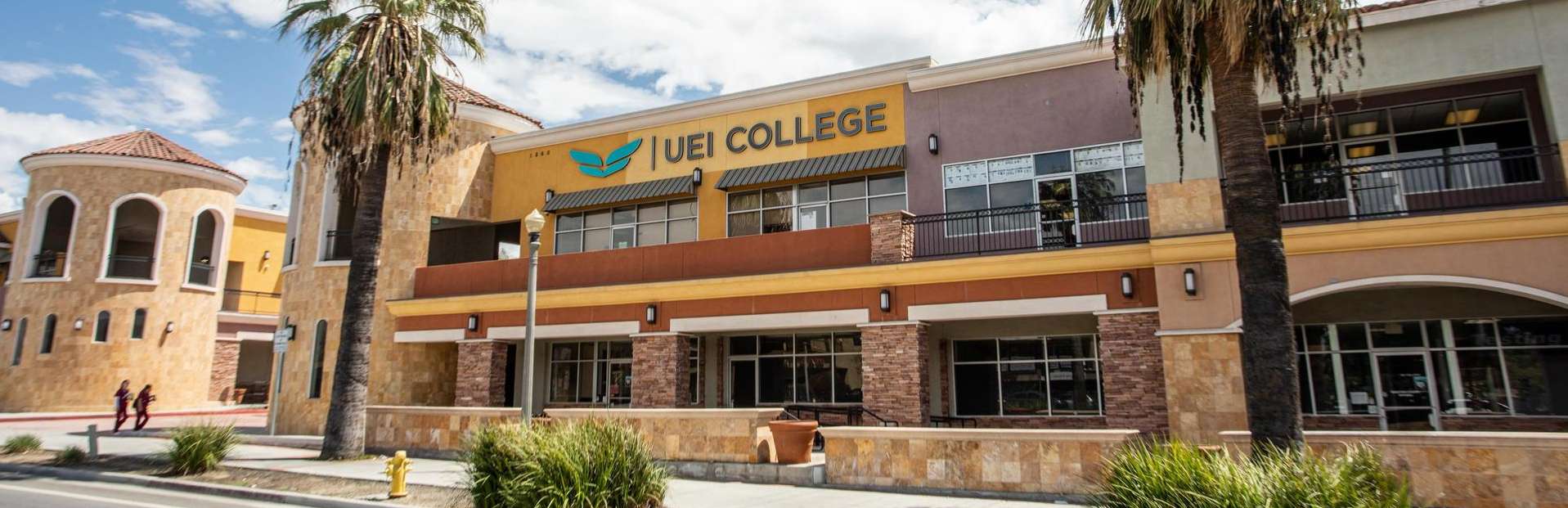
UEI College-Riverside operates on a fundamentally different model than traditional four-year universities. This is a career-focused trade school in Southern California where the admissions process is about readiness for vocational training, not competing for a scarce seat. The campus opened in 2011 with a mission to deliver practical, accelerated programs in fields like healthcare, construction, and business administration, aiming to get students into the workforce quickly. The experience is defined by flexible scheduling, a dedicated staff, and a direct path to a credential.
More details
- Undergrad enrollment
- 1,616
- Top Majors
- Health, Mechanical Technologies, Construction
- Campus Opened
- 2011
- Graduation Rate
- 67%
- Median Earnings (10yr)
- $30,848
Outcomes & value
Outcomes & value
- Median earnings (10 yr)
- $30,848
- Value (earnings ÷ net price)
- 1.0×
- Median debt at graduation
- $9,500
- Reducing loan balance (3 yr)
- 22%
- Pell (lower-income) share
- 71%
- First-gen share (among federal-aid recipients)
- 63%
Earnings = median of students working ~10 years after entry; debt = median of graduates. Value divides 10-yr earnings by one year’s net price — read it as earnings per dollar of annual cost, not a full lifetime ROI; it favors lower-cost schools. Source: U.S. Dept. of Education College Scorecard. Figures lag ~2 years and reflect all students, not your intended major.
Campus & location
Campus safety
- On-campus violent crimes (2024)
- 1
On-campus criminal offenses classed as violent (murder/non-negligent manslaughter, rape, robbery, aggravated assault) for the most recent reported year. Source: U.S. Dept. of Education Campus Safety and Security (Clery Act). Counts reflect what’s reported to the school, and urban campuses often report more partly due to non-student incidents nearby — read alongside campus size and setting, not as a standalone safety verdict.
Climate
- Pleasant days / yr
- 160
- Summer high
- 94°F
- Winter low
- 44°F
- Annual rain
- 16.2"
- Annual snow
- 0.9"
- Natural-hazard risk
- Very High
Pleasant days counts days per year with a mean temperature of 55–75°F, a high at or below 90°F, a low at or above 45°F, and little precipitation — a transparent comfort measure, not a weighting we invented. Computed from Open-Meteo ERA5 daily history (2019–2023). Natural-hazard risk is the county’s composite rating from the FEMA National Risk Index.
Quick answers
- How much does UEI College-Riverside cost?
- At UEI College-Riverside, the average net price (after aid) is about $29,702 per year. Actual cost varies with financial aid and residency.
- How many undergraduates attend UEI College-Riverside?
- UEI College-Riverside enrolls approximately 1,616 undergraduate students.
- Where is UEI College-Riverside located?
- UEI College-Riverside is located in Riverside, CA.
Admissions
Forget the frenzy—UEI College-Riverside's admissions process is designed for accessibility, not selectivity. The school reports a 100% , positioning itself as an open-door institution for career training. The process is handled by a dedicated team of admissions representatives who guide prospective students from choosing a program through enrollment and financial aid applications. There is no mention of standardized test requirements like the SAT or ACT; the focus is on an applicant's readiness for vocational education. The school does not appear to participate in early decision or early action plans, which are typical of selective undergraduate admissions. Demonstrated interest, a factor weighed by some traditional colleges, is not a relevant concept here; the pathway is straightforward and consultative.
Academics
Academics at UEI College-Riverside are singularly focused on career training. The curriculum is built around short-term, hands-on programs designed to lead directly to employment. According to data on awarded degrees, the school is highly specialized in three main areas: Health (with 592 degrees awarded), Mechanical Technologies (269 degrees), and Construction (268 degrees). A top major is identified as Allied Health and Medical Assisting Services. Beyond healthcare and trades, UEI also offers career training programs in Business Office Administration and Criminal Justice. Instruction is provided by experienced professionals, emphasizing practical skills over theoretical exploration. This is not a liberal arts college; it's a training ground for specific technical and allied health roles, with programs structured to be completed in a condensed timeframe.
Compare UEI College-Riverside
vs United States Air Force Academyvs Hillsdale Collegevs Grove City Collegevs United States Coast Guard Academy
See colleges similar to UEI College-Riverside →Sources
- Common Data Set 2023-24
- Common Data Set: Home
- Common Data Set
- Common Data Set (CDS) | Institutional Research - UC Riverside
- Common Data Set: Your Key to Smarter College Decisions
- Common Data Set 2021-2022
- UEI College - Riverside
- First-Year Class Profile
- UC Riverside SAT Scores and GPA
- 2018 UC Riverside Acceptance Rate: Class of 2022
- Admissions Process for Vocational & Trade School Programs
- UEI College-Riverside: Acceptance Rate, Tuition & Rankings - EDsmart