Admit rate has ranged 53%–57% over the last 5 years, though the latest figure above (63%) falls outside that window. Source: IPEDS via Urban Institute.
Acceptance & SAT from Common Data Set / IPEDS; net price, earnings & graduation from the U.S. Dept. of Education College Scorecard. Figures lag ~1–2 years — verify with the school.
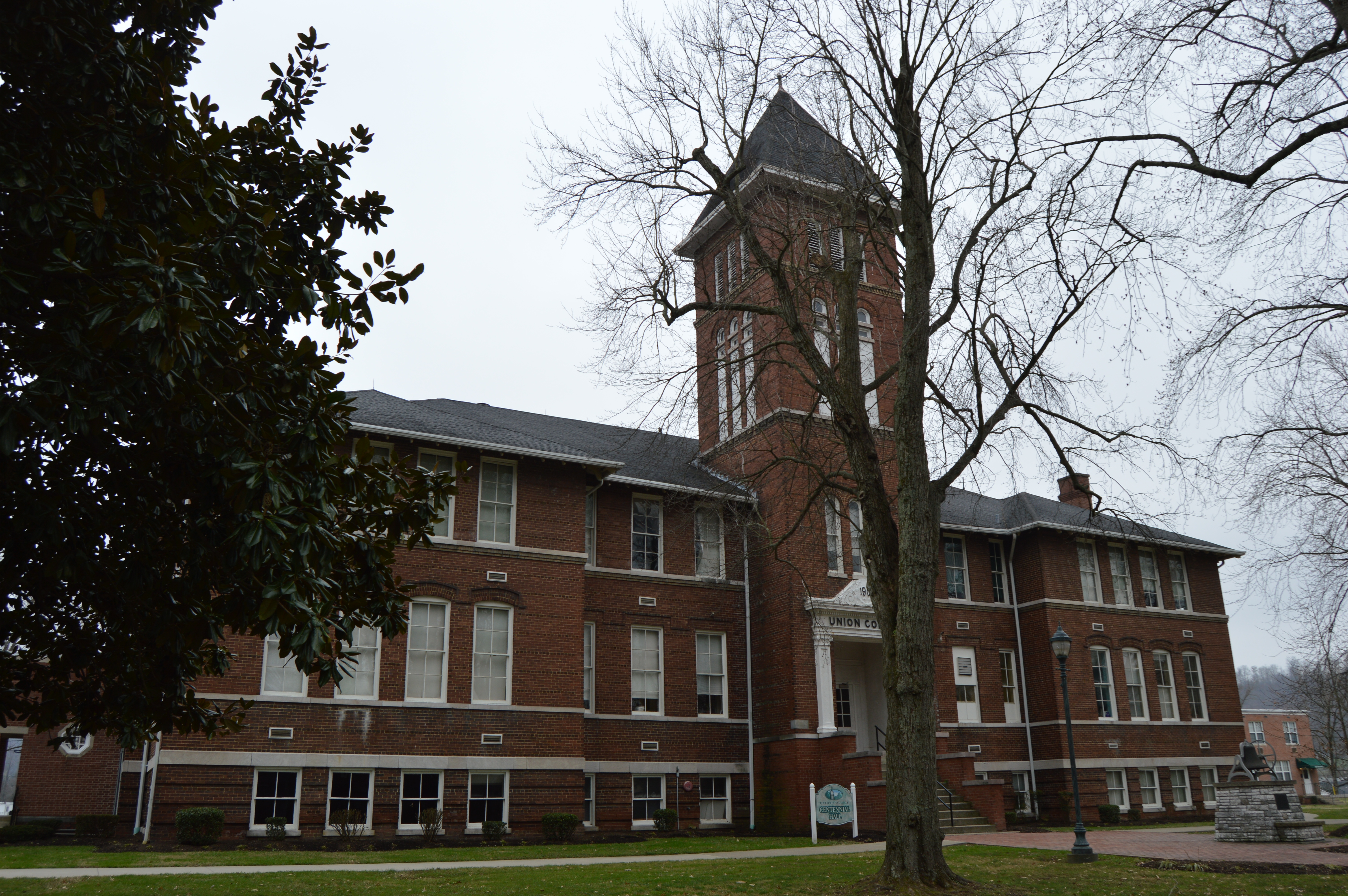
Union Commonwealth University is a small, private liberal arts college embedded in the Appalachian culture of Barbourville, Kentucky, where the mission is intensely personal and the pace is unhurried. It’s a place where every undergraduate gets financial aid, business and nursing are the dominant career paths, and the academic vision is being retooled for 'quality, accountability, and efficiency.' The vibe is welcoming and scrappy, with a focus on serving a diverse, often first-generation student body from the region and beyond.
Admission requirements
Test-optional — scores considered if submitted
Required
High school transcript
Grade point average
TOEFL (non-native English)
Considered (not required)
Letters of recommendation
Test scores (SAT/ACT)
College-prep program
Source: IPEDS Admissions survey (2022) via Urban Institute. Covers formal factors only — it does not reflect essays, extracurriculars, or other holistic criteria.
More details
Undergrad enrollment
746
In-state tuition
$30,946
Out-of-state tuition
$30,946
Top Majors
Business, Kinesiology, Nursing, Liberal Studies
Financial Aid
100% of undergraduates receive aid
Graduation Rate
32%
Application Deadline
Rolling
First-Year Retention
59%
Student-Faculty Ratio
14:1
Median Earnings (10yr)
$42,002
Outcomes & value
Outcomes & value
Median earnings (10 yr)
$42,002
Value (earnings ÷ net price)
2.0×
Median debt at graduation
$24,250
Graduation rate
32%
First-year retention
64%
Reducing loan balance (3 yr)
47%
Pell (lower-income) share
53%
First-gen share (among federal-aid recipients)
41%
Financial health
2.2 / 3.0Meets the federal financial-responsibility standard
U.S. Dept. of Education Financial Responsibility Composite Score (FY2022-23). Scale −1.0 to 3.0; ≥1.5 meets the standard. Reported for private nonprofit & for-profit institutions only — public universities are state-backed and not scored, so this is a stability signal, not a ranking.
Top-earning majors
Median earnings by field of study (highest credential), ~2 years after completion.
Registered Nursing, Nursing Administration, Nursing Research and Clinical Nursing$56,415
Teacher Education and Professional Development, Specific Subject Areas$29,685
Sports, Kinesiology, and Physical Education/Fitness$24,035
Source: U.S. Dept. of Education College Scorecard (field-of-study earnings). Figures cover graduates who received federal aid and lag ~2 years; not all programs report data.
On-campus criminal offenses classed as violent (murder/non-negligent manslaughter, rape, robbery, aggravated assault) for the most recent reported year. Source: U.S. Dept. of Education Campus Safety and Security (Clery Act). Counts reflect what’s reported to the school, and urban campuses often report more partly due to non-student incidents nearby — read alongside campus size and setting, not as a standalone safety verdict.
Climate
Pleasant days / yr
94
Summer high
85°F
Winter low
33°F
Annual rain
53.5"
Annual snow
7.7"
Natural-hazard risk
Relatively Low
Pleasant days counts days per year with a mean temperature of 55–75°F, a high at or below 90°F, a low at or above 45°F, and little precipitation — a transparent comfort measure, not a weighting we invented. Computed from Open-Meteo ERA5 daily history (2019–2023). Natural-hazard risk is the county’s composite rating from the FEMA National Risk Index.
Quick answers
What is the acceptance rate at Union Commonwealth University?
Union Commonwealth University's acceptance rate is approximately 63% (Barbourville, KY), based on the most recent figures we compiled from public and primary sources.
How much does Union Commonwealth University cost?
At Union Commonwealth University, the average net price (after aid) is about $21,311 per year. Actual cost varies with financial aid and residency.
How many undergraduates attend Union Commonwealth University?
Union Commonwealth University enrolls approximately 746 undergraduate students.
Where is Union Commonwealth University located?
Union Commonwealth University is located in Barbourville, KY.
Admissions
Union Commonwealth operates on a rolling admissions basis with no set application deadline, making it accessible for students who decide later in the cycle. The process is moderately selective, though the university has seen significant recent momentum, reporting a 75% increase in accepted first-time freshmen and ranking 3rd overall in growth since 2021. While the school has an open admission policy for most in-state students, it employs selective admission for out-of-state applicants and for some specific programs. Test scores are accepted but not uniformly required for all; admitted students who submit scores typically present an ACT range between 15 and 22 or an SAT range between 960 and 1180. The average high school GPA of incoming students is 3.7. The university does not appear to have a binding Early Decision program in the traditional sense, instead focusing on its rolling process. Demonstrated interest is not a formal factor in admissions decisions.
Earnings = median of students working ~10 years after entry; debt = median of graduates. Value divides 10-yr earnings by one year’s net price — read it as earnings per dollar of annual cost, not a full lifetime ROI; it favors lower-cost schools. Source: U.S. Dept. of Education College Scorecard. Figures lag ~2 years and reflect all students, not your intended major.
The academic experience at Union Commonwealth is built on a liberal arts foundation but is decidedly pragmatic, emphasizing hands-on experiences like research, internships, and community engagement. The student-faculty ratio is 14:1, promising smaller class sizes and more personal attention. However, student satisfaction as measured by the average freshman retention rate is 59%, a figure that the institution's recent 'bold academic vision' directly seeks to address by anchoring itself in 'quality, accountability, and efficiency.'
The most popular majors are unapologetically career-oriented: Business, Kinesiology and Exercise Science, and Nursing lead the way. Liberal Arts and Sciences/Studies is also a significant program. The curriculum is designed to prepare students for graduate study or direct entry into professions, with notable strength in pre-professional tracks within biology, chemistry, mathematics, and actuarial science.
Life on this small Kentucky campus is defined by community and connection. With more than 25 clubs and student organizations, students find niches around shared interests, from academics to hobbies. The campus community is consistently described as 'welcoming and inclusive,' a crucial characteristic given its location in a small town within Appalachia. The university actively celebrates and serves this regional culture and heritage. Student support is a stated priority, with staff dedicated to improving the quality of the student experience through study skills assistance, personal counseling, and health and career services—resources that are particularly important for a diverse student body, many of whom may be college attendees.
Outcomes at Union Commonwealth tell a story of a college serving a population where the traditional four-year graduation path isn't always the norm. The six-year graduation rate is reported between 34% and 40%, with a significant portion of students transferring or withdrawing. For those who persist, the financial payoff is tangible. Studies promoted by the university show that obtaining a degree increases income substantially, with graduates earning 84% more than those with only a high school diploma. According to federal data, median earnings for graduates are $43,672 one year after graduation, rising to $45,810 after five years. A separate source reports graduates earning a median of $52,077 four years after graduation. The first-year retention rate is 59%, an indicator the university is working to improve.
Affordability is a central pillar of Union Commonwealth's pitch. The university states unequivocally that 100% of its undergraduate students receive scholarships and/or financial aid, ensuring no one pays the full sticker price. The average total aid awarded is $26,961 per year, composed of institutional grants ($19,794), federal grants ($6,873), and state grant aid ($7,258). The —what students actually pay after grants and scholarships—varies significantly by family income. For students from families earning $0-$30,000, the average net price is $15,310. The average net price for all federal loan recipients is higher, at $24,770. While the university emphasizes grant aid, loans remain a part of the financial aid landscape for many students; qualifying for federal loans requires completion of the FAFSA. There is no indication in the provided sources of a 'no-loan' policy or a commitment to meet 100% of demonstrated financial need without loans.
Union Commonwealth stands out for its unvarnished commitment to serving a specific place and population. It is not a highly selective liberal arts college chasing national rankings; it is a regional institution deeply rooted in Appalachian Kentucky, providing a dynamic, personal education to a diverse student body. Its distinctiveness lies in its pragmatic balance: a liberal arts foundation paired with dominant, career-focused majors like Business and Nursing; a 100% financial aid participation rate that attempts to lower barriers to entry; and a candid, ongoing institutional effort to overhaul its academic model for greater 'quality, accountability, and efficiency' in response to retention challenges. It’s a college that meets students where they are—financially, academically, and geographically—with a supportive, community-focused environment, even as it works to improve the rigor and outcomes of the degree it confers.
Union Commonwealth University seal · sourceUnion Commonwealth University - Wikipedia · sourceUnion Commonwealth University | Barbourville KY · sourceUnion Commonwealth University - Barbourville, KY · source