Admit rate has ranged 11%–16% over the last 5 years. Source: IPEDS via Urban Institute.
Acceptance & SAT from Common Data Set / IPEDS; net price, earnings & graduation from the U.S. Dept. of Education College Scorecard. Figures lag ~1–2 years — verify with the school.
The United States Air Force Academy is not a college; it's a four-year crucible that forges Air Force and Space Force officers. Every aspect of cadet life—from the 7,000-foot elevation of its Colorado campus to its intensely structured 24-hour schedule—is designed to test and develop leadership, character, and intellect under pressure. In exchange for a world-class, fully-funded education valued at over $416,000, cadets commit to at least five years of active military service, entering a career pipeline with immediate responsibility and purpose that civilian universities simply cannot match.
Admission requirements
Test scores required
Required
High school transcript
Grade point average
Class rank
Letters of recommendation
Test scores (SAT/ACT)
Source: IPEDS Admissions survey (2022) via Urban Institute. Covers formal factors only — it does not reflect essays, extracurriculars, or other holistic criteria.
More details
Undergrad enrollment
4,114
No-Loan Policy
Yes, all cadets attend on full scholarship with no cost
Graduation Rate
88%
Meets Full Need
Yes, via full scholarship for all cadets
Scholarship Value
> $416,000
Service Commitment
Minimum 5 years active duty after graduation
Demonstrated Interest
Not considered
Early Decision/Action
No Early Action or Early Decision offered
Top Quarter of HS Class
81.1% of admitted students
STEM vs. Humanities Split
~60% in science/engineering, ~40% in social sciences/humanities
Outcomes & value
Outcomes & value
Graduation rate
88%
First-year retention
97%
Earnings = median of students working ~10 years after entry; debt = median of graduates. Value divides 10-yr earnings by one year’s net price — read it as earnings per dollar of annual cost, not a full lifetime ROI; it favors lower-cost schools. Source: U.S. Dept. of Education College Scorecard. Figures lag ~2 years and reflect all students, not your intended major.
Campus & location
Climate
Pleasant days / yr
91
Summer high
79°F
Winter low
13°F
Annual rain
17.2"
Annual snow
56.7"
Natural-hazard risk
Relatively Moderate
Pleasant days counts days per year with a mean temperature of 55–75°F, a high at or below 90°F, a low at or above 45°F, and little precipitation — a transparent comfort measure, not a weighting we invented. Computed from Open-Meteo ERA5 daily history (2019–2023). Natural-hazard risk is the county’s composite rating from the FEMA National Risk Index.
Quick answers
What is the acceptance rate at United States Air Force Academy?
United States Air Force Academy's acceptance rate is approximately 14% (USAF Academy, CO), based on the most recent figures we compiled from public and primary sources.
What SAT score do you need for United States Air Force Academy?
Admitted students at United States Air Force Academy typically score 1230–1440 on the SAT (the middle-50% range). Scores outside this band are still admitted, especially with strong applications.
How many undergraduates attend United States Air Force Academy?
United States Air Force Academy enrolls approximately 4,114 undergraduate students.
Where is United States Air Force Academy located?
United States Air Force Academy is located in USAF Academy, CO.
Admissions
Gaining admission to USAFA is a multi-front campaign that evaluates far more than academic prowess. With an of 14%, the process is highly selective, sifting through thousands of applicants to build a class of leaders. The academy looks for a proven record across five pillars: academics, athletics, extracurricular involvement, leadership positions, and overall character. The academic bar is high: for the Class of 2025, 81.1% of admitted students ranked in the top quarter of their high school class, with 52.8% in the top tenth. Standardized test scores are a significant factor, with the middle 50% SAT range for admitted students historically falling between 1250–1450. The process is holistic and competitive, with no Early Action or Early Decision program to provide an early advantage—all applicants face the same December 31 regular decision deadline. Demonstrated interest, a factor tracked by many private colleges, is explicitly not considered in admissions decisions, as confirmed by the . The academy's —the percentage of admitted students who enroll—is exceptionally strong, with recent offer-acceptance rates climbing as high as 95.7%.
The academic program is a rigorous, structured blend of STEM, social sciences, and humanities, all taught with an eye toward military and aerospace applications. Cadets choose from 31 bachelor's degree majors, but all must complete a demanding core curriculum covering a broad array of subjects. The split between technical and non-technical fields is pronounced: about 60% of cadets complete majors in science and engineering, while the other 40% graduate in the social sciences and humanities. This balance reflects the academy's mission to produce technically savvy leaders and broadly educated strategists. Popular majors are heavily skewed toward engineering and applied sciences; recent data shows the top three most popular majors for graduates were Engineering (31%), Biological and Biomedical Sciences (18%), and Business, Management, and Marketing (15%). The curriculum emphasizes real-world application, with significant research opportunities integrated into the program. Cadets have the flexibility to switch majors or even add a second major, allowing them to tailor their academic focus within the structured environment.
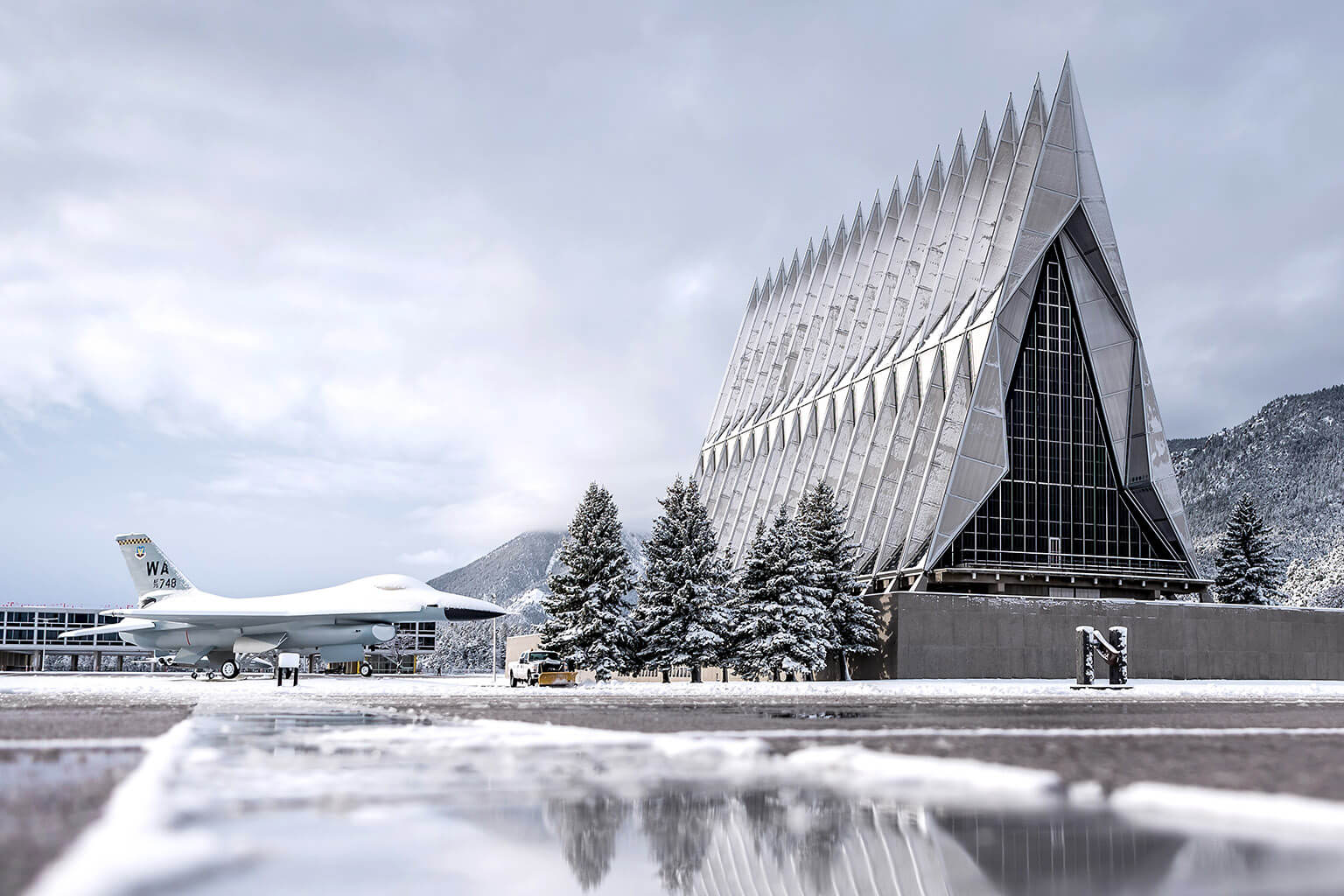
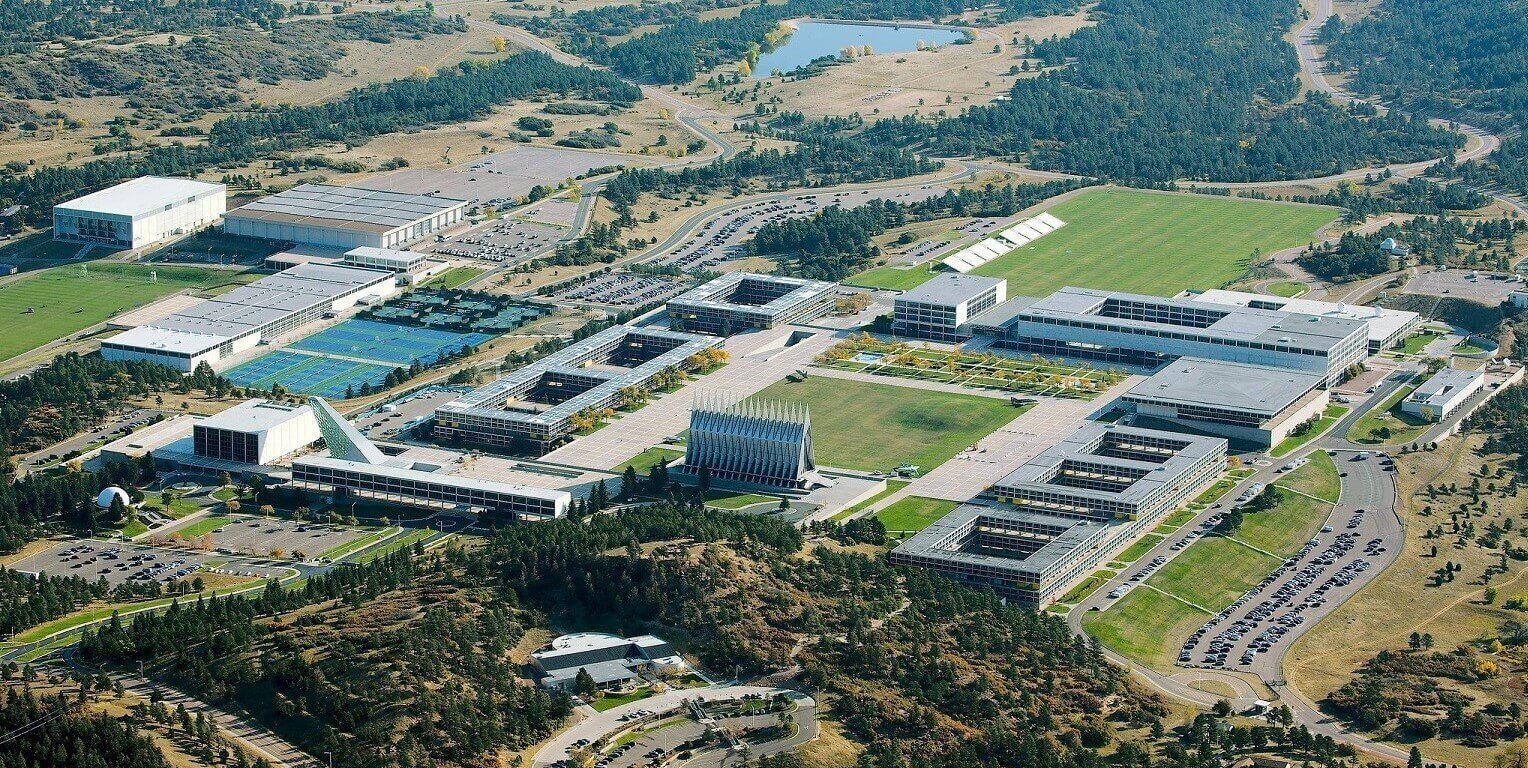
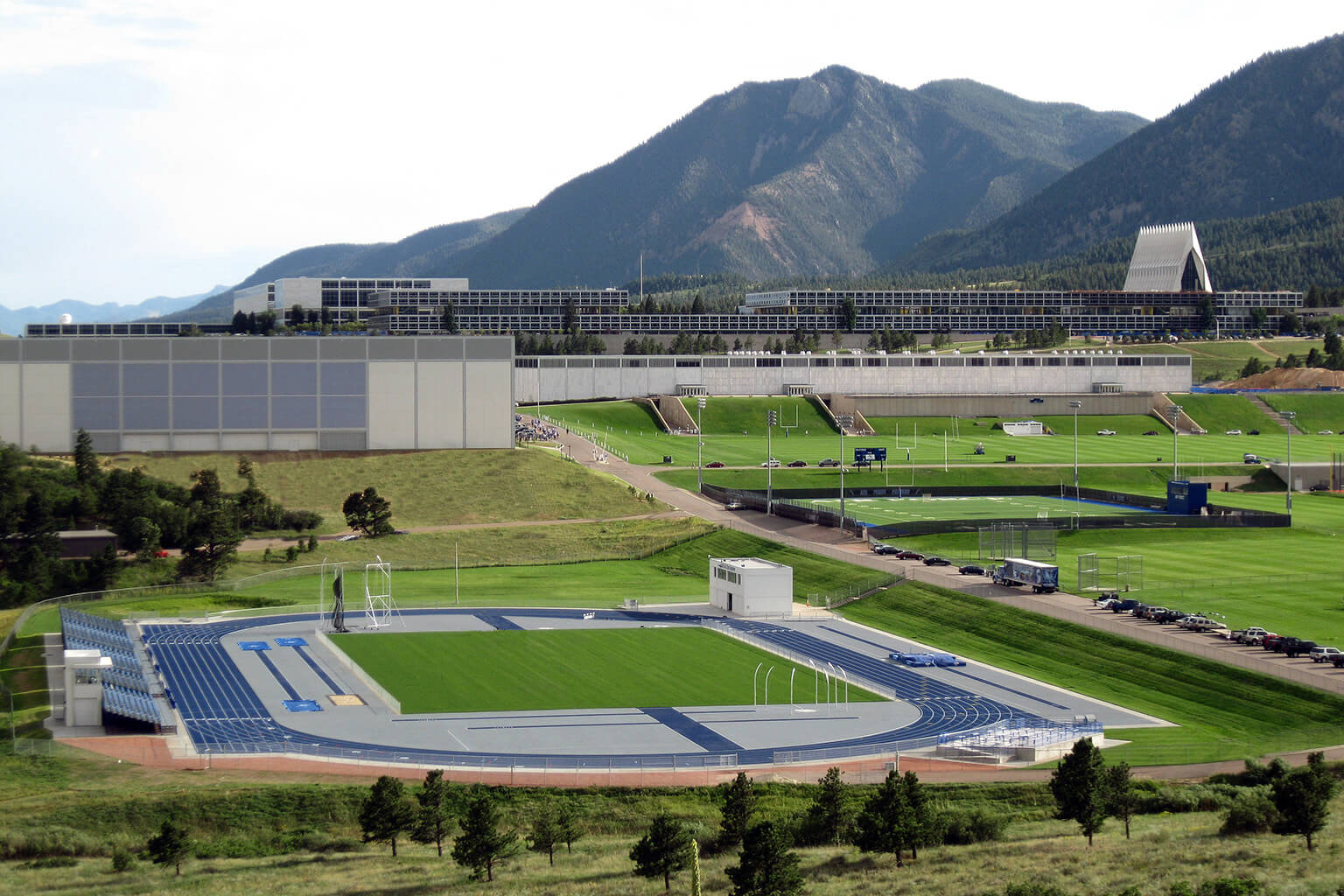
Life as a cadet is a total immersion in a structured, demanding environment where every minute is accounted for. The day begins early with morning formation, launching a relentless schedule that juggles academic classes, military training, mandatory athletics, and leadership responsibilities. This is not a typical college experience; it's a purposeful, four-year leadership laboratory. The journey starts with the intense six-week Basic Cadet Training (BCT), which prepares new cadets for life at a service academy through challenging physical and field instruction. The overarching character of student life is defined by a rigorous combination of academics, military training, and a structured social environment. Descriptions from those within the community underscore the challenge: it involves "lots of tough school work, lots of physical training, lots of arbitrary rules to follow," demanding excellence academically, physically, mentally, and emotionally. The campus itself is located immediately north of Colorado Springs, Colorado, at a high elevation that adds a physical dimension to the daily grind. Social life is built within the squadron system, fostering deep camaraderie and a sense of shared purpose that replaces the typical collegiate social scene.
The USAFA experience culminates in a commission as a second lieutenant in the U.S. Air Force or Space Force and a commitment to at least five years of active duty service. This is a guaranteed career launch with immediate leadership responsibility. The academy's graduation rate is a key metric of its success in shepherding cadets through the demanding program. For the Class of 2025, the attrition rate was 18.3%, meaning over 80% of the class that started together reached graduation. Broader institutional data shows high completion rates, with 89% of students graduating within the normal four-year time frame and 92% within four years according to some reports. The financial outcome for graduates is uniquely structured; instead of entering the job market with debt, they enter military service. While traditional median salary data is less relevant due to the military pay scale, which includes salary, housing, food, and special allowances, one source notes that graduates earn a median starting salary of $86,600. The true "outcome" is a career of service, with graduates entering fields like pilot training, cyber operations, intelligence, engineering, and space operations directly from commencement.
The financial model of the Air Force Academy is fundamentally different from any civilian institution. There is no tuition. There are no room and board charges. All cadets are on a full scholarship that covers every aspect of their education and living expenses. The academy values this comprehensive package at more than $416,000 per cadet. This places it firmly in the category of institutions with a definitive "no-loan" policy; students do not take out loans to pay for their education because there are no costs to cover. The trade-off is a service commitment: in return for this fully-funded education, cadets commit to serve as commissioned officers in the U.S. Air Force or Space Force for a minimum of five years after graduation. This arrangement means the academy meets 100% of the demonstrated financial need for every admitted student—the need is met by the full scholarship, not through a package of grants and loans. Consequently, calculators and FAFSA-based aid estimates are not applicable in the traditional sense, as the cost to the cadet and their family is zero.
The United States Air Force Academy stands apart as a total-immersion leadership institution where the mission is explicit and the payoff is a career, not just a degree. Its distinctiveness is rooted in several irreplicable factors:
A Fully-Funded, No-Debt Guarantee: The academy's full-ride scholarship, valued at over $416,000, completely removes financial barriers and the burden of student loans, a benefit unmatched by even the most generous need-blind, no-loan Ivy League policies.
The Career Pipeline: Graduation does not lead to a job search; it leads directly to a commission and a guaranteed role as an Air Force or Space Force officer. This immediate transition into a leadership career with profound responsibility is a unique outcome.
Holistic Forging of Character: The academy's regimen intentionally stresses every facet of a person—intellectual, physical, moral, and emotional—within a tightly structured 24/7 environment. It's designed to build resilience and decision-making under pressure, not just academic knowledge.
The Culture of Service and Squadron: Life is built around the squadron, creating an unparalleled sense of camaraderie and shared purpose. The culture is one of mutual commitment, where cadets are accountable to each other in a way that transcends typical campus friendships.
Applied Academic Focus: With 60% of majors in STEM fields and all coursework tinged with aerospace and military application, the academics are intensely purposeful, blending theory with the immediate practical needs of national security and technological innovation.
It is a singular choice for those seeking a challenge that is as much about building a life of service as it is about earning an education.
United States Air Force Academy seal · sourceFacilities • United States Air Force Academy · sourceVisitors • United States Air Force Academy · sourceSelf-Guided Tour • United States Air Force Academy · source