Admit rate has ranged 19%–24% over the last 5 years. Source: IPEDS via Urban Institute.
Acceptance & SAT from Common Data Set / IPEDS; net price, earnings & graduation from the U.S. Dept. of Education College Scorecard. Figures lag ~1–2 years — verify with the school.
The United States Coast Guard Academy is not a college; it's a four-year, federally funded leadership crucible where every student is a cadet on a direct path to a commission. Located on the Thames River in New London, CT, it trades tuition bills for a five-year service obligation, offering a singular blend of rigorous engineering-focused academics, relentless military training, and immediate, meaningful career outcomes. This is an institution defined by its mission: producing leaders of character for the nation's smallest armed service, where the classroom, the barracks, and the deck of a cutter are all part of the same demanding, close-knit education.
Admission requirements
Test-optional — scores considered if submitted
Required
High school transcript
Grade point average
Letters of recommendation
Demonstrated competencies
Considered (not required)
Class rank
Test scores (SAT/ACT)
College-prep program
TOEFL (non-native English)
Source: IPEDS Admissions survey (2022) via Urban Institute. Covers formal factors only — it does not reflect essays, extracurriculars, or other holistic criteria.
More details
Undergrad enrollment
1,108
No-Loan Policy
Yes, all cadets — full tuition, room, board + monthly salary
Graduation Rate
93%
Meets Full Need
Yes
Service Obligation
5 years active duty
Demonstrated Interest
Considered
Student-Faculty Ratio
7:1
First-Year Retention Rate
97%
Early Decision Share of Class
Most of the class (per admissions forums)
Outcomes & value
Outcomes & value
Graduation rate
93%
First-year retention
99%
Earnings = median of students working ~10 years after entry; debt = median of graduates. Value divides 10-yr earnings by one year’s net price — read it as earnings per dollar of annual cost, not a full lifetime ROI; it favors lower-cost schools. Source: U.S. Dept. of Education College Scorecard. Figures lag ~2 years and reflect all students, not your intended major.
Campus & location
Climate
Pleasant days / yr
104
Summer high
78°F
Winter low
28°F
Annual rain
56.7"
Annual snow
21.4"
Pleasant days counts days per year with a mean temperature of 55–75°F, a high at or below 90°F, a low at or above 45°F, and little precipitation — a transparent comfort measure, not a weighting we invented. Computed from Open-Meteo ERA5 daily history (2019–2023).
Deep dive — research, future-scholar output & economic mobility▾
Research output
Institutional h-index
72
Scholarly works
1,008
Institutional research volume and impact from OpenAlex. The h-index reflects large research universities and will be low for teaching-focused liberal-arts colleges — not a measure of undergraduate quality.
Quick answers
What is the acceptance rate at United States Coast Guard Academy?
United States Coast Guard Academy's acceptance rate is approximately 22% (New London, CT), based on the most recent figures we compiled from public and primary sources.
What SAT score do you need for United States Coast Guard Academy?
Admitted students at United States Coast Guard Academy typically score 1240–1400 on the SAT (the middle-50% range). Scores outside this band are still admitted, especially with strong applications.
How many undergraduates attend United States Coast Guard Academy?
United States Coast Guard Academy enrolls approximately 1,108 undergraduate students.
Where is United States Coast Guard Academy located?
United States Coast Guard Academy is located in New London, CT.
Admissions
Gaining entry to the Coast Guard Academy is a fiercely competitive, holistic process that looks for more than just top grades—it seeks future officers. The Academy is highly selective, admitting about 300 cadets annually from thousands of applicants. For the Class of 2029, 369 appointments were offered. The admissions funnel typically sees around 1,853 to 2,021 completed applications. Crucially, unlike other service academies, the USCGA does not require a congressional nomination, making the applicant pool entirely self-selected and the competition direct.
Academically, the admitted class is exceptionally strong. The Academy reports that 46% of entering cadets ranked in the top 10% of their high school class, with 82% in the top quarter. The average GPA is around 3.79. The middle 50% SAT range is 1240–1400, and the middle 50% ACT range is 27–32. The process is also notable for its high rate—the percentage of admitted students who enroll—which is reported at 66%, indicating that an offer of appointment is highly coveted.
A significant portion of the class is filled through Early Action. Forum discussions and admissions experts note that "they pick most of the class during early admission," suggesting a strategic advantage for applicants who have the Academy as a clear first choice. Demonstrated interest is also a factor considered in the process, with activities like a "Cadet for the Day" visit being tracked. The Academy has made strides in diversity, with a Fall 2020 enrollment that was 38% female and 36% of the class comprising underrepresented minorities.
The academic program is a tightly integrated, practical engine designed to produce technically proficient leaders. The Academy offers a focused slate of ten academic majors, all built upon a mandatory, liberal arts-based core curriculum that provides a broad foundational education. The program explicitly stands apart by combining a strong background in science and technology with a solid grounding in the liberal arts and in-depth major study.
Engineering and STEM fields dominate the academic landscape. Majors include Civil Engineering, Electrical Engineering, Mechanical Engineering, Naval Architecture and Marine Engineering, and Cyber Systems. Operations Research and Computer Analysis and Government are also among the options. Notably, the Government major is a significant producer of degrees. This technical emphasis is delivered in an environment of exceptional access to faculty, with a student-faculty ratio of 7:1.
The rigor is constant and applied. Education is not confined to the lecture hall; it is immediately put into practice during summer training aboard Coast Guard cutters and at various operational units. This model fosters high levels of student satisfaction and persistence, reflected in a remarkable 97% average freshman retention rate. The Academy is consistently ranked among the nation's top undergraduate colleges, a testament to the intensity and quality of its "rigorous, practical education."
Cadet life is a total-immersion experience that is, in the Academy's own words, "like no other." It is a 200-week journey focused on striving for a superior academic, military, and athletic experience within a profoundly close-knit environment. The entire student body, or the Corps of Cadets, numbers around 1,000, living together in a single barracks and adhering to a highly structured daily routine that blends classes, military formations, athletics, and study hours.
There is no Greek life; the Corps itself is the defining community. Every cadet must participate in athletics, either at the NCAA Division III intercollegiate level or in a robust intramural program. This mandatory physical component is integral to building teamwork and resilience. The campus is dedicated to maintaining a safe environment, adhering to standards like the Clery Act.
The experience is demanding, often described as intense and transformative. First-hand accounts from forums highlight the challenge, the camaraderie forged under pressure, and the unique focus of having every peer on the same career path. For cadets, especially international students, the Academy facilitates a "Home Away From Home" program to connect with local families, providing a crucial cultural and emotional respite from the regimented campus life. It's a world unto itself, where the line between student life and professional preparation is completely erased.
The outcome of a Coast Guard Academy education is not a question of if a graduate will get a job, but where they will serve. Every graduate receives a Bachelor of Science degree and is commissioned as an Ensign in the U.S. Coast Guard, obligated to serve for a minimum of five years of active duty. This pathway delivers exceptional stability and immediate purpose.
The graduation rate is a point of institutional pride and effectiveness. The Academy reports an average 85% graduation rate, with more detailed figures showing a 91% four-year graduation rate and a 92% six-year rate. First-year retention is exceptionally high at 99%. This indicates that those who adapt to the initial rigors are highly likely to succeed through to commissioning.
Post-graduation, outcomes are measured in service and satisfaction. An impressive 85% of graduates stay in the Coast Guard beyond their five-year obligation. For those who transition to the civilian sector, the track record is strong. Reports indicate a median starting salary of $88,000 for Academy graduates, and 73% find a high level of meaning in their jobs. The education is not just paid for; it is an investment that yields leaders who are both highly employable and deeply fulfilled by their work.
The financial model of the Coast Guard Academy is its most radical and defining feature. Simply put, cadets pay nothing for tuition, room, or board. The entire comprehensive education, currently valued at more than $280,000, is fully funded by the U.S. government. In return, cadets commit to a service obligation.
Furthermore, cadets are not students in the traditional economic sense; they are enlisted members of the U.S. Coast Guard. As such, they receive a full monthly salary and allowance for housing and food throughout their four years. This means they not only graduate debt-free but have actually been earning a steady income since their first day.
This structure makes the Academy a 100% need-met institution by its very nature—every admitted cadet's full financial need is covered by the federal grant of a tuition-free education and a salary. There is no loan component because there is no cost to the student. External scholarships, such as those from the Coast Guard Foundation, may provide additional support for specific expenses or for family members, but the core financial proposition is unparalleled: a top-tier education where you are paid to attend.
The United States Coast Guard Academy stands alone in American higher education. It is not merely a selective college; it is a direct pipeline into a unique, humanitarian-focused branch of the U.S. military. Its distinctiveness is woven into every facet of the experience:
The Ultimate No-Loan Model: It inverts the entire concept of college affordability. Cadets are paid employees, graduating with zero debt and significant savings, while their peers elsewhere are taking on loans.
Mission-Driven from Day One: There is no "figuring it out later." Every cadet shares the unambiguous goal of becoming a Coast Guard officer, creating a focused, cohesive culture absent the career anxiety prevalent at other institutions.
The Small Service Advantage: As the smallest armed service, the Coast Guard offers unparalleled hands-on responsibility early in an officer's career. Academy graduates don't get lost in a vast bureaucracy; they are quickly entrusted with real-world missions like search and rescue, law enforcement, and environmental protection.
Applied Learning as a Creed: The integration of classroom theory (especially in engineering and sciences) with summer training on cutters and at sectors is seamless. Academics are not abstract; they are tools for the job you start the day after graduation.
A Leadership Laboratory: The 24/7 military environment, the honor system, and the requirement to lead one's peers from the freshman "swab" year onward forge a type of pragmatic, tested leadership character that is difficult to replicate in a civilian campus setting.
It is a place for those who want an education defined by purpose, not just a degree; who prefer a uniform to a sweatshirt; and who see service not as a post-graduation option, but as the very point of the endeavor.
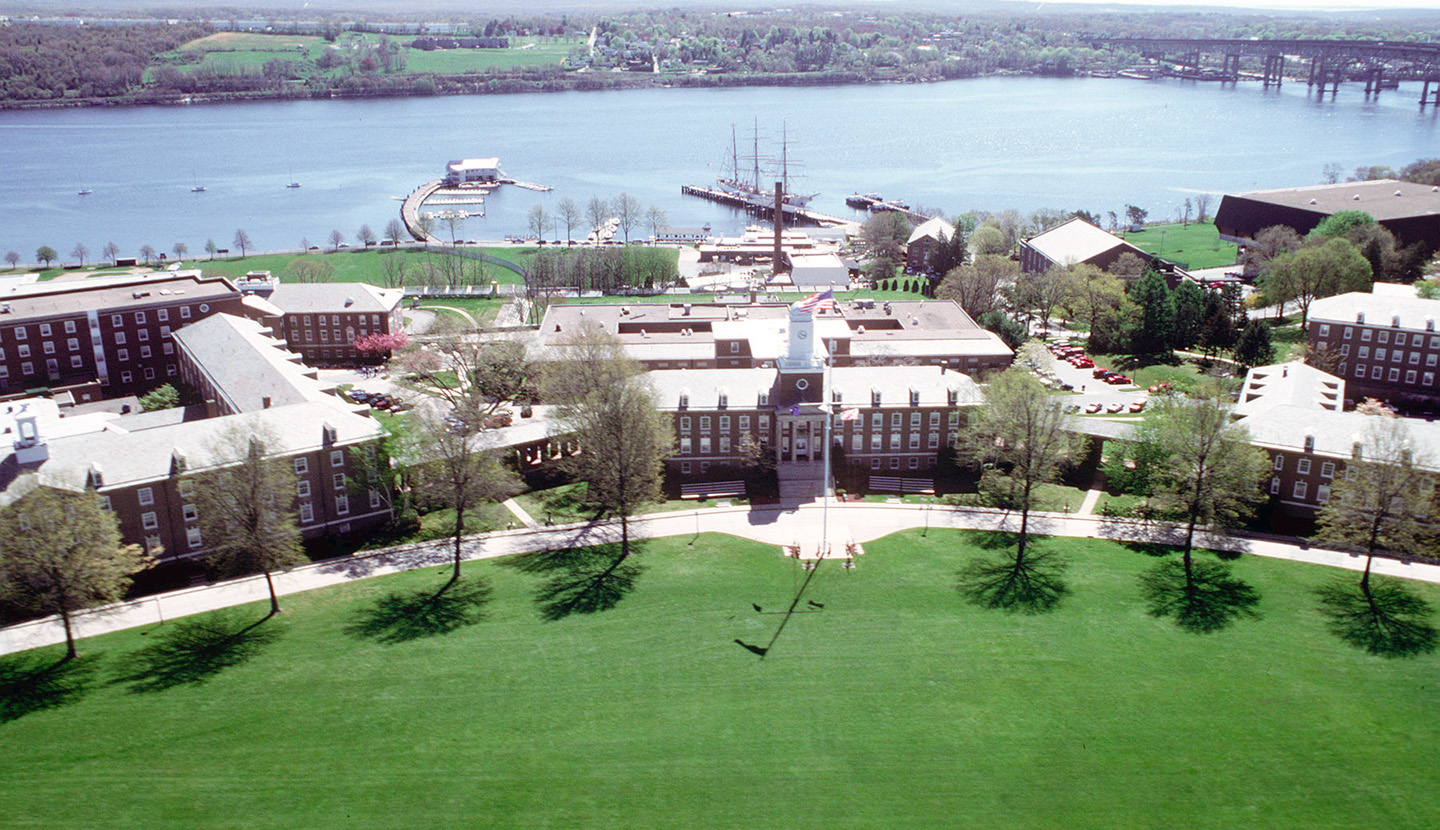
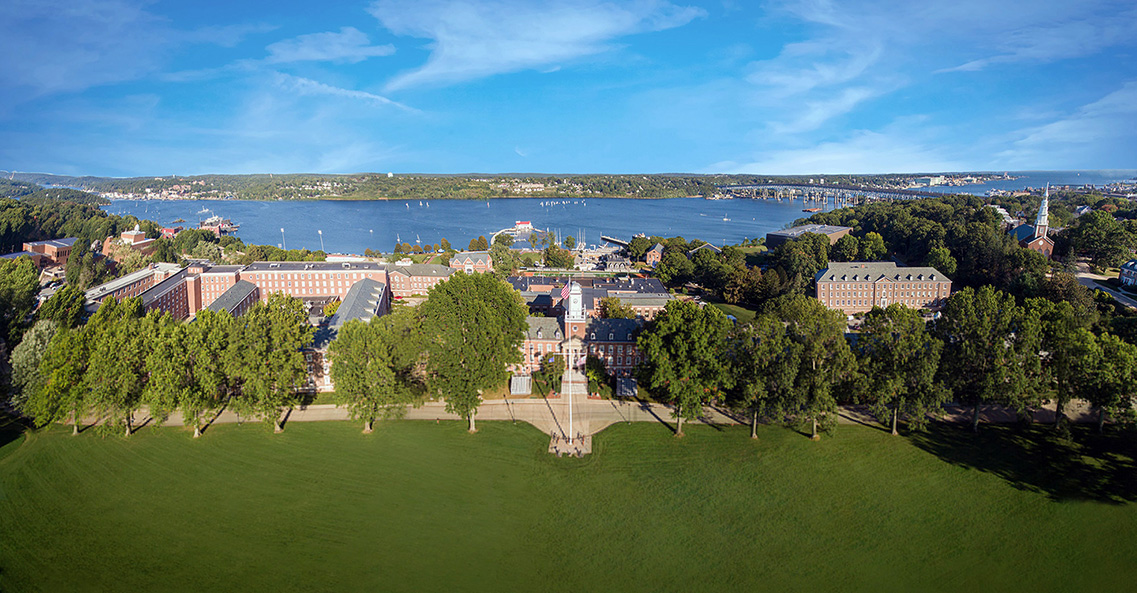
United States Coast Guard Academy seal · sourceCGA Campus Map - United States Coast Guard Academy · sourceHistoric Structures - United States Coast Guard Academy · sourceVisit - United States Coast Guard Academy · source
.jpg?width=1600)