Admit rate has ranged 24%–32% over the last 5 years — notably volatile, though the latest figure above (34%) falls outside that window. Source: IPEDS via Urban Institute.
Acceptance & SAT from Common Data Set / IPEDS; net price, earnings & graduation from the U.S. Dept. of Education College Scorecard. Figures lag ~1–2 years — verify with the school.
The United States Merchant Marine Academy at Kings Point is not a typical college; it's a federal service academy where the regimented, spartan life of a midshipman collides with a world-class maritime education. Students here don't just earn a degree—they graduate with a U.S. Coast Guard license and a naval reserve commission, launching them directly into high-paying careers in global shipping, naval architecture, and military logistics. The price is right (tuition is federally covered), but the cost is measured in discipline, grueling sea-year deployments, and a campus culture that prioritizes function over comfort.
Admission requirements
Test scores required
Required
High school transcript
Grade point average
Class rank
Letters of recommendation
Test scores (SAT/ACT)
TOEFL (non-native English)
Considered (not required)
College-prep program
Source: IPEDS Admissions survey (2022) via Urban Institute. Covers formal factors only — it does not reflect essays, extracurriculars, or other holistic criteria.
More details
Undergrad enrollment
962
In-state tuition
$895
Out-of-state tuition
$895
Location
Kings Point, NY
Campus Size
80 acres
Graduation Rate
82%
Nomination Required
Yes (Congressional)
Sea Year Requirement
Yes
Median Earnings (10yr)
$90,610
Federal Service Academy
Yes
Regular Decision Deadline
February 1
Outcomes & value
Outcomes & value
Median earnings (10 yr)
$90,610
Value (earnings ÷ net price)
14.7×
Median debt at graduation
$8,833
Graduation rate
82%
First-year retention
84%
Pell (lower-income) share
8%
Earnings = median of students working ~10 years after entry; debt = median of graduates. Value divides 10-yr earnings by one year’s net price — read it as earnings per dollar of annual cost, not a full lifetime ROI; it favors lower-cost schools. Source: U.S. Dept. of Education College Scorecard. Figures lag ~2 years and reflect all students, not your intended major.
Campus & location
Campus safety
On-campus violent crimes (2024)
0
Per 1,000 students
0.00
On-campus criminal offenses classed as violent (murder/non-negligent manslaughter, rape, robbery, aggravated assault) for the most recent reported year. Source: U.S. Dept. of Education Campus Safety and Security (Clery Act). Counts reflect what’s reported to the school, and urban campuses often report more partly due to non-student incidents nearby — read alongside campus size and setting, not as a standalone safety verdict.
Climate
Pleasant days / yr
93
Summer high
83°F
Winter low
29°F
Annual rain
54.6"
Annual snow
19"
Natural-hazard risk
Relatively High
Pleasant days counts days per year with a mean temperature of 55–75°F, a high at or below 90°F, a low at or above 45°F, and little precipitation — a transparent comfort measure, not a weighting we invented. Computed from Open-Meteo ERA5 daily history (2019–2023). Natural-hazard risk is the county’s composite rating from the FEMA National Risk Index.
Deep dive — research, future-scholar output & economic mobility▾
Research output
Institutional h-index
35
Scholarly works
558
Institutional research volume and impact from OpenAlex. The h-index reflects large research universities and will be low for teaching-focused liberal-arts colleges — not a measure of undergraduate quality.
Quick answers
What is the acceptance rate at United States Merchant Marine Academy?
United States Merchant Marine Academy's acceptance rate is approximately 34% (Kings Point, NY), based on the most recent figures we compiled from public and primary sources.
What SAT score do you need for United States Merchant Marine Academy?
Admitted students at United States Merchant Marine Academy typically score 1110–1300 on the SAT (the middle-50% range). Scores outside this band are still admitted, especially with strong applications.
How much does United States Merchant Marine Academy cost?
At United States Merchant Marine Academy, the average net price (after aid) is about $6,174 per year. Actual cost varies with financial aid and residency.
How many undergraduates attend United States Merchant Marine Academy?
United States Merchant Marine Academy enrolls approximately 962 undergraduate students.
Where is United States Merchant Marine Academy located?
United States Merchant Marine Academy is located in Kings Point, NY.
Admissions
Gaining admission to Kings Point is a selective and highly structured process, distinct from civilian college applications. The Academy receives around 1,367 to 1,392 applications annually for a class of roughly 468 students, resulting in a competitive . Applicants must navigate a multi-step gauntlet that includes securing a nomination from a member of Congress or another authorized source, passing a rigorous medical exam, and demonstrating strong academic and leadership potential. While the admissions office does not consider demonstrated interest as a formal factor, the complexity of the nomination process itself acts as a significant filter. The academic profile of admitted students is solid, with middle 50% SAT scores in the competitive range. The deadline for regular admission is February 1, and while early decision options exist, the process remains anchored in the congressional nomination system, making it a unique hybrid of service academy and specialized college admissions.
Selectivity: The process is selective, with thousands of applicants vying for a few hundred spots.
Nomination Required: A congressional nomination is a non-negotiable prerequisite, adding a layer of political vetting to the academic review.
Holistic Review: Beyond test scores and grades, the Academy evaluates leadership, physical fitness, and medical readiness, seeking candidates prepared for the regimented life and demanding sea year.
The academic program at USMMA is relentlessly practical and professionally focused, designed to produce licensed merchant marine officers and engineers. There are no purely theoretical majors; every course of study is engineered around obtaining a U.S. Coast Guard license and meeting the stringent standards of the global maritime industry. The most popular majors cluster in Transportation and Materials Moving and various engineering fields, particularly Systems Engineering. The curriculum is famously rigorous, integrating demanding classroom work in naval architecture, marine engineering, and logistics with hands-on, real-world application. A defining feature is the "Sea Year," where midshipmen spend nearly a full year at sea aboard commercial vessels or military sealift command ships, applying their classroom knowledge in a high-stakes, global environment. Professors are often praised for being approachable and helpful, but they operate within a fast-paced, no-nonsense environment that mirrors the industry itself. The program's intensity is a frequent point of discussion, with the culminating license exam serving as a formidable final hurdle.
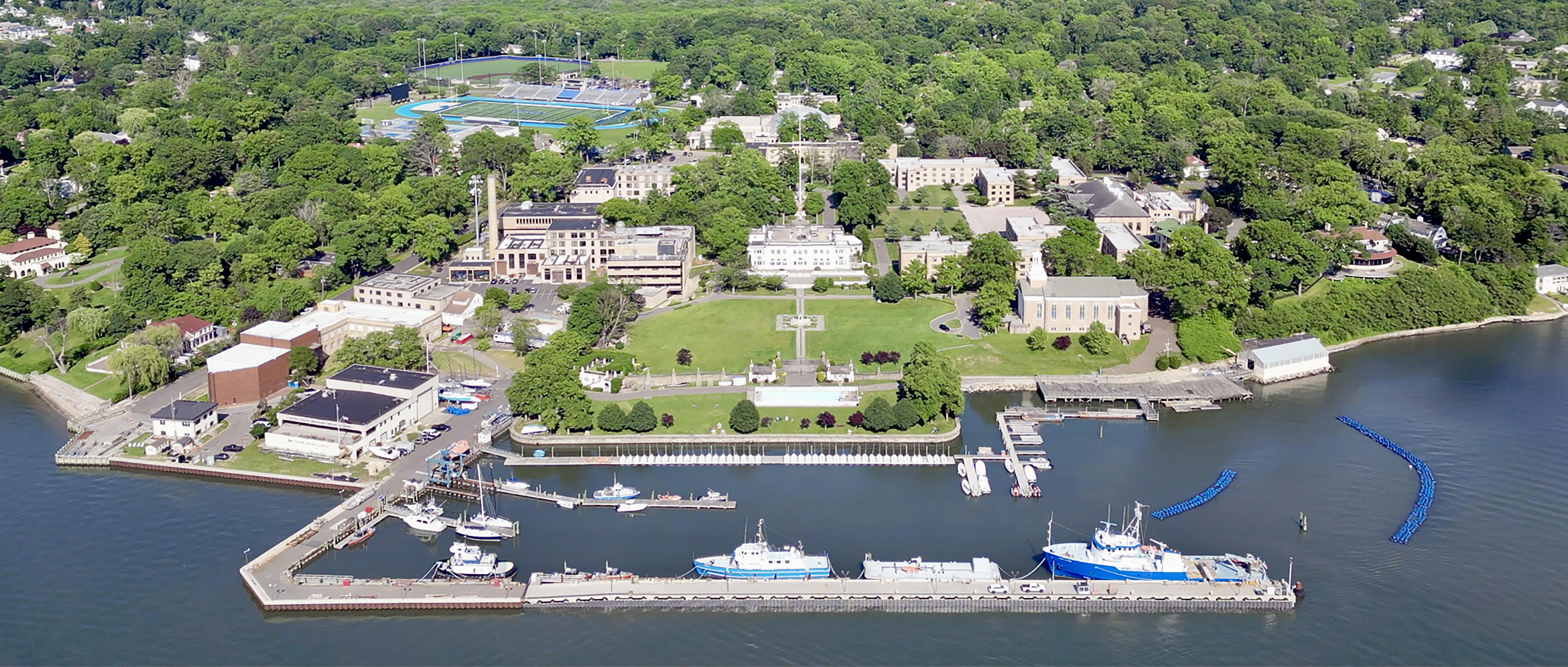
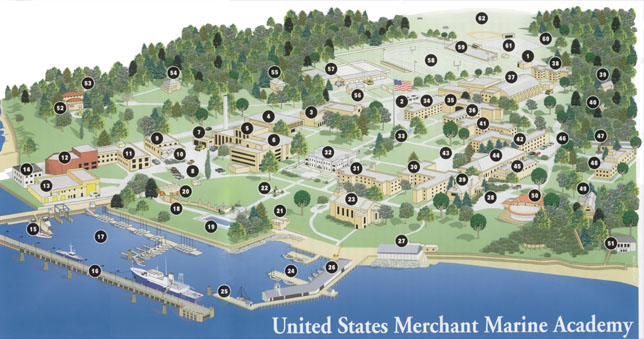
Life at Kings Point is governed by the regimental system, a military-style structure that dictates everything from waking hours to uniform standards. This isn't a campus of leisurely club fairs and spontaneous parties; it's a disciplined environment where midshipmen are trained for leadership and accountability. The 80-acre campus in a quiet Long Island suburb is functional and austere, with students reporting that facilities can feel dated and maintenance can be an issue—hot water in showers is not a guaranteed luxury. Social and cultural life is largely internally generated, with the Humanities Department fostering activities like the O'Gara Academic Honor Society. While the immediate surroundings offer limited dining and nightlife, New York City is accessible for weekend liberty. The pervasive culture is one of shared hardship and mission, bonding students through the unique pressures of the Academy, the Sea Year, and the collective goal of earning their license. It's a life of sacrifice, where personal freedom is traded for a powerful professional credential and a guaranteed career path.
The return on investment at USMMA is starkly quantifiable and exceptionally high. Graduates don't face a job search; they enter a mandatory service obligation with a choice of paths, all leading to immediate, high-paying employment. The median earnings for alumni ten years after entry are among the highest of any undergraduate institution in the country. This outcome is the direct product of the Academy's model: every graduate leaves with a Bachelor of Science degree, a U.S. Coast Guard merchant marine officer's license, and a commission as an ensign in the U.S. Naval Reserve. This trifecta opens doors to lucrative careers as ship's officers on commercial vessels, roles in maritime logistics and operations, engineering positions in the maritime industry, or continued service in the military. The graduation rate reflects the program's difficulty, but those who persist are virtually guaranteed a launch into the upper echelons of the maritime transportation and engineering sectors.
The financial proposition of USMMA is its most dramatic advantage. As a federal service academy, tuition is fully covered for all appointed midshipmen. In return, students commit to a service obligation post-graduation. Therefore, the published "sticker price" for tuition and fees is $0 for both in-state and out-of-state students. The costs that remain are for room, board, books, supplies, and uniforms, which are partially offset by a monthly stipend. The —what families actually pay after all aid—is remarkably low, making it one of the nation's most affordable elite technical educations. Financial aid primarily comes from federal programs like Pell Grants and Direct Loans for those who qualify; the Academy itself does not offer institutional need-based or merit scholarships. The value, consistently recognized in "best value" college rankings, is undeniable: a debt-free education in exchange for service, culminating in a credential that commands a premium salary.
The United States Merchant Marine Academy stands alone. It is not merely a college with a naval ROTC program; it is one of the five federal service academies, and the only one dedicated to the merchant marine. Its singularity lies in the concrete, high-stakes trade it offers: four years of regimented, spartan life and intense academic labor in exchange for a guaranteed, high-earning career at the intersection of global commerce and national security. While the other service academies feed directly into the armed forces, Kings Point graduates have a unique choice: serve as licensed officers in the vital U.S. Merchant Marine, fulfill their obligation in the armed forces, or work in crucial civilian maritime sectors. The experience is defined by the transformative and grueling Sea Year, which provides a level of real-world, hands-on professional training unmatched in undergraduate education. You come for the free tuition and the unmatched ROI; you stay for the forged-in-steel camaraderie and the pride of joining a small, essential profession that keeps the world's economy—and America's sealift capability—afloat.
United States Merchant Marine Academy seal · sourceCampus Map | U.S. Merchant Marine Academy · sourceUnited States Merchant Marine Academy - Wikipedia · sourceAbout USMMA | U.S. Merchant Marine Academy · source