Loading…
← All schools
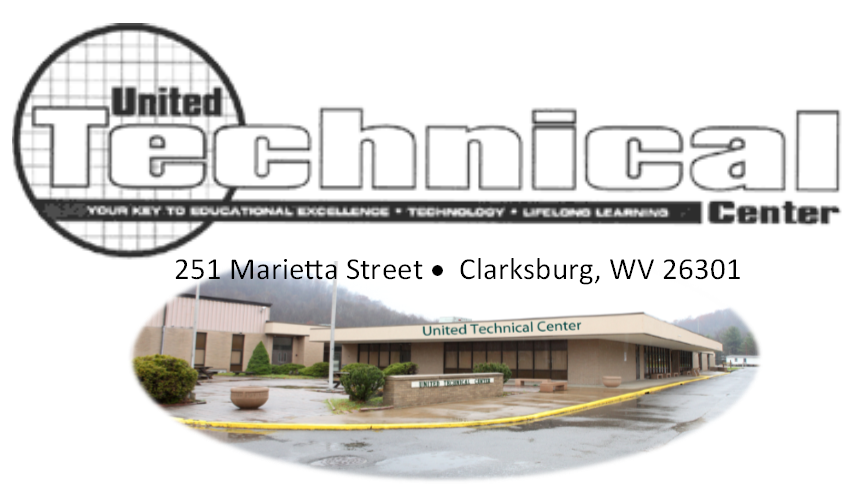
United Technical Center
Clarksburg, WVpublicunitedtechnicalcenterwv.com/
Avg net price
$3,461
Earnings (10 yr)
$49,130
Admit rate has ranged 71%–100% over the last 4 years — notably volatile. Source: IPEDS via Urban Institute.
Acceptance & SAT from Common Data Set / IPEDS; net price, earnings & graduation from the U.S. Dept. of Education College Scorecard. Figures lag ~1–2 years — verify with the school.
United Technical Center is a hyper-practical, no-frills career and technical school serving high school students and adults in rural West Virginia. It operates less like a traditional college and more like a direct pipeline into skilled trades and healthcare support roles, with a singular focus on hands-on credentialing. The vibe is blue-collar, pragmatic, and community-focused, offering a starkly affordable path to immediate workforce entry.
Admission requirements
Test-blind — scores not considered
Required
- High school transcript
- Grade point average
- Letters of recommendation
- Demonstrated competencies
Source: IPEDS Admissions survey (2022) via Urban Institute. Covers formal factors only — it does not reflect essays, extracurriculars, or other holistic criteria.
More details
- Undergrad enrollment
- 10
- In-state tuition
- $4,700
- Out-of-state tuition
- $4,700
- Loan Aid Recipients
- 0%
- Student-Faculty Ratio
- 9:1
- Median Earnings (10yr)
- $49,130
- Graduation Rate (6-year)
- 100%
- Federal Grant Aid Recipients
- 55%
- Earnings 5 Years After Graduation
- $46,815
- Institutional Grant Aid Recipients
- 45%
Outcomes & value
Outcomes & value
- Median earnings (10 yr)
- $49,130
- Value (earnings ÷ net price)
- 14.2×
- Pell (lower-income) share
- 44%
Earnings = median of students working ~10 years after entry; debt = median of graduates. Value divides 10-yr earnings by one year’s net price — read it as earnings per dollar of annual cost, not a full lifetime ROI; it favors lower-cost schools. Source: U.S. Dept. of Education College Scorecard. Figures lag ~2 years and reflect all students, not your intended major.
Campus & location
Campus safety
- On-campus violent crimes (2024)
- 0
On-campus criminal offenses classed as violent (murder/non-negligent manslaughter, rape, robbery, aggravated assault) for the most recent reported year. Source: U.S. Dept. of Education Campus Safety and Security (Clery Act). Counts reflect what’s reported to the school, and urban campuses often report more partly due to non-student incidents nearby — read alongside campus size and setting, not as a standalone safety verdict.
Climate
- Pleasant days / yr
- 106
- Summer high
- 81°F
- Winter low
- 29°F
- Annual rain
- 39.7"
- Annual snow
- 19.1"
- Natural-hazard risk
- Relatively Low
Pleasant days counts days per year with a mean temperature of 55–75°F, a high at or below 90°F, a low at or above 45°F, and little precipitation — a transparent comfort measure, not a weighting we invented. Computed from Open-Meteo ERA5 daily history (2019–2023). Natural-hazard risk is the county’s composite rating from the FEMA National Risk Index.
Quick answers
- How much does United Technical Center cost?
- At United Technical Center, the average net price (after aid) is about $3,461 per year. Actual cost varies with financial aid and residency.
- How many undergraduates attend United Technical Center?
- United Technical Center enrolls approximately 10 undergraduate students.
- Where is United Technical Center located?
- United Technical Center is located in Clarksburg, WV.
Admissions
Admissions at United Technical Center are straightforward and geared toward readiness for technical training, not the of a liberal arts college. The process is open to both high school students and adults seeking career training. The center reports a high , with one source indicating an 80.5% undergraduate acceptance rate in 2022 (33 admissions from 41 applications). Another source lists a 100% acceptance rate. The primary academic hurdle for specific programs, like Cosmetology, is passing a pre-entrance exam (the TABE Test), with a recommended 8th-grade level competency. The school serves students from Doddridge, Harrison, and Taylor counties, indicating a strong regional focus. There is no mention of Early Decision rounds, demonstrated interest as a factor, or complex academic rating systems common to four-year institutions; admission appears contingent on meeting basic eligibility requirements and program-specific testing.
- Acceptance Rate: Sources vary between 80.5% and 100%.
- Key Requirement: For programs like Cosmetology, applicants must possess a high school diploma, GED, or equivalent and pass a pre-entrance exam.
- Student Body: The campus is reported to be home to 28 full-time undergraduate students.
- Service Area: Focuses on students from Doddridge, Harrison, and Taylor counties in West Virginia.
Compare United Technical Center
vs University of Virginia's College at Wisevs University of Science and Arts of Oklahomavs West Virginia University Institute of Technologyvs Florida Polytechnic University
See colleges similar to United Technical Center →Sources
- [PDF] A. General Information - UTC
- Common Data Set: Home
- [PDF] Common Data Set 2021-2022 - Colorado Department of Education
- [PDF] Common Data Set 2024-2025 - West Virginia University
- Common Data Set Repository - College Transitions
- The Common Data Set: What It Is & How to Use It In College ...
- United Technical Center - Adult Education
- United Technical Center - Home
- United Technical Center — Acceptance Rate, Costs & More
- United Technical Center Tuition, Acceptance Rate, & Academics
- United Technical Center