Loading…
← All schools
University of Arkansas Community College Rich Mountain
Mena, ARpublicuarichmountain.edu
Avg net price
$4,842
Earnings (10 yr)
$30,037
Acceptance & SAT from Common Data Set / IPEDS; net price, earnings & graduation from the U.S. Dept. of Education College Scorecard. Figures lag ~1–2 years — verify with the school.
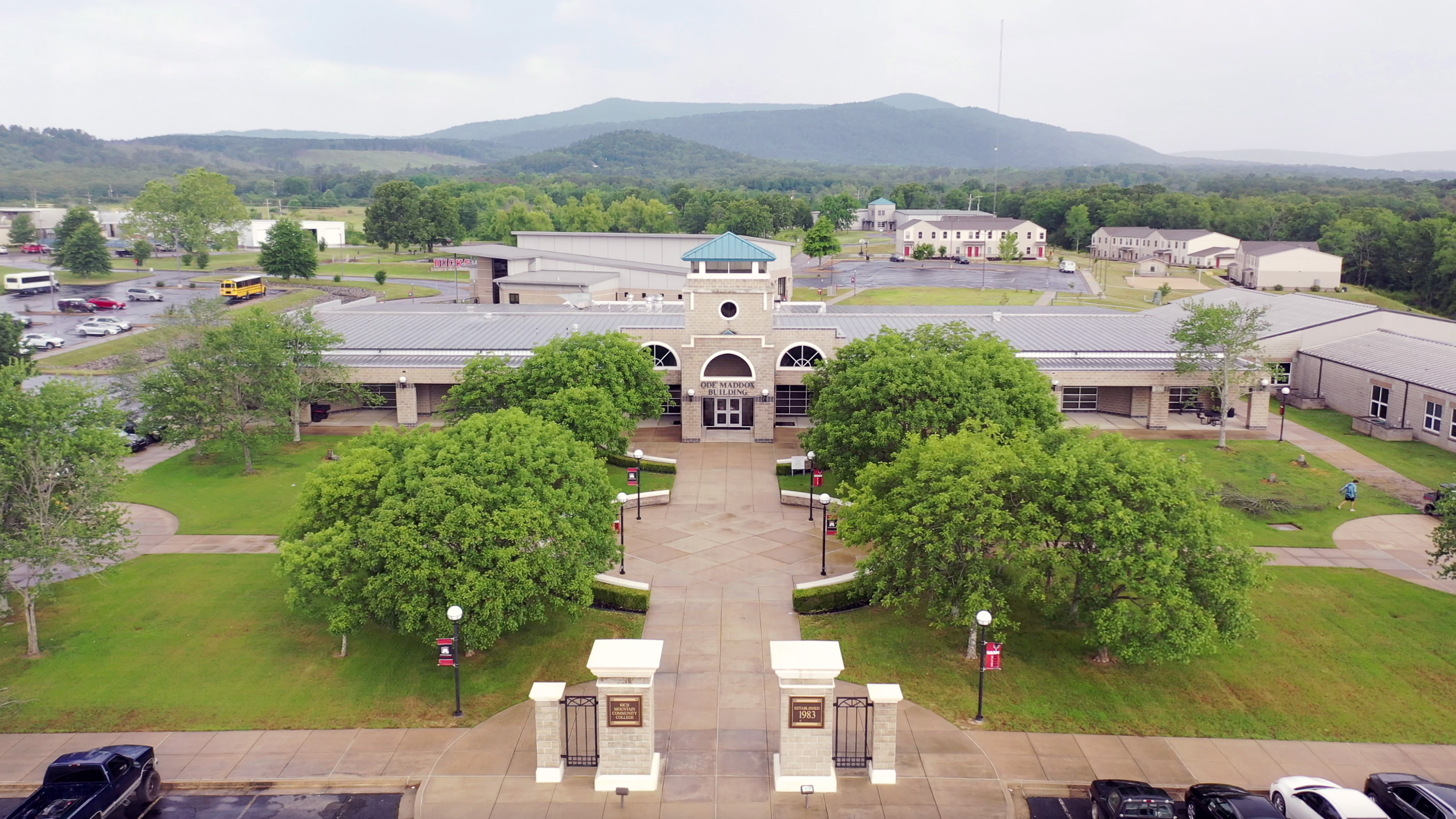
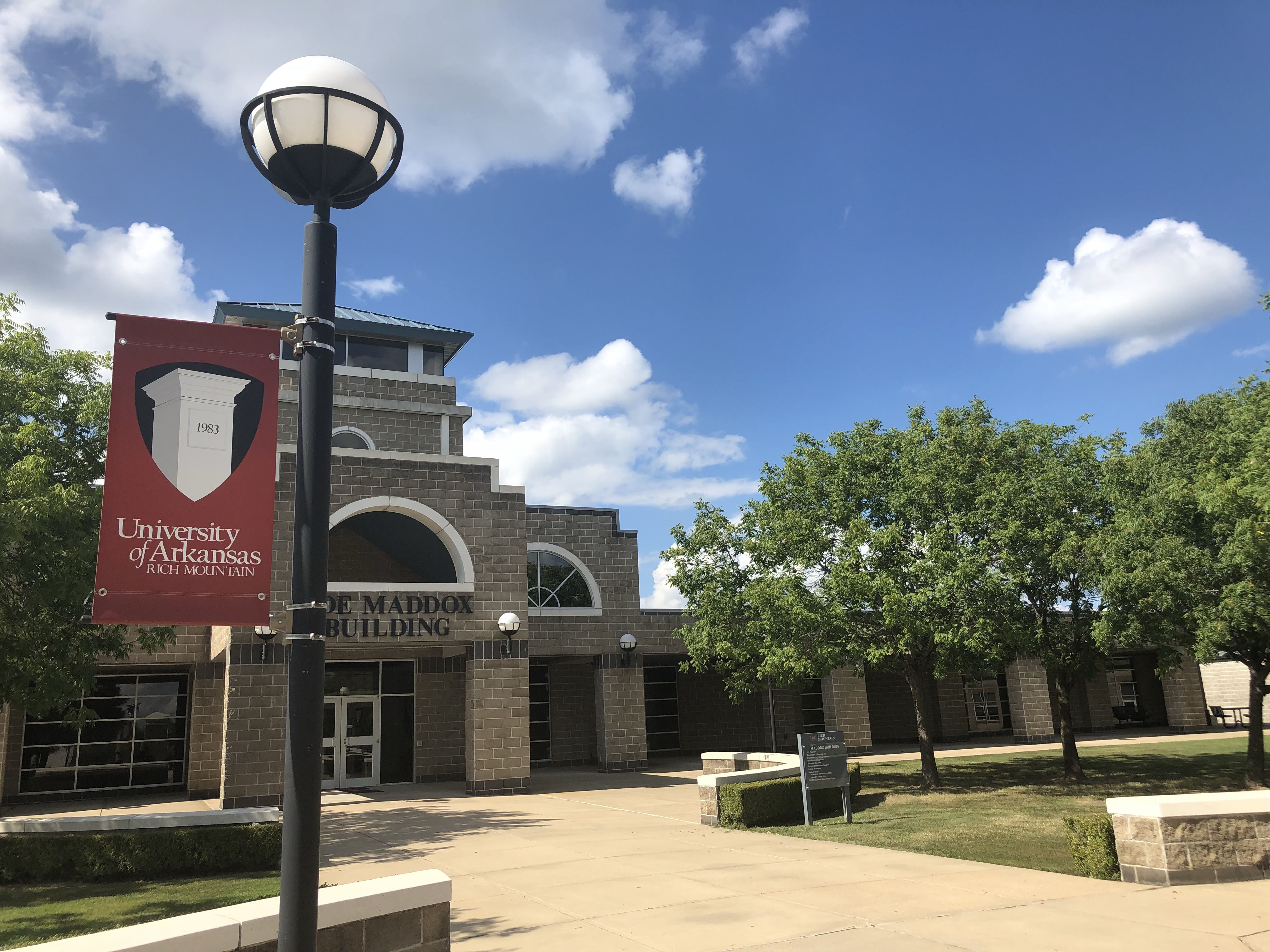
The University of Arkansas Community College Rich Mountain is a singularly pragmatic institution built for the working residents of western Arkansas. It operates on a famously convenient schedule—no Friday classes—and offers a direct, affordable on-ramp to careers in nursing, IT, and general studies, with a culture defined by its small-town setting and open-door admissions policy. This is a college that measures success not in selectivity, but in accessibility and return on investment for its local community.
More details
- Undergrad enrollment
- 503
- In-state tuition
- $3,696
- Out-of-state tuition
- $4,272
- Unique Schedule
- No Friday classes
- Popular Programs
- Liberal Studies, General Studies, Nursing
- Median Earnings (10yr)
- $30,037
- Student-to-Faculty Ratio
- 19:1 (16:1 per admissions)
- Grant/Scholarship Aid Recipients
- 90% of first-year students
Outcomes & value
Outcomes & value
- Median earnings (10 yr)
- $30,037
- Value (earnings ÷ net price)
- 6.2×
- Median debt at graduation
- $6,500
- Pell (lower-income) share
- 40%
- First-gen share (among federal-aid recipients)
- 64%
Earnings = median of students working ~10 years after entry; debt = median of graduates. Value divides 10-yr earnings by one year’s net price — read it as earnings per dollar of annual cost, not a full lifetime ROI; it favors lower-cost schools. Source: U.S. Dept. of Education College Scorecard. Figures lag ~2 years and reflect all students, not your intended major.
Campus & location
Campus safety
- On-campus violent crimes (2024)
- 0
On-campus criminal offenses classed as violent (murder/non-negligent manslaughter, rape, robbery, aggravated assault) for the most recent reported year. Source: U.S. Dept. of Education Campus Safety and Security (Clery Act). Counts reflect what’s reported to the school, and urban campuses often report more partly due to non-student incidents nearby — read alongside campus size and setting, not as a standalone safety verdict.
Climate
- Pleasant days / yr
- 89
- Summer high
- 89°F
- Winter low
- 36°F
- Annual rain
- 50"
- Annual snow
- 4.9"
- Natural-hazard risk
- Relatively Low
Pleasant days counts days per year with a mean temperature of 55–75°F, a high at or below 90°F, a low at or above 45°F, and little precipitation — a transparent comfort measure, not a weighting we invented. Computed from Open-Meteo ERA5 daily history (2019–2023). Natural-hazard risk is the county’s composite rating from the FEMA National Risk Index.
Quick answers
- How much does University of Arkansas Community College Rich Mountain cost?
- At University of Arkansas Community College Rich Mountain, the average net price (after aid) is about $4,842 per year. Actual cost varies with financial aid and residency.
- How many undergraduates attend University of Arkansas Community College Rich Mountain?
- University of Arkansas Community College Rich Mountain enrolls approximately 503 undergraduate students.
- Where is University of Arkansas Community College Rich Mountain located?
- University of Arkansas Community College Rich Mountain is located in Mena, AR.
Admissions
UA Rich Mountain practices a true open-door admissions policy, with every source reporting a 100% for applicants. The process is designed for accessibility, requiring proof of high school graduation or a GED, along with placement via ACT, SAT, or ACCUPLACER scores. In a recent cycle, 905 students applied, 905 were accepted, and 786 enrolled, reflecting its mission to serve the local population without barriers. There is no mention of an Early Decision program or a policy of considering demonstrated interest; the focus is squarely on meeting basic eligibility requirements.
Academics
Academics are career-focused and streamlined, with the college offering degrees and certificates in 15 different fields across 29 majors. The most popular programs are Liberal Arts and Sciences/Liberal Studies, General Studies, and Nursing. The nursing pathway is particularly prominent, with the college offering Certified Nursing Assistant (CNA), Licensed Practical Nurse (LPN), and Registered Nurse (RN) programs. A stated goal of every program is to develop student competence in critical thinking, effective communication, and using technology to solve problems. The student-to-faculty ratio is reported as 19:1, though the admissions page advertises a more intimate 16:1, suggesting small class sizes are a point of pride. The academic calendar includes a famously appealing perk: , a schedule designed to accommodate working students.
Compare University of Arkansas Community College Rich Mountain
vs University of Science and Arts of Oklahomavs Florida Polytechnic Universityvs United States Coast Guard Academyvs University of Arkansas at Pine Bluff
See colleges similar to University of Arkansas Community College Rich Mountain →Sources
- Common Data Set - Office of Strategic Analytics & Insights
- [PDF] 2024-2025 College Catalog - UA Rich Mountain
- University of Arkansas Community College Rich Mountain | Data USA
- Common Data Set: Home
- Common Data Set - Arkansas State University
- [XLS] Excel - Office of Strategic Analytics & Insights - University of Arkansas
- University of Arkansas Community College Rich Mountain - Niche
- University of Arkansas Rich Mountain - Tuition and Acceptance Rate
- University of Arkansas Community College Rich Mountain Admissions
- Admissions - University of Arkansas Rich Mountain