Admit rate has ranged 45%–59% over the last 5 years — notably volatile. Source: IPEDS via Urban Institute.
Acceptance & SAT from Common Data Set / IPEDS; net price, earnings & graduation from the U.S. Dept. of Education College Scorecard. Figures lag ~1–2 years — verify with the school.
The University of Dallas isn't just another Catholic liberal arts college in Texas—it's a fiercely intellectual, Great Books-centric enclave where students debate Aristotle over coffee and spend semesters studying in Rome. With a 19-course Core curriculum that anchors every undergraduate degree, UD cultivates a particular breed of graduate: articulate, principled, and surprisingly successful in medical and law school admissions. This is a campus where faith and reason aren't at odds but in constant, lively conversation, anchored by a tight-knit community of just over 1,400 undergraduates.
Admission requirements
Test-optional — scores considered if submitted
Required
High school transcript
Grade point average
Letters of recommendation
College-prep program
TOEFL (non-native English)
Considered (not required)
Class rank
Test scores (SAT/ACT)
Source: IPEDS Admissions survey (2022) via Urban Institute. Covers formal factors only — it does not reflect essays, extracurriculars, or other holistic criteria.
More details
Undergrad enrollment
1,403
In-state tuition
$53,930
Out-of-state tuition
$53,930
Graduation Rate
73%
Median Earnings (10yr)
$58,285
Students Receiving Aid
98%
Average Financial Aid Package
$45,681
Student Clubs & Organizations
Over 50
Outcomes & value
Outcomes & value
Median earnings (10 yr)
$58,285
Value (earnings ÷ net price)
2.6×
Median debt at graduation
$23,117
Graduation rate
73%
First-year retention
77%
Reducing loan balance (3 yr)
75%
Pell (lower-income) share
26%
First-gen share (among federal-aid recipients)
16%
Financial health
2.2 / 3.0Meets the federal financial-responsibility standard
U.S. Dept. of Education Financial Responsibility Composite Score (FY2022-23). Scale −1.0 to 3.0; ≥1.5 meets the standard. Reported for private nonprofit & for-profit institutions only — public universities are state-backed and not scored, so this is a stability signal, not a ranking.
Top-earning majors
Median earnings by field of study (highest credential), ~2 years after completion.
Business Administration, Management and Operations$48,432
Economics$47,260
Teacher Education and Professional Development, Specific Levels and Methods$35,060
History$33,281
Theological and Ministerial Studies$28,598
Psychology, General$26,896
Campus & location
Campus safety
On-campus violent crimes (2024)
0
Per 1,000 students
0.00
On-campus criminal offenses classed as violent (murder/non-negligent manslaughter, rape, robbery, aggravated assault) for the most recent reported year. Source: U.S. Dept. of Education Campus Safety and Security (Clery Act). Counts reflect what’s reported to the school, and urban campuses often report more partly due to non-student incidents nearby — read alongside campus size and setting, not as a standalone safety verdict.
Climate
Pleasant days / yr
88
Summer high
94°F
Winter low
40°F
Annual rain
53.8"
Annual snow
1.6"
Natural-hazard risk
Very High
Pleasant days counts days per year with a mean temperature of 55–75°F, a high at or below 90°F, a low at or above 45°F, and little precipitation — a transparent comfort measure, not a weighting we invented. Computed from Open-Meteo ERA5 daily history (2019–2023). Natural-hazard risk is the county’s composite rating from the FEMA National Risk Index.
Deep dive — research, future-scholar output & economic mobility▾
Research output
Institutional h-index
132
Scholarly works
4,162
Institutional research volume and impact from OpenAlex. The h-index reflects large research universities and will be low for teaching-focused liberal-arts colleges — not a measure of undergraduate quality.
Share of this school’s graduates who go on to earn research doctorates (2010–20), by national rank and per-capita yield (NSF institutional-yield ratio). A signal of a research-oriented student culture — not a causal promise, since it partly reflects who enrolls. Only top producers appear. Source: NSF NCSES, Baccalaureate Origins of U.S. Research Doctorate Recipients.
Economic mobility
Mobility rate
1.3%
Bottom → top quintile
Quick answers
What is the acceptance rate at University of Dallas?
University of Dallas's acceptance rate is approximately 53% (Irving, TX), based on the most recent figures we compiled from public and primary sources.
What SAT score do you need for University of Dallas?
Admitted students at University of Dallas typically score 1120–1370 on the SAT (the middle-50% range). Scores outside this band are still admitted, especially with strong applications.
How much does University of Dallas cost?
At University of Dallas, the average net price (after aid) is about $22,610 per year. Actual cost varies with financial aid and residency.
How many undergraduates attend University of Dallas?
University of Dallas enrolls approximately 1,403 undergraduate students.
Where is University of Dallas located?
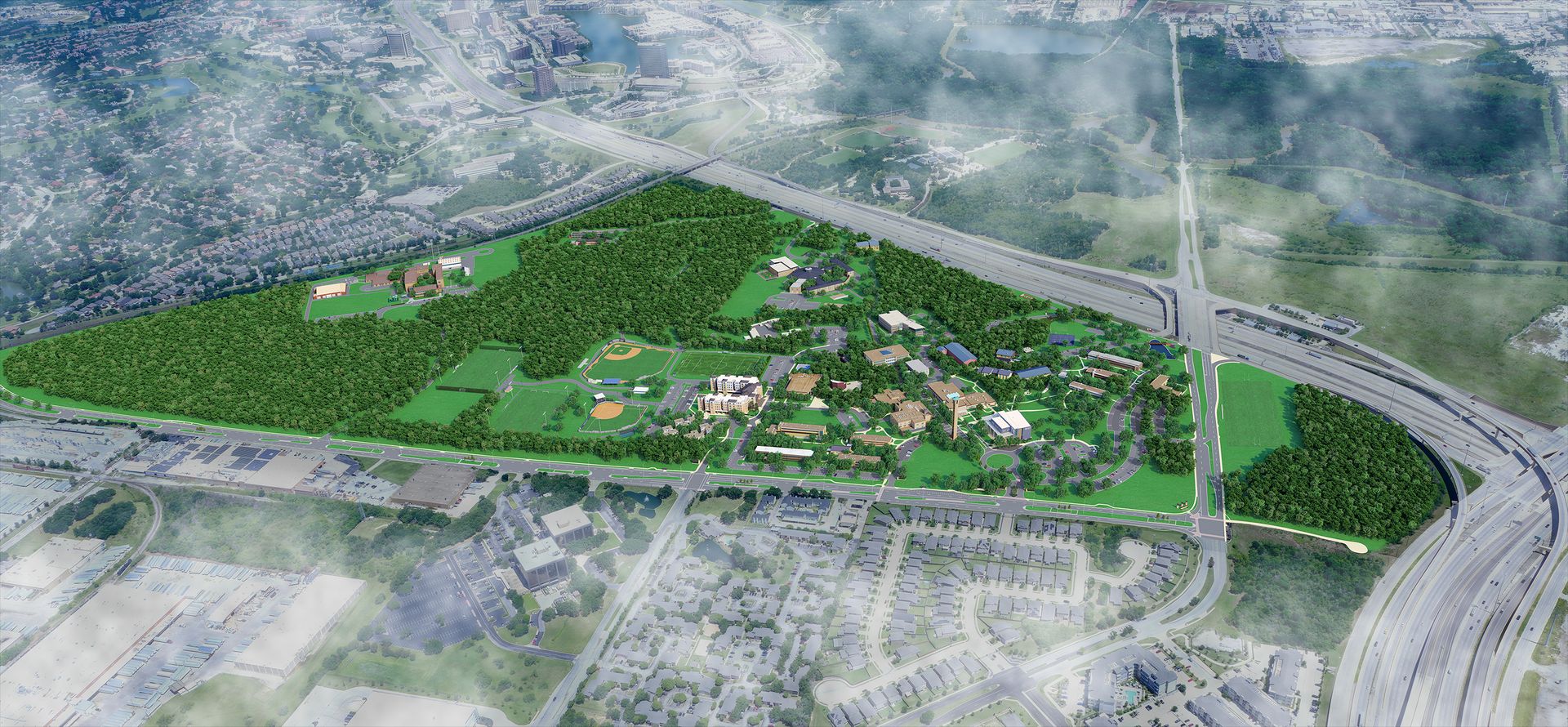
University of Dallas is located in Irving, TX.
Admissions
The University of Dallas occupies a distinctive middle ground in selectivity—more accessible than the hyper-competitive elite liberal arts colleges it often compares itself to academically, yet selective enough to curate a class of students prepared for its demanding Core curriculum. The admissions process is moderately selective, with a focus on academic preparation for its rigorous liberal arts program.
Admitted students typically present strong academic credentials. The middle 50% SAT range for admitted students who submitted scores is 1120–1370. The university participates in the initiative, which provides standardized reporting on admissions criteria and student demographics. While the university's own institutional research office handles data requests and reporting, specific details on the relative importance of factors like class rank, GPA, and standardized test scores are documented through these common datasets.
Application materials are processed through the admissions office, which evaluates candidates holistically. Notably, the university does not appear to have a binding Early Decision program that creates a significant admissions advantage, distinguishing it from many private liberal arts colleges that fill large portions of their classes through early commitment.
Earnings = median of students working ~10 years after entry; debt = median of graduates. Value divides 10-yr earnings by one year’s net price — read it as earnings per dollar of annual cost, not a full lifetime ROI; it favors lower-cost schools. Source: U.S. Dept. of Education College Scorecard. Figures lag ~2 years and reflect all students, not your intended major.
Source: U.S. Dept. of Education College Scorecard (field-of-study earnings). Figures cover graduates who received federal aid and lag ~2 years; not all programs report data.
Mobility rate = the share of students who both start in the bottom household-income quintile and reach the top quintile; bottom → top is that chance conditional on starting at the bottom. Source: Opportunity Insights Mobility Report Cards (Chetty, Friedman, Saez, Turner & Yagan). Reflects 1980–82 birth cohorts, so it’s directional, not current.
The academic identity of the University of Dallas is unequivocally defined by its rigorous Core curriculum—a 19-course sequence in philosophy, history, literature, science, and theology that every undergraduate must complete, regardless of their major. This is not a sampling of general education requirements but a coherent, sequential exploration of the Western intellectual tradition that begins with Homer and Aristotle and progresses through the modern era.
The university offers 27 undergraduate majors through its Constantin College of Liberal Arts, with particularly notable strength in fields that complement the Core: philosophy, theology, and foreign languages. According to U.S. News data, 6% of graduates major in Foreign Languages, Literatures, and Linguistics, another 6% in Theology and Religious Vocations, and 5% in Philosophy and Religious Studies. The curriculum's demanding nature prepares students exceptionally well for graduate and professional programs; the university promotes that its graduates "thrive in top medical, law, and graduate programs, rivaling Ivy League schools in job placement."
Graduate education is also robust, with more than 20 graduate programs offered alongside a range of certificate programs. The academic environment is unapologetically focused on deep reading, seminar-style discussion, and writing—this is a place where students learn to think, argue, and write with precision.
Life at UD is intensely communal and unmistakably Catholic, described by the university itself as cultivating "an authentic Catholic Community that holistically develops students for leadership and service to the world." The campus vibe is one of shared intellectual and spiritual pursuit—this isn't a party school, but a place where students form "lifelong friendships" around shared values and rigorous learning.
Students have formed over 50 clubs and organizations spanning academics, culture, politics, and hobbies. The Office of Student Life, located in the Haggar University Center, serves as the hub for this activity. Campus life integrates academic and social spheres closely, with frequent events like lecture and film series, art exhibitions, plays, and musical performances. Reviews on Niche give the campus life a B+ grade, based on assessments of campus diversity and social scene.
The university presents itself as "The Catholic University for Independent Thinkers," suggesting a culture that values both faith and intellectual autonomy. This creates a unique environment where traditional Catholic devotion coexists with intense philosophical debate—a combination that defines the UD experience.
UD graduates emerge with distinctive outcomes that reflect both the quality of their education and the professional pathways the curriculum enables. The graduation rate is a solid 73%, indicating that most students who enroll persist through the demanding curriculum to completion.
Career outcomes are strong, particularly for graduate degree seekers. According to university data on graduate students, those who responded to surveys reported an average salary of $87,568 and a median salary of $70,000. Out of a class of 258 graduate students surveyed, 81 earned a promotion while pursuing their degrees—a testament to the immediate applicability of their education.
Longer-term earnings data shows steady growth: while early career earnings start around $42,141 one year after graduation, this grows to $60,044 five years out. The university heavily promotes its success in placing graduates into top medical, law, and graduate programs, suggesting that many students use their UD education as a springboard to advanced degrees rather than immediate employment.
The retention and graduation data maintained by the university shows a 77% overall graduation rate when considering full-time students, though the specific methodology behind this figure isn't detailed in available sources.
The University of Dallas makes significant investments in financial aid to ensure access to its distinctive education. About 98% of students receive some form of merit scholarships or financial aid, creating a culture where nearly every student benefits from institutional support.
The —what students actually pay after scholarships and grants—varies by source but shows substantial discounting from the sticker price. One source reports the net price at $29,520, while another puts it at $31,221 after scholarships and grants. For the 2024-25 academic year, the university reports that the average tuition, housing, and food cost after scholarships and grants for first-year students is $35,760.
The average financial aid package is reported at $45,681, with 62.92% of students receiving financial aid. Students who complete the FAFSA and are eligible for federal aid can receive up to $33,000 in assistance on average. The university continues to offer robust scholarship opportunities ranging from $1,000 to full-tuition awards throughout the year.
While the university participates in federal loan programs and acknowledges private loans as part of financial aid packages, there's no indication in the available sources of a formal "no-loan" policy for low-income students or a guarantee to meet 100% of demonstrated need without loans.
The University of Dallas stands apart in American higher education as one of the few institutions that successfully merges a deeply committed Catholic identity with a fiercely intellectual, Great Books-based liberal arts curriculum. Unlike many Catholic universities that have secularized their curricula, UD leans into its tradition with a required theology component in its Core and an explicit mission to cultivate "joyful faith and rigorous learning."
What makes UD truly distinctive is how this combination plays out in practice: students who can quote Thomas Aquinas one moment and deconstruct Nietzsche the next, all within a community small enough that these conversations continue from the classroom to the dining hall. The Rome semester—while not detailed in the provided sources—is legendary in UD lore, representing the ultimate integration of the curriculum's study of Western civilization with direct experience of its origins.
The outcomes speak to the effectiveness of this model: graduates who are not just employed but prepared—for leadership, for graduate study, for thoughtful engagement with the world. In an era of increasing vocationalism in higher education, UD remains stubbornly committed to the idea that the best professional preparation is a deep education in what it means to be human. This is a school for students who want to read the difficult books, ask the big questions, and do so within a community that shares their fundamental commitments.
University of Dallas seal · sourceDirections to Campus · sourceThe University of Texas at Dallas - Full Episode | The College Tour · sourceUniversity of Dallas - Profile, Rankings and Data | US News Best Colleges · source