Loading…
← All schools
University of Guam
Mangilao, GUpublicuog.edu
Avg net price
$8,598
Earnings (10 yr)
$35,946
Graduation rate
37%
Acceptance & SAT from Common Data Set / IPEDS; net price, earnings & graduation from the U.S. Dept. of Education College Scorecard. Figures lag ~1–2 years — verify with the school.
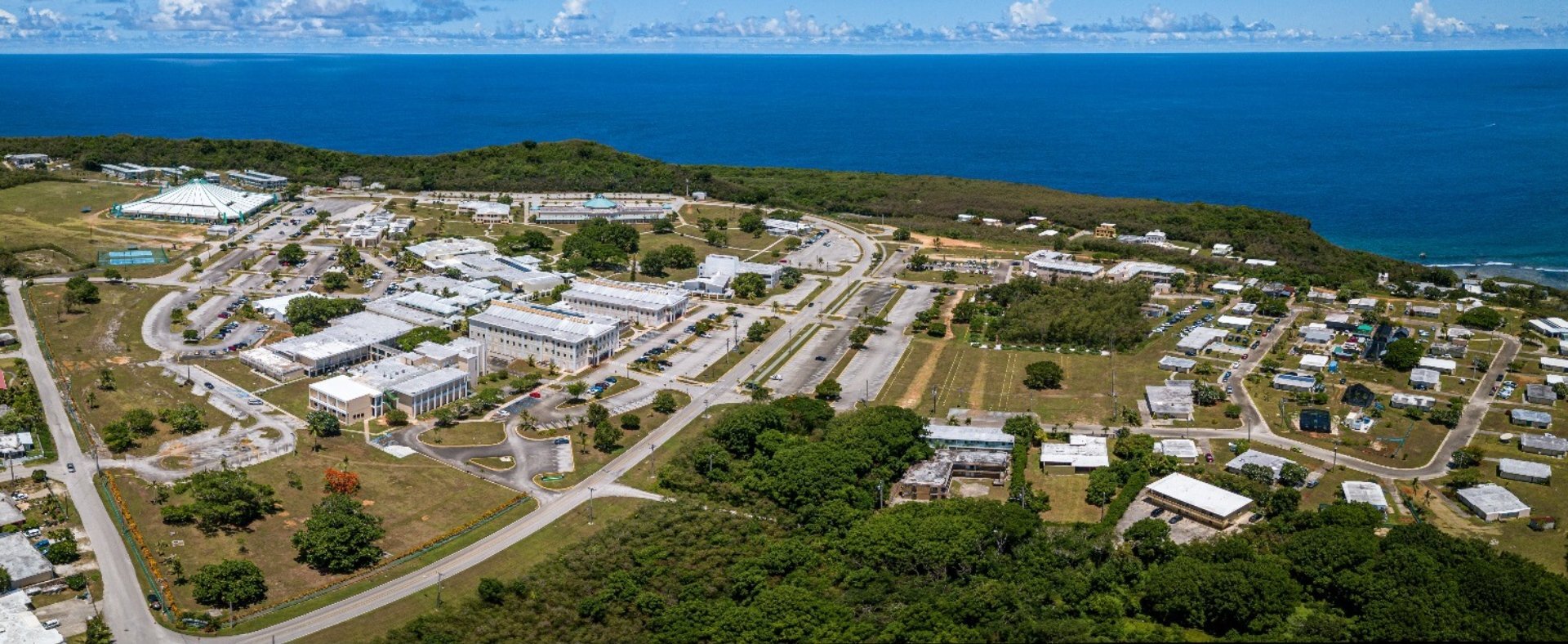
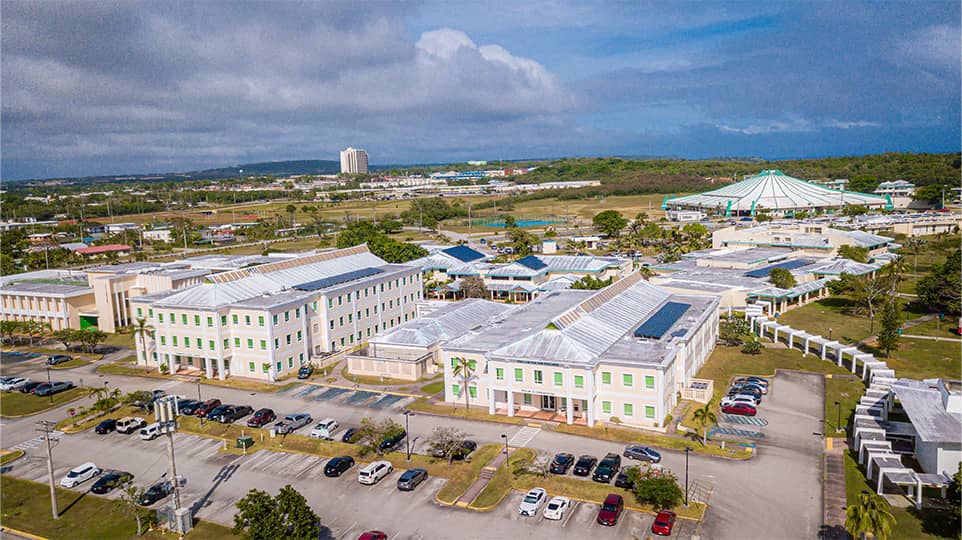
The University of Guam is the singular public university for the U.S. territory of Guam, serving as a vital educational and cultural hub for the Western Pacific. With an open-access admissions philosophy and a mission deeply rooted in the island's Chamorro heritage, it provides a relaxed, community-centered campus experience where students can forge their path amid the unique backdrop of Micronesian life. Its academic focus is pragmatic, with strengths in education, business, and public administration, designed to meet the needs of the local and regional workforce.
More details
- Undergrad enrollment
- 2,515
- In-state tuition
- $6,110
- Out-of-state tuition
- $11,414
- Unique Policy
- Free tuition for Guam residents 55+
- Graduation Rate
- 37%
- Median Earnings (10yr)
- $35,946
- First-Year Retention Rate
- 77%
- Regular Application Deadline
- August 27
Outcomes & value
Outcomes & value
- Median earnings (10 yr)
- $35,946
- Value (earnings ÷ net price)
- 4.2×
- Median debt at graduation
- $16,786
- Graduation rate
- 37%
- First-year retention
- 77%
- Reducing loan balance (3 yr)
- 59%
- Pell (lower-income) share
- 45%
- First-gen share (among federal-aid recipients)
- 46%
Top-earning majors
Median earnings by field of study (highest credential), ~2 years after completion.
- Registered Nursing, Nursing Administration, Nursing Research and Clinical Nursing$49,625
- Accounting and Related Services$33,281
- English Language and Literature, General$23,649
- Business Administration, Management and Operations$21,850
Source: U.S. Dept. of Education College Scorecard (field-of-study earnings). Figures cover graduates who received federal aid and lag ~2 years; not all programs report data.
Compare on earnings: best colleges for Nursing · best colleges for Accounting · best colleges for English
Campus & location
Campus safety
- On-campus violent crimes (2024)
- 0
- Per 1,000 students
- 0.00
On-campus criminal offenses classed as violent (murder/non-negligent manslaughter, rape, robbery, aggravated assault) for the most recent reported year. Source: U.S. Dept. of Education Campus Safety and Security (Clery Act). Counts reflect what’s reported to the school, and urban campuses often report more partly due to non-student incidents nearby — read alongside campus size and setting, not as a standalone safety verdict.
Climate
- Pleasant days / yr
- 0
- Summer high
- 84°F
- Winter low
- 77°F
- Annual rain
- 96.6"
Pleasant days counts days per year with a mean temperature of 55–75°F, a high at or below 90°F, a low at or above 45°F, and little precipitation — a transparent comfort measure, not a weighting we invented. Computed from Open-Meteo ERA5 daily history (2019–2023).
Quick answers
- How much does University of Guam cost?
- At University of Guam, the average net price (after aid) is about $8,598 per year. Actual cost varies with financial aid and residency.
- How many undergraduates attend University of Guam?
- University of Guam enrolls approximately 2,515 undergraduate students.
- Where is University of Guam located?
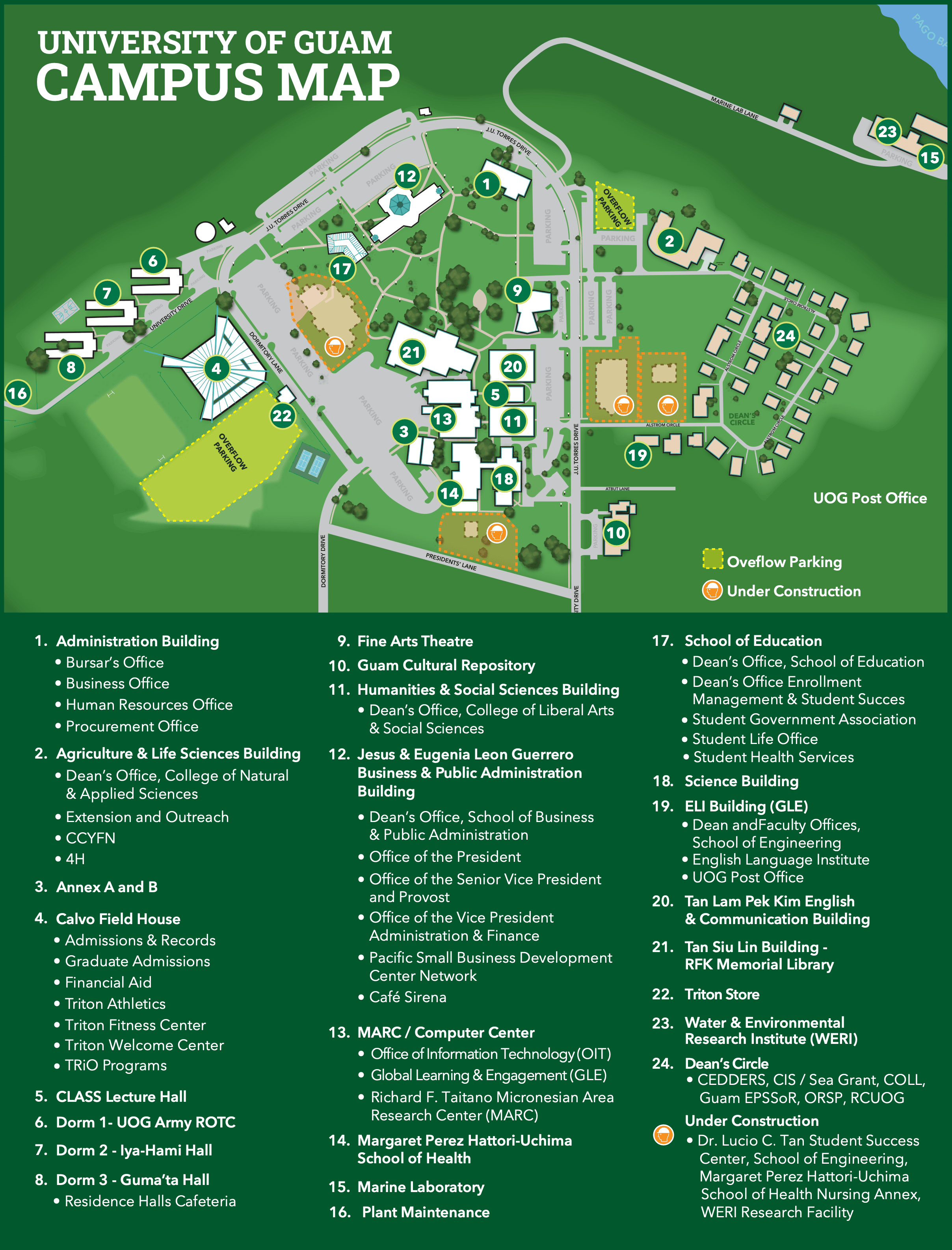
- University of Guam is located in Mangilao, GU.
Admissions
The University of Guam operates on an open-access admissions model, making higher education widely available to the island's residents and the broader Micronesian region. With reported at 99% or 100%, the process is non-selective and designed to be inclusive. The university emphasizes that admissions decisions are typically made within 2 to 3 days after an application is received, indicating a straightforward and expedited process. The regular admissions application deadline is August 27. While the framework outlines that factors like academic GPA, standardized test scores, application essays, and recommendations can be considered 'Very Important' in admissions decisions generally, UOG's high acceptance rate suggests these criteria serve more as baseline requirements for readiness rather than as competitive filters. The university enrolls a mix of full-time and part-time students, with total enrollment reported at 2,896 students in 2024, of which 2,165 were full-time. There is no mention of an Early Decision program; the process is centered on regular admission and early registration.
Compare University of Guam
vs University of Puerto Ricovs University of Puerto Rico-Carolinavs University of Puerto Rico at Poncevs University of Puerto Rico-Humacao
See colleges similar to University of Guam →Sources
- Institutional Effectiveness
- Common Data Set: Home
- Common Data Set 2024-2025
- The Common Data Set: What It Is & How to Use It In College Applications
- University of Guam: Unibetsedåt Guåhan
- University of Guam
- University of Guam Admissions - US News Best Colleges
- University of Guam - Tuition and Acceptance Rate
- University of Guam
- College admissions predictions. - University of Guam
- University of Guam Admission, Acceptance Rate, SAT, ACT & GPA