Admit rate has ranged 73%–93% over the last 5 years — notably volatile, though the latest figure above (67%) falls outside that window. Source: IPEDS via Urban Institute.
Acceptance & SAT from Common Data Set / IPEDS; net price, earnings & graduation from the U.S. Dept. of Education College Scorecard. Figures lag ~1–2 years — verify with the school.
The University of Indianapolis (UIndy) is a private, comprehensive university that feels like a well-kept secret in the heart of the Midwest. Founded in 1902, it operates with a practical, hands-on ethos, channeling students into high-demand fields like nursing, business, and psychology through a supportive, close-knit campus community. It’s a place where accessibility—with a test-optional policy and a 67% acceptance rate—meets tangible outcomes, boasting a 91% positive career outcome rate for recent graduates.
Admission requirements
Test-blind — scores not considered
Required
Grade point average
TOEFL (non-native English)
Considered (not required)
High school transcript
Letters of recommendation
College-prep program
Demonstrated competencies
Source: IPEDS Admissions survey (2022) via Urban Institute. Covers formal factors only — it does not reflect essays, extracurriculars, or other holistic criteria.
More details
Undergrad enrollment
3,005
In-state tuition
$37,200
Out-of-state tuition
$37,200
Campus Housing
56% of students
No-Loan Policy
No
Popular Majors
Nursing, Psychology, Business
Application Fee
$0
Graduation Rate
56%
Meets Full Need
No indication
Demonstrated Interest
Not considered (per CDS inference)
Student Organizations
70+
Median Earnings (10yr)
$53,610
Outcomes & value
Outcomes & value
Median earnings (10 yr)
$53,610
Value (earnings ÷ net price)
2.5×
Median debt at graduation
$26,864
Graduation rate
56%
First-year retention
71%
Reducing loan balance (3 yr)
52%
Pell (lower-income) share
33%
First-gen share (among federal-aid recipients)
32%
Financial health
2.4 / 3.0Meets the federal financial-responsibility standard
U.S. Dept. of Education Financial Responsibility Composite Score (FY2022-23). Scale −1.0 to 3.0; ≥1.5 meets the standard. Reported for private nonprofit & for-profit institutions only — public universities are state-backed and not scored, so this is a stability signal, not a ranking.
Top-earning majors
Median earnings by field of study (highest credential), ~2 years after completion.
Registered Nursing, Nursing Administration, Nursing Research and Clinical Nursing$60,821
Accounting and Related Services$49,644
Allied Health Diagnostic, Intervention, and Treatment Professions$47,260
Business Administration, Management and Operations$45,618
Marketing$42,682
Teacher Education and Professional Development, Specific Subject Areas
Campus & location
Campus safety
On-campus violent crimes (2024)
5
Per 1,000 students
1.14
On-campus criminal offenses classed as violent (murder/non-negligent manslaughter, rape, robbery, aggravated assault) for the most recent reported year. Source: U.S. Dept. of Education Campus Safety and Security (Clery Act). Counts reflect what’s reported to the school, and urban campuses often report more partly due to non-student incidents nearby — read alongside campus size and setting, not as a standalone safety verdict.
Climate
Pleasant days / yr
87
Summer high
84°F
Winter low
26°F
Annual rain
44.8"
Annual snow
17.5"
Natural-hazard risk
Relatively High
Pleasant days counts days per year with a mean temperature of 55–75°F, a high at or below 90°F, a low at or above 45°F, and little precipitation — a transparent comfort measure, not a weighting we invented. Computed from Open-Meteo ERA5 daily history (2019–2023). Natural-hazard risk is the county’s composite rating from the FEMA National Risk Index.
Deep dive — research, future-scholar output & economic mobility▾
Research output
Institutional h-index
233
Scholarly works
12,037
Institutional research volume and impact from OpenAlex. The h-index reflects large research universities and will be low for teaching-focused liberal-arts colleges — not a measure of undergraduate quality.
Economic mobility
Mobility rate
1.0%
Bottom → top quintile
18%
From bottom quintile
5%
Mobility rate = the share of students who both start in the bottom household-income quintile and reach the top quintile; bottom → top is that chance conditional on starting at the bottom. Source: Opportunity Insights Mobility Report Cards (Chetty, Friedman, Saez, Turner & Yagan). Reflects 1980–82 birth cohorts, so it’s directional, not current.
Quick answers
What is the acceptance rate at University of Indianapolis?
University of Indianapolis's acceptance rate is approximately 67% (Indianapolis, IN), based on the most recent figures we compiled from public and primary sources.
How much does University of Indianapolis cost?
At University of Indianapolis, the average net price (after aid) is about $21,602 per year. Actual cost varies with financial aid and residency.
How many undergraduates attend University of Indianapolis?
University of Indianapolis enrolls approximately 3,005 undergraduate students.
Where is University of Indianapolis located?
University of Indianapolis is located in Indianapolis, IN.
Admissions
UIndy positions itself as an accessible, student-centered gateway to higher education. The admissions process is decidedly less selective, with an of 67%. The university is , meaning undergraduate applicants are not required to submit SAT or ACT scores for consideration. While specific GPA ranges for admitted students are not detailed in the provided sources, the process is designed to be straightforward with no application fee. The university's rate—the percentage of admitted students who enroll—is reported at 10.63%, which is relatively low and suggests admitted students often have multiple options. There is no indication from the provided sources that UIndy employs an Early Decision program or that it tracks demonstrated interest (like campus visits or communications) as a factor in admissions decisions.
Earnings = median of students working ~10 years after entry; debt = median of graduates. Value divides 10-yr earnings by one year’s net price — read it as earnings per dollar of annual cost, not a full lifetime ROI; it favors lower-cost schools. Source: U.S. Dept. of Education College Scorecard. Figures lag ~2 years and reflect all students, not your intended major.
$40,365
Liberal Arts and Sciences, General Studies and Humanities$40,132
Teacher Education and Professional Development, Specific Levels and Methods$39,369
Source: U.S. Dept. of Education College Scorecard (field-of-study earnings). Figures cover graduates who received federal aid and lag ~2 years; not all programs report data.
Academics at UIndy are defined by a comprehensive, career-oriented curriculum spanning associate, bachelor's, master's, and doctoral degrees. The university offers a wide array of undergraduate programs, with a distinct focus on direct pathways to professions. The most popular majors reflect this practical bent: Registered Nursing, Psychology, and Business Administration and Management. Students can explore diverse bachelor's degree programs, with the institution emphasizing hands-on learning and supportive faculty. The academic structure allows for exploration across disciplines, with resources and support geared toward a clear educational journey. Founded in 1902 as Indiana Central University, the school has evolved into a modern institution preparing students for specific roles in the workforce.
Life on the south side of Indianapolis revolves around a vibrant, close-knit campus community. Over 70 student clubs and organizations—from academic groups to cultural associations—provide the backbone of engagement, ensuring there's a niche for every interest. The residential experience is a significant part of the fabric, with 56% of students living in college-owned, -operated, or -affiliated housing, while 44% live off-campus. This blend fosters a cohesive environment where, as one graduate student perspective highlighted, responsive campus leadership and meaningful involvement opportunities make UIndy feel like a place where students truly belong. The culture is described as fostering lifelong connections among a diverse student body.
UIndy's value proposition is crystallized in its career outcomes. For the 2024 graduating cohort, an impressive 91% achieved a positive career outcome, which includes employment or further education. The median earnings for alumni ten years after entry is $53,610. The university's overall graduation rate is 56%. These figures suggest a institution that successfully launches the majority of its graduates into the next stage of their careers, with earnings that provide a solid return on investment for a private, regional university.
The published total for undergraduate students is $47,996. However, the average after aid—what students typically pay—is significantly lower at $21,602. A large majority of students (73.17%) receive financial aid, with the average aid package totaling $36,333. The university encourages all students to complete the FAFSA to be considered for and offers scholarships that do not need to be repaid. The financial aid office provides resources like a net price calculator for families to estimate costs. The provided sources do not indicate that UIndy has a policy of meeting 100% of demonstrated financial need without loans (a 'no-loan' policy); standard federal loan programs (Direct Subsidized and Unsubsidized Loans) are part of the aid offerings.
The University of Indianapolis carves out its distinct identity by mastering the balance between open access and high-impact results. It’s not a hyper-selective ivory tower, but a grounded institution where the 67% and policy open doors for a broad range of students. Once inside, they find a purpose-driven environment: the curriculum is laser-focused on in-demand fields like nursing and business, and the small-campus vibe with over 70 clubs creates a supportive community. This practical formula works. The staggering 91% positive career outcome rate for graduates isn't just a brochure statistic; it's the core proof of UIndy's mission. It’s a university that bets on students who might be overlooked elsewhere and equips them with the hands-on skills and direct support to not just graduate, but to launch successfully—making it a potent engine for upward mobility in the Midwest.
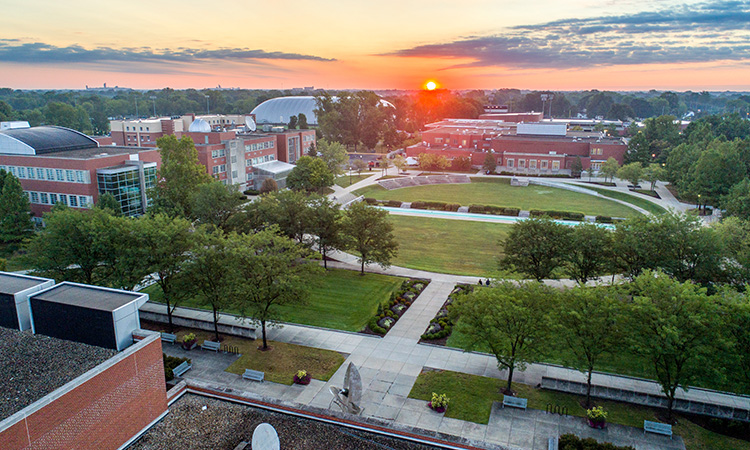
University of Indianapolis seal · sourceSculpture Walk | UIndy · sourceUIndy Rises in U.S. News & World Report Best Colleges Rankings - UIndy 360 · sourceUniversity of Indianapolis - Profile, Rankings and Data | US News Best Colleges · source