Admit rate has ranged 82%–97% over the last 5 years — notably volatile, though the latest figure above (43%) falls outside that window. Source: IPEDS via Urban Institute.
Acceptance & SAT from Common Data Set / IPEDS; net price, earnings & graduation from the U.S. Dept. of Education College Scorecard. Figures lag ~1–2 years — verify with the school.
The University of Lynchburg is a small, private liberal arts university in Virginia that operates with a distinctively pragmatic and supportive ethos. It’s a place where a test-optional, direct-admissions approach aims to widen access, and where the academic focus tilts decisively toward pre-professional fields like business, health sciences, and exercise physiology. The vibe is residential and communal—three-quarters of students live on campus—with an outcomes profile that speaks to steady, if not stratospheric, career progression for its graduates.
Admission requirements
Test-optional — scores considered if submitted
Required
High school transcript
Grade point average
College-prep program
TOEFL (non-native English)
Considered (not required)
Letters of recommendation
Test scores (SAT/ACT)
Demonstrated competencies
Source: IPEDS Admissions survey (2022) via Urban Institute. Covers formal factors only — it does not reflect essays, extracurriculars, or other holistic criteria.
More details
Undergrad enrollment
1,577
In-state tuition
$36,750
Out-of-state tuition
$36,750
Graduation Rate
57%
On-Campus Housing
74% of students
Median Earnings (10yr)
$56,380
Universal First-Year Merit Aid
$18,000-$25,000/year
Outcomes & value
Outcomes & value
Median earnings (10 yr)
$56,380
Value (earnings ÷ net price)
2.5×
Median debt at graduation
$27,000
Graduation rate
57%
First-year retention
71%
Reducing loan balance (3 yr)
68%
Pell (lower-income) share
28%
First-gen share (among federal-aid recipients)
30%
Financial health
2.2 / 3.0Meets the federal financial-responsibility standard
U.S. Dept. of Education Financial Responsibility Composite Score (FY2022-23). Scale −1.0 to 3.0; ≥1.5 meets the standard. Reported for private nonprofit & for-profit institutions only — public universities are state-backed and not scored, so this is a stability signal, not a ranking.
Top-earning majors
Median earnings by field of study (highest credential), ~2 years after completion.
Registered Nursing, Nursing Administration, Nursing Research and Clinical Nursing$57,770
Criminology$33,459
Teacher Education and Professional Development, Specific Levels and Methods$32,925
Communication and Media Studies$31,133
Source: U.S. Dept. of Education College Scorecard (field-of-study earnings). Figures cover graduates who received federal aid and lag ~2 years; not all programs report data.
On-campus criminal offenses classed as violent (murder/non-negligent manslaughter, rape, robbery, aggravated assault) for the most recent reported year. Source: U.S. Dept. of Education Campus Safety and Security (Clery Act). Counts reflect what’s reported to the school, and urban campuses often report more partly due to non-student incidents nearby — read alongside campus size and setting, not as a standalone safety verdict.
Climate
Pleasant days / yr
94
Summer high
87°F
Winter low
32°F
Annual rain
41.9"
Annual snow
9.5"
Natural-hazard risk
Relatively Low
Pleasant days counts days per year with a mean temperature of 55–75°F, a high at or below 90°F, a low at or above 45°F, and little precipitation — a transparent comfort measure, not a weighting we invented. Computed from Open-Meteo ERA5 daily history (2019–2023). Natural-hazard risk is the county’s composite rating from the FEMA National Risk Index.
Deep dive — research, future-scholar output & economic mobility▾
Research output
Institutional h-index
102
Scholarly works
2,383
Institutional research volume and impact from OpenAlex. The h-index reflects large research universities and will be low for teaching-focused liberal-arts colleges — not a measure of undergraduate quality.
Quick answers
What is the acceptance rate at University of Lynchburg?
University of Lynchburg's acceptance rate is approximately 43% (Lynchburg, VA), based on the most recent figures we compiled from public and primary sources.
What SAT score do you need for University of Lynchburg?
Admitted students at University of Lynchburg typically score 980–1230 on the SAT (the middle-50% range). Scores outside this band are still admitted, especially with strong applications.
How much does University of Lynchburg cost?
At University of Lynchburg, the average net price (after aid) is about $22,235 per year. Actual cost varies with financial aid and residency.
How many undergraduates attend University of Lynchburg?
University of Lynchburg enrolls approximately 1,577 undergraduate students.
Where is University of Lynchburg located?
University of Lynchburg is located in Lynchburg, VA.
Admissions
Lynchburg’s admissions process is designed to be accessible, framing itself as "selective" but with a gateway that is notably wider than many of its private liberal arts peers. The university accepts the Common Application and has embraced a policy, meaning SAT and ACT scores are not required for admission or even for merit scholarships. This aligns with its recent participation in Common App's direct admissions program, an initiative aimed explicitly at providing pathways for over 200,000 and low-income students. The process appears to be geared toward evaluating a student's overall profile rather than test scores alone.
While the overall selectivity is moderate, there is a strategic advantage to applying with commitment. Early Decision applicants see a significantly higher —61% compared to the overall rate—highlighting the value the university places on demonstrated interest and a secured enrollment. For the admitted class, the academic middle is solid but not hyper-competitive, with a focus on a student's GPA and overall readiness for college-level work.
Earnings = median of students working ~10 years after entry; debt = median of graduates. Value divides 10-yr earnings by one year’s net price — read it as earnings per dollar of annual cost, not a full lifetime ROI; it favors lower-cost schools. Source: U.S. Dept. of Education College Scorecard. Figures lag ~2 years and reflect all students, not your intended major.
Academically, Lynchburg is firmly planted in the practical. The curriculum is designed to "inspire independent thinkers to become trustworthy, effective leaders," but the programmatic heart of the university beats strongest in health, business, and science. This isn't a school where esoteric humanities dominate; it's where students come to prepare for a job. The most popular majors for recent graduates tell the story: Biological and Biomedical Sciences, and Business, Management, and Marketing, each accounted for 16% of the graduating class. Health professions and related programs followed closely.
A deeper look at the numbers reveals even more specific student interests. Niche data shows Business, Exercise Physiology, and Nursing as the top three majors by number of graduates, with Criminology and Psychology also in the top five. The university offers a range of undergraduate, graduate, and certificate options across the humanities, natural sciences, and social sciences, but the energy and enrollment are clearly channeled into fields with clear professional pathways. The academic environment is likely one of applied learning, where critical thinking and problem-solving are directed toward concrete outcomes.
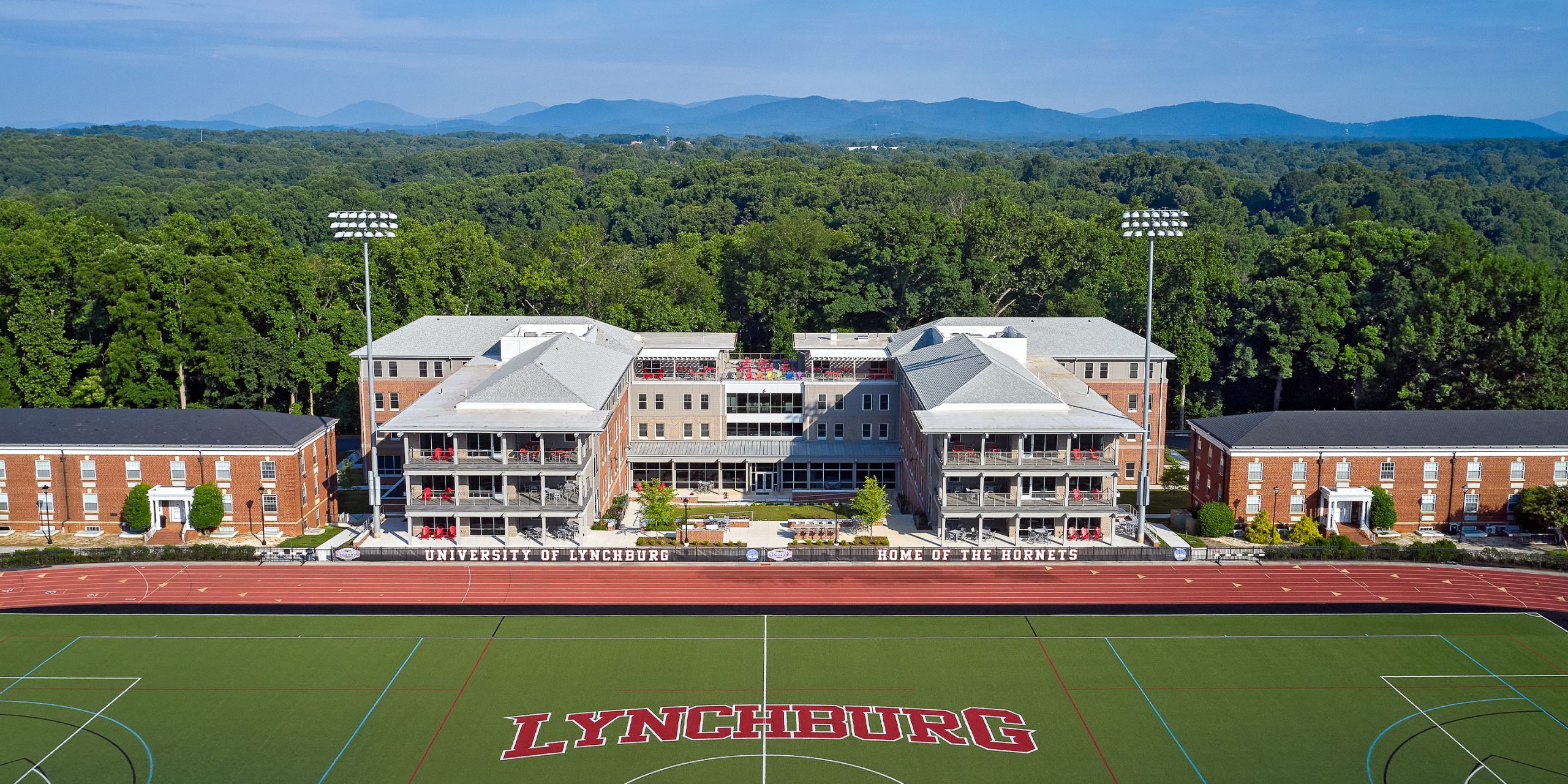
Life at Lynchburg is intensely residential and community-oriented. The university reports that 74% of students live in college-owned, -operated, or -affiliated housing, creating a campus-centric experience where the quad and dormitories are the primary social hubs. This high residential percentage fosters a tight-knit atmosphere; it’s the kind of place where you’re likely to know a significant portion of your class by sight, if not by name. The university actively promotes a "vibrant, engaging college life" filled with campus activities, and its Instagram presence emphasizes mutual support and community building beyond just academics.
The school has invested in creating intentional student spaces designed as welcoming environments for conversation, reflection, and community building. This focus on curated communal areas suggests an understanding that for a largely residential student body, the quality of non-classroom time is paramount. While details on specific traditions or a strong Greek life presence aren't detailed in the provided sources, the overall picture is of a classic, contained liberal arts campus where the line between academic and social life is blurred, and involvement in campus organizations is a key part of the experience.
Lynchburg’s outcomes narrative is one of steady, incremental progress rather than immediate high-flying success. The earnings trajectory for alumni is gradual: data shows average earnings rising from about $33,700 six years after entry to $46,000 ten years after entry. More authoritative state data reports a median wage of $65,953 for graduates 15 years out and $72,366 for those 20 years out, indicating that Lynchburg graduates build their careers and earning power reliably over the long term.
Graduation rates are a point of focus. One source reports an overall rate of 62%, placing it in the top 40% nationally, with a noticeable gender gap (56% for men, higher for women). The university itself highlights strong graduation rates for specific graduate programs, like its Master of Science in Athletic Training, which saw rates between 82% and 94% in recent years. This suggests that outcomes can be highly program-dependent. The overarching story is that a Lynchburg degree provides a foundation for stable, professional employment, with alumni seeing their most significant financial gains a decade or more into their careers.
Lynchburg employs a aggressive upfront discounting model to make its private education more accessible. The university states that all first-year students receive merit scholarships ranging from $18,000 to $25,000 per year, which dramatically reduces the sticker price. This universal approach is a core part of its financial strategy. Students and families are directed to use the official Calculator to get a personalized estimate, which includes not just merit aid but also need-based grants and federal loans.
It is important to note that Lynchburg is not among the elite group of institutions with a "no-loan" policy, where loans are replaced entirely with grants. The university offers federal student loans and expects them to be part of many financial aid packages. The financial aid office emphasizes that students must be enrolled full-time to receive most types of aid. The message is one of affordability through a combination of guaranteed merit awards and traditional , not through a loan-free promise.
The University of Lynchburg stands out for its deliberate, almost pragmatic, alignment of mission, admissions, and academics. It doesn't try to be an ultra-selective intellectual enclave. Instead, it positions itself as an engine of opportunity through direct admissions and universal . Its academic identity is refreshingly clear-cut: this is a school for students aiming for careers in business, health, and the sciences. The high residential percentage creates a specific type of undergraduate experience—immersive, communal, and focused on campus life—which is increasingly rare outside of the most expensive private colleges. Finally, its outcomes data paints a picture of a institution whose graduates may not land the highest starting salaries, but who build durable, growing careers over time. It’s a university built for the practical-minded student who wants a traditional, supportive campus experience while preparing for a specific professional field.
University of Lynchburg seal · sourceUniversity of Lynchburg – Colleges That Change Lives · sourceBonner / University of Lynchburg Campus Profile · sourceResidential Life Building + Honors College, University of Lynchburg - Cooper Carry · source