Admit rate has ranged 72%–81% over the last 5 years — notably volatile. Source: IPEDS via Urban Institute.
Acceptance & SAT from Common Data Set / IPEDS; net price, earnings & graduation from the U.S. Dept. of Education College Scorecard. Figures lag ~1–2 years — verify with the school.
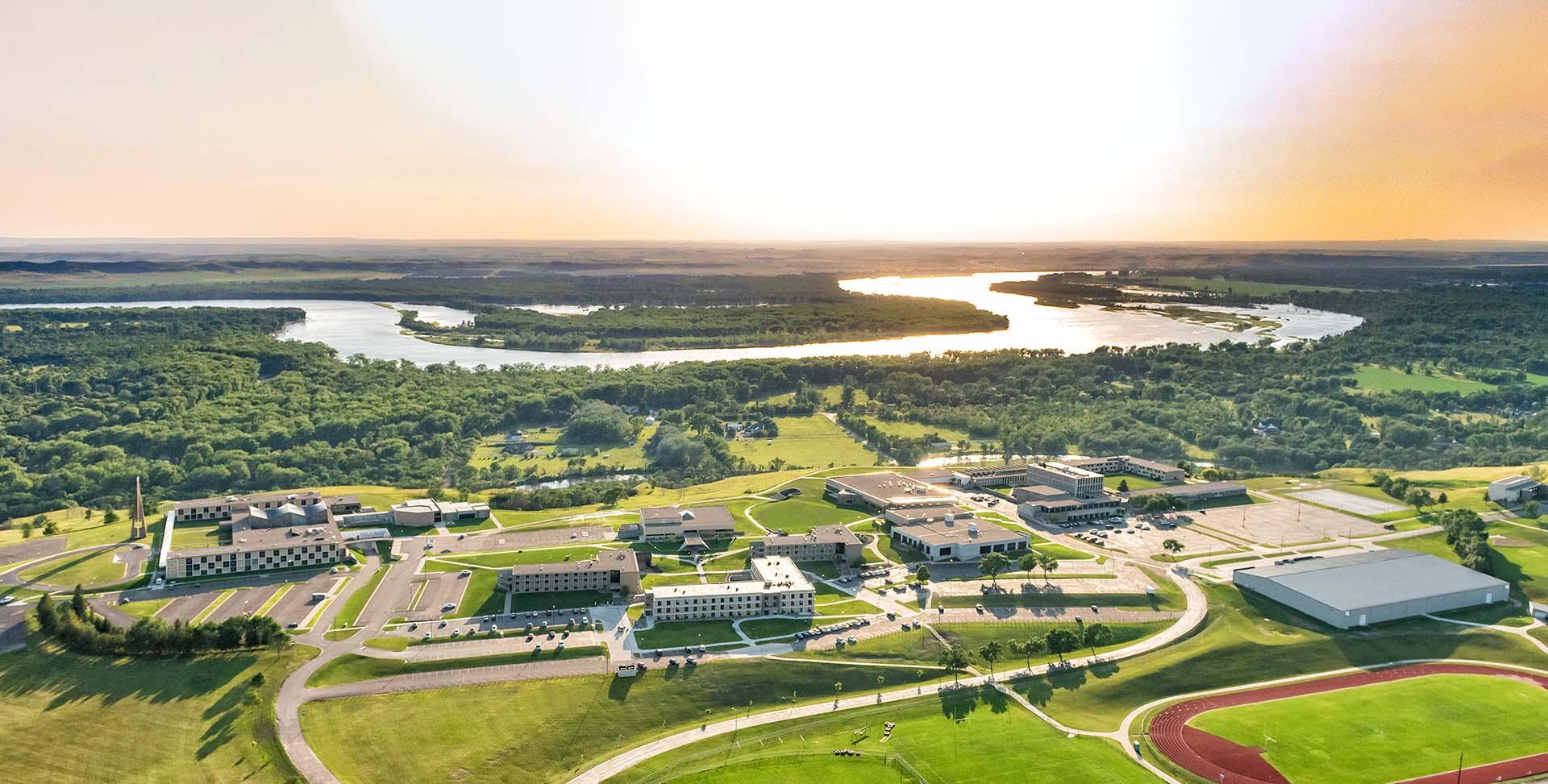
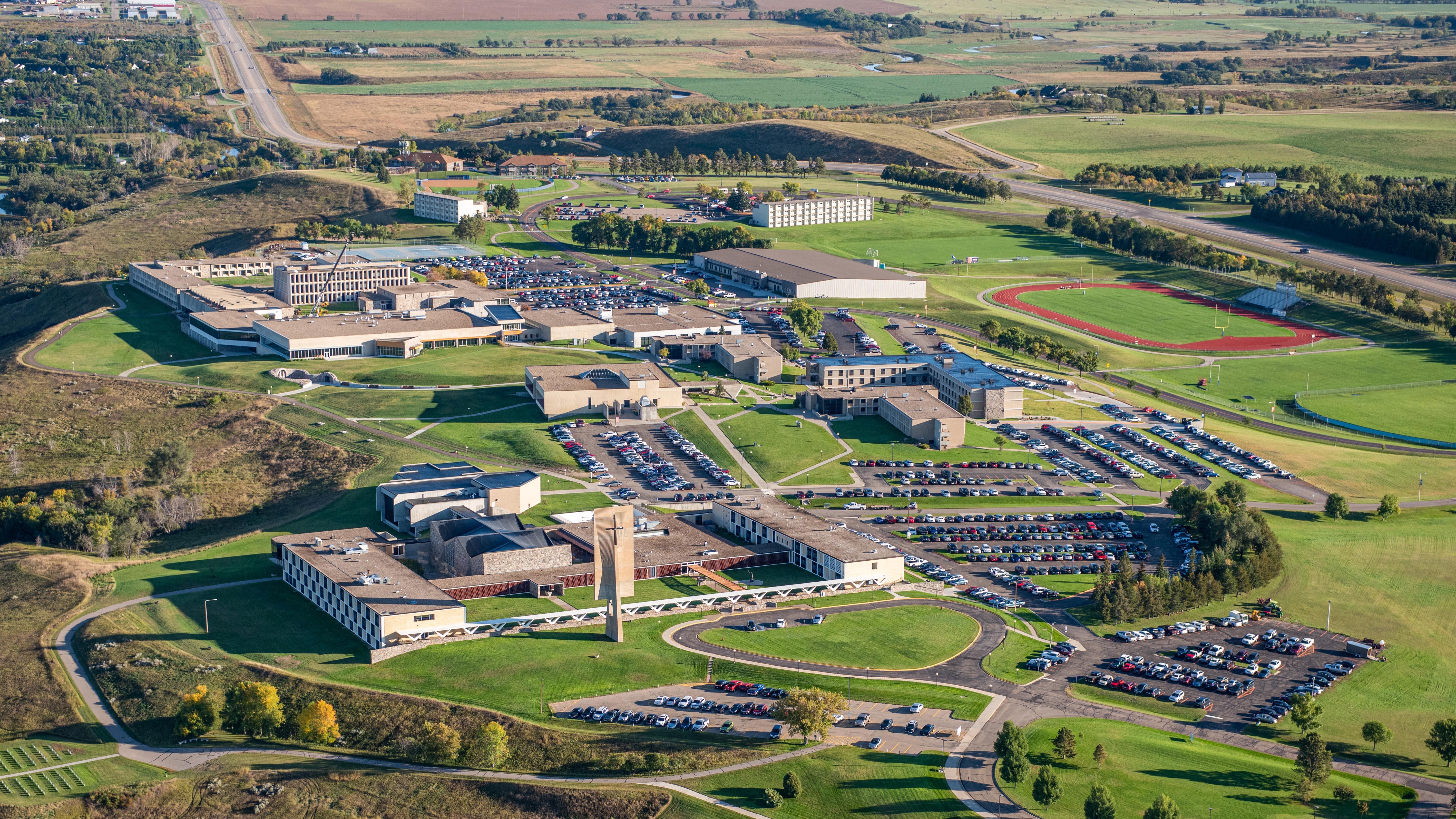
The University of Mary carves out a distinctive niche as a Catholic, Benedictine university in Bismarck, North Dakota, where faith and practical career preparation are woven into the fabric of campus life. It operates with a pragmatic, accessible admissions philosophy, offering nearly 60 undergraduate programs—many with a professional focus—within a close-knit, supportive community. While its graduation rate and median earnings reflect its regional, mission-driven student body, the school is recognized for its teaching excellence and provides near-universal financial aid to make its education attainable.
Admission requirements
Test-optional — scores considered if submitted
Required
High school transcript
Grade point average
Considered (not required)
Class rank
Letters of recommendation
Test scores (SAT/ACT)
College-prep program
Demonstrated competencies
TOEFL (non-native English)
Source: IPEDS Admissions survey (2022) via Urban Institute. Covers formal factors only — it does not reflect essays, extracurriculars, or other holistic criteria.
More details
Undergrad enrollment
2,416
In-state tuition
$22,356
Out-of-state tuition
$22,356
Greek Life
None
Campus Vibe
Welcoming, close-knit, Catholic
Graduation Rate
67%
Median Earnings (10yr)
$60,909
Students Receiving Aid
99% of full-time beginners
Student-to-Faculty Ratio
10:1
Outcomes & value
Outcomes & value
Median earnings (10 yr)
$60,909
Value (earnings ÷ net price)
3.4×
Median debt at graduation
$24,000
Graduation rate
67%
First-year retention
84%
Reducing loan balance (3 yr)
76%
Pell (lower-income) share
21%
First-gen share (among federal-aid recipients)
18%
Financial health
2.8 / 3.0Meets the federal financial-responsibility standard
U.S. Dept. of Education Financial Responsibility Composite Score (FY2022-23). Scale −1.0 to 3.0; ≥1.5 meets the standard. Reported for private nonprofit & for-profit institutions only — public universities are state-backed and not scored, so this is a stability signal, not a ranking.
Top-earning majors
Median earnings by field of study (highest credential), ~2 years after completion.
Registered Nursing, Nursing Administration, Nursing Research and Clinical Nursing$56,641
Business Administration, Management and Operations$54,359
Teacher Education and Professional Development, Specific Levels and Methods$38,289
Sports, Kinesiology, and Physical Education/Fitness$33,281
Source: U.S. Dept. of Education College Scorecard (field-of-study earnings). Figures cover graduates who received federal aid and lag ~2 years; not all programs report data.
On-campus criminal offenses classed as violent (murder/non-negligent manslaughter, rape, robbery, aggravated assault) for the most recent reported year. Source: U.S. Dept. of Education Campus Safety and Security (Clery Act). Counts reflect what’s reported to the school, and urban campuses often report more partly due to non-student incidents nearby — read alongside campus size and setting, not as a standalone safety verdict.
Climate
Pleasant days / yr
92
Summer high
82°F
Winter low
9°F
Annual rain
19.8"
Annual snow
32.7"
Natural-hazard risk
Relatively Moderate
Pleasant days counts days per year with a mean temperature of 55–75°F, a high at or below 90°F, a low at or above 45°F, and little precipitation — a transparent comfort measure, not a weighting we invented. Computed from Open-Meteo ERA5 daily history (2019–2023). Natural-hazard risk is the county’s composite rating from the FEMA National Risk Index.
Deep dive — research, future-scholar output & economic mobility▾
Research output
Institutional h-index
130
Scholarly works
1,877
Institutional research volume and impact from OpenAlex. The h-index reflects large research universities and will be low for teaching-focused liberal-arts colleges — not a measure of undergraduate quality.
Economic mobility
Mobility rate
2.4%
Bottom → top quintile
43%
From bottom quintile
6%
Mobility rate = the share of students who both start in the bottom household-income quintile and reach the top quintile; bottom → top is that chance conditional on starting at the bottom. Source: Opportunity Insights Mobility Report Cards (Chetty, Friedman, Saez, Turner & Yagan). Reflects 1980–82 birth cohorts, so it’s directional, not current.
Quick answers
What is the acceptance rate at University of Mary?
University of Mary's acceptance rate is approximately 75% (Bismarck, ND), based on the most recent figures we compiled from public and primary sources.
What SAT score do you need for University of Mary?
Admitted students at University of Mary typically score 1110–1340 on the SAT (the middle-50% range). Scores outside this band are still admitted, especially with strong applications.
How much does University of Mary cost?
At University of Mary, the average net price (after aid) is about $17,770 per year. Actual cost varies with financial aid and residency.
How many undergraduates attend University of Mary?
University of Mary enrolls approximately 2,416 undergraduate students.
Where is University of Mary located?
University of Mary is located in Bismarck, ND.
Admissions
The University of Mary employs a moderately selective, rolling admissions process for most of its programs, though some have specific deadlines. The is 75%, positioning it as an accessible option for a broad range of students. Admitted students typically present SAT scores in the 1110–1340 range or ACT scores between 21 and 27. The admissions process is not described as highly competitive in the sources, aligning with its mission of accessibility. While many programs use rolling admissions, applicants should verify specific deadlines for their intended major.
Application Process: Many programs offer rolling admissions, but some have specific application deadlines.
Admissions Profile: The middle 50% of admitted students who submitted test scores have SAT scores between 1110 and 1340 or ACT scores between 21 and 27.
Earnings = median of students working ~10 years after entry; debt = median of graduates. Value divides 10-yr earnings by one year’s net price — read it as earnings per dollar of annual cost, not a full lifetime ROI; it favors lower-cost schools. Source: U.S. Dept. of Education College Scorecard. Figures lag ~2 years and reflect all students, not your intended major.
Academics
Academics at the University of Mary are defined by professionally focused programs energized by the liberal arts, robust internships, and close faculty mentorship. The university offers close to 60 undergraduate degrees across arts & humanities, behavioral & social studies, business, education, health & sciences, and science & engineering. This practical orientation is recognized externally; the school has been designated a “College of Distinction” for teaching excellence, innovative learning experiences, and strong career preparation. The student-to-faculty ratio is 10:1, suggesting the potential for personalized attention. Majors span from traditional liberal arts fields like English, History, and Communications to pre-professional tracks in areas like Child Development and Human Services.
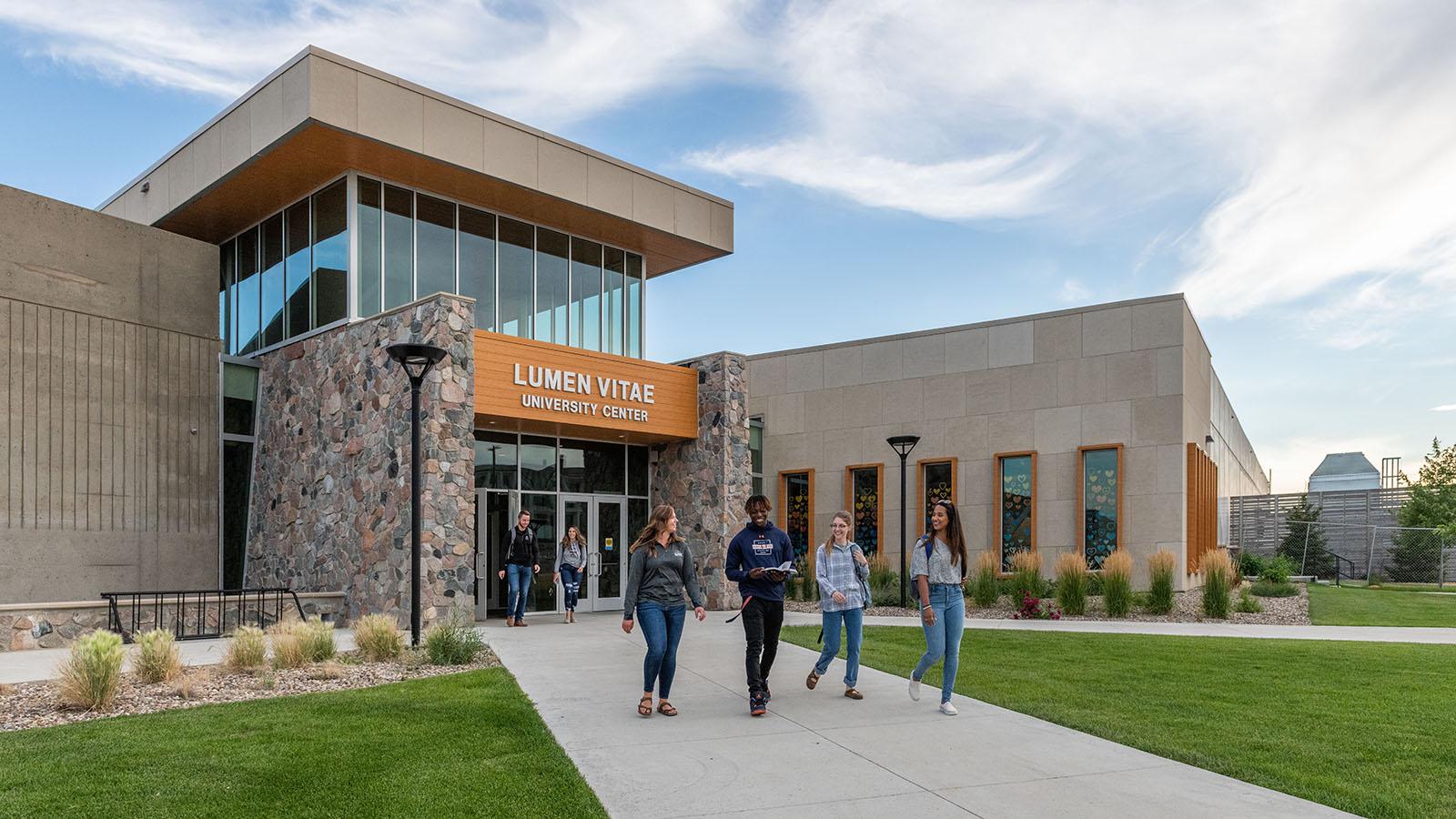
Life on the Bismarck campus is described as welcoming, close-knit, and vibrant, heavily influenced by its Catholic, Benedictine identity. Students report that it's easy to make friends and feel at home in this environment. The university provides rich opportunities for students to explore and grow in their faith as part of its core mission. Outside the classroom, a wide range of student clubs and organizations cater to interests in sports, the arts, and community service. The campus activities board (MAC) organizes on-campus social activities, cultural events, and entertainment. Notably, there is no Greek life system, with social life revolving instead around these organized activities and the tight-knit community feel.
The University of Mary reports an overall graduation rate of 67% for first-time freshmen. For career outcomes, the median earnings for alumni ten years after entry are $60,909. The university's accreditation materials cite an 84% overall graduation rate for a recent cohort, though the specific metric (e.g., 4-year, 6-year) is not detailed in the provided snippet. These figures place the institution's outcomes within the context of its regional and mission-focused profile.
Affordability is a clear priority, with nearly all full-time beginning undergraduates (99%) receiving grant or scholarship aid. The average after aid is $17,770. The university provides a Net Price Calculator to help families estimate their actual costs, emphasizing that aid packages can significantly reduce the sticker price. Financial aid is awarded based on demonstrated financial need, with grants—funds that typically do not need to be repaid—forming a key component of aid packages for those who qualify.
The University of Mary stands out for its unwavering integration of Catholic, Benedictine values with a fiercely practical education. It’s not a liberal arts college that happens to be Catholic; its identity is the engine for its community and its professional focus. This creates a specific vibe: a supportive, close-knit campus in the Northern Plains where faith development and career readiness are treated as complementary, not competing, priorities. Its recognition as a 'College of Distinction' underscores a commitment to teaching and engaged learning over sheer research prestige. Furthermore, its near-universal financial aid distribution demonstrates a tangible commitment to making this value-infused education accessible to the students it seeks to serve.
University of Mary seal · sourceAbout | University of Mary in Bismarck, ND · sourceAbout | University of Mary in Bismarck, ND · sourceSatellite Locations | University of Mary in Bismarck, ND · source