Admit rate has ranged 58%–83% over the last 5 years — notably volatile. Source: IPEDS via Urban Institute.
Acceptance & SAT from Common Data Set / IPEDS; net price, earnings & graduation from the U.S. Dept. of Education College Scorecard. Figures lag ~1–2 years — verify with the school.
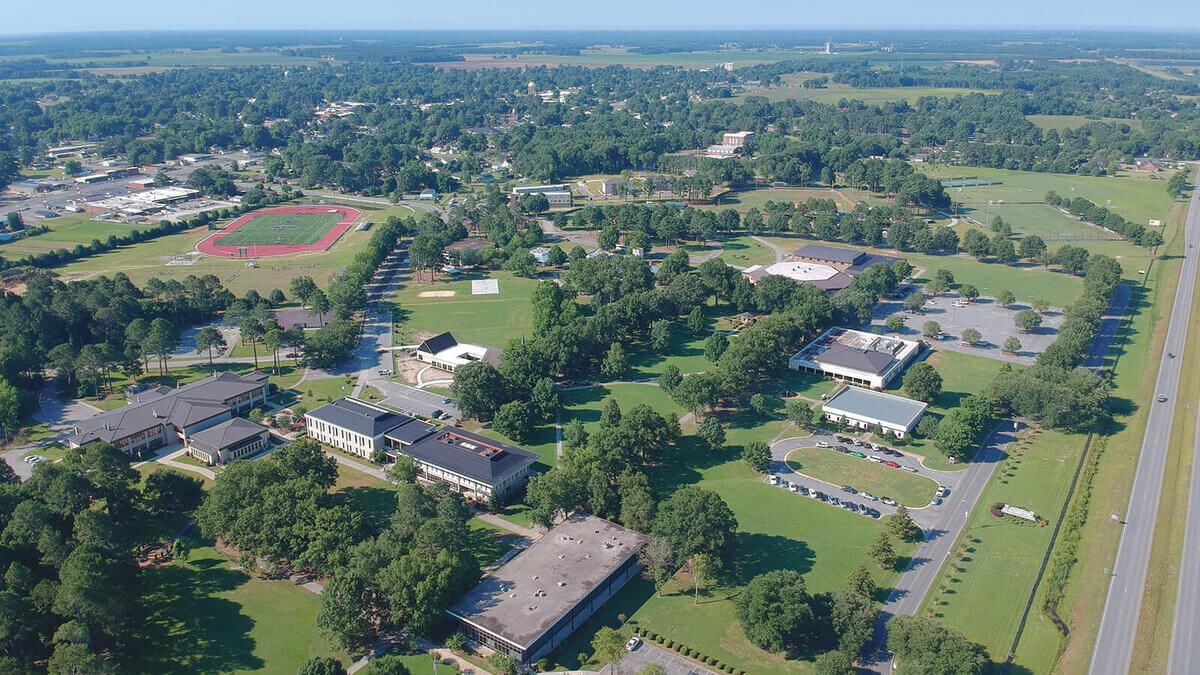
The University of Mount Olive (UMO) is a small, private Christian liberal arts college in rural North Carolina with a pragmatic, career-focused approach. With a 75-77% acceptance rate and a 47% graduation rate, it attracts students seeking affordable, values-based education—particularly in business, health professions, and education—while offering a tight-knit campus life in a town of under 5,000 people.
Admission requirements
Test-blind — scores not considered
Required
High school transcript
Grade point average
TOEFL (non-native English)
Source: IPEDS Admissions survey (2022) via Urban Institute. Covers formal factors only — it does not reflect essays, extracurriculars, or other holistic criteria.
More details
Undergrad enrollment
1,796
In-state tuition
$27,366
Out-of-state tuition
$27,366
Location
Mount Olive, NC (population <5,000)
Athletics
NCAA Division II
Graduation Rate
47%
Student-Faculty Ratio
16:1 or 19:1 (sources vary)
Freshman Retention Rate
67%
Median Earnings 1 Year Post-Grad
$36,427
Outcomes & value
Outcomes & value
Median earnings (10 yr)
$47,139
Value (earnings ÷ net price)
2.5×
Median debt at graduation
$27,209
Graduation rate
52%
First-year retention
72%
Reducing loan balance (3 yr)
41%
Pell (lower-income) share
45%
First-gen share (among federal-aid recipients)
43%
Financial health
3.0 / 3.0Meets the federal financial-responsibility standard
U.S. Dept. of Education Financial Responsibility Composite Score (FY2022-23). Scale −1.0 to 3.0; ≥1.5 meets the standard. Reported for private nonprofit & for-profit institutions only — public universities are state-backed and not scored, so this is a stability signal, not a ranking.
Top-earning majors
Median earnings by field of study (highest credential), ~2 years after completion.
Registered Nursing, Nursing Administration, Nursing Research and Clinical Nursing$66,821
Management Information Systems and Services$49,019
Health and Medical Administrative Services$43,240
Business Administration, Management and Operations$41,631
Human Resources Management and Services$40,827
Agricultural Business and Management
Campus & location
Campus safety
On-campus violent crimes (2024)
0
Per 1,000 students
0.00
On-campus criminal offenses classed as violent (murder/non-negligent manslaughter, rape, robbery, aggravated assault) for the most recent reported year. Source: U.S. Dept. of Education Campus Safety and Security (Clery Act). Counts reflect what’s reported to the school, and urban campuses often report more partly due to non-student incidents nearby — read alongside campus size and setting, not as a standalone safety verdict.
Climate
Pleasant days / yr
114
Summer high
87°F
Winter low
40°F
Annual rain
48.7"
Annual snow
1.7"
Natural-hazard risk
Relatively Moderate
Pleasant days counts days per year with a mean temperature of 55–75°F, a high at or below 90°F, a low at or above 45°F, and little precipitation — a transparent comfort measure, not a weighting we invented. Computed from Open-Meteo ERA5 daily history (2019–2023). Natural-hazard risk is the county’s composite rating from the FEMA National Risk Index.
Deep dive — research, future-scholar output & economic mobility▾
Research output
Institutional h-index
45
Scholarly works
355
Institutional research volume and impact from OpenAlex. The h-index reflects large research universities and will be low for teaching-focused liberal-arts colleges — not a measure of undergraduate quality.
Economic mobility
Mobility rate
1.3%
Bottom → top quintile
7%
From bottom quintile
18%
Mobility rate = the share of students who both start in the bottom household-income quintile and reach the top quintile; bottom → top is that chance conditional on starting at the bottom. Source: Opportunity Insights Mobility Report Cards (Chetty, Friedman, Saez, Turner & Yagan). Reflects 1980–82 birth cohorts, so it’s directional, not current.
Quick answers
What is the acceptance rate at University of Mount Olive?
University of Mount Olive's acceptance rate is approximately 76% (Mount Olive, NC), based on the most recent figures we compiled from public and primary sources.
How much does University of Mount Olive cost?
At University of Mount Olive, the average net price (after aid) is about $18,853 per year. Actual cost varies with financial aid and residency.
How many undergraduates attend University of Mount Olive?
University of Mount Olive enrolls approximately 1,796 undergraduate students.
Where is University of Mount Olive located?
University of Mount Olive is located in Mount Olive, NC.
Admissions
UMO is decidedly not selective, with an hovering between 74.59% and 77.7% across sources. Test scores are optional for admission, and admitted students typically have ACT scores between 17–22. The gender breakdown of applicants skews female, with 1,148 female applicants (76% acceptance rate) versus 778 male applicants in recent data. Notably, UMO emphasizes accessibility over exclusivity—its admissions page bluntly states it’s ' for admission purposes' and doesn’t even count SAT writing scores.
Earnings = median of students working ~10 years after entry; debt = median of graduates. Value divides 10-yr earnings by one year’s net price — read it as earnings per dollar of annual cost, not a full lifetime ROI; it favors lower-cost schools. Source: U.S. Dept. of Education College Scorecard. Figures lag ~2 years and reflect all students, not your intended major.
$39,729
Education, General$38,289
Teacher Education and Professional Development, Specific Subject Areas$36,560
Source: U.S. Dept. of Education College Scorecard (field-of-study earnings). Figures cover graduates who received federal aid and lag ~2 years; not all programs report data.
UMO offers 66 majors with a 16:1 or 19:1 student-faculty ratio (sources disagree), leaning heavily into practical fields: business, education, and health professions dominate its catalog. The school markets itself as combining 'academic rigor with values-based education,' though its 67% freshman retention rate and 47% graduation rate suggest academic engagement is uneven. Programs are available both on-campus and online, with degree sheets emphasizing 'career interests' over pure liberal arts exploration. The vibe is vocational—this isn’t a place for abstract theorizing, but for gaining 'skills applicable across a wide range of careers.'
Life at UMO revolves around small-town camaraderie—think 'creative events to give students a “big city” experience' in a rural setting (translation: they try hard to compensate for limited off-campus options). The Campus Activities Board (CAB) organizes most social events, and Instagram shows a heavy emphasis on athletics (the Trojans compete in NCAA Division II) and Christian fellowship. Dorms and clubs foster tight bonds, but Greek life is absent. One Niche reviewer sums it up: 'It’s quiet, but you’ll know everyone.'
UMO’s outcomes are mediocre by national standards: a 47% graduation rate (bottom 30% nationally) and median earnings of $36,427 one year post-graduation. Male students fare worse, graduating at just 43%. The school doesn’t trumpet employment stats, instead highlighting 'values' and 'community'—a tell that career outcomes aren’t its strong suit. For context, $36K is roughly North Carolina’s average starting salary for bachelor’s holders, suggesting UMO grads don’t outperform regional peers.
UMO leans into affordability, offering a net price calculator and emphasizing aid packages. While exact tuition figures aren’t public in the sources, the focus on financial aid tools suggests cost-consciousness is a selling point. The process is centralized: students 'accept awards, submit applications, and download forms' all via one portal. Notably, UMO’s aid office pushes grants over loans, aligning with its mission to serve lower-income and students.
UMO’s niche is unapologetic pragmatism: it’s for students who want a low-stress admissions process, Christian-inflected career training, and small-town support at a manageable cost. Unlike elite liberal arts colleges, it makes no pretenses about selectivity or intellectual prestige—its website touts 'practical learning,' not Nobel laureates. The trade-off? Limited academic rigor (evidenced by retention rates) and modest outcomes. But for a certain student—especially or rural learners seeking a stepping stone to steady employment—that’s enough.
University of Mount Olive logo · sourceUniversity of Mount Olive - Mount Olive, NC | Appily · sourceAGP Tour of the University of Mount Olive · sourceA look around campus the University of Mount Olive campus this morning! | University of Mount Olive | Facebook · source