Loading…
← All schools
University of Nebraska Medical Center
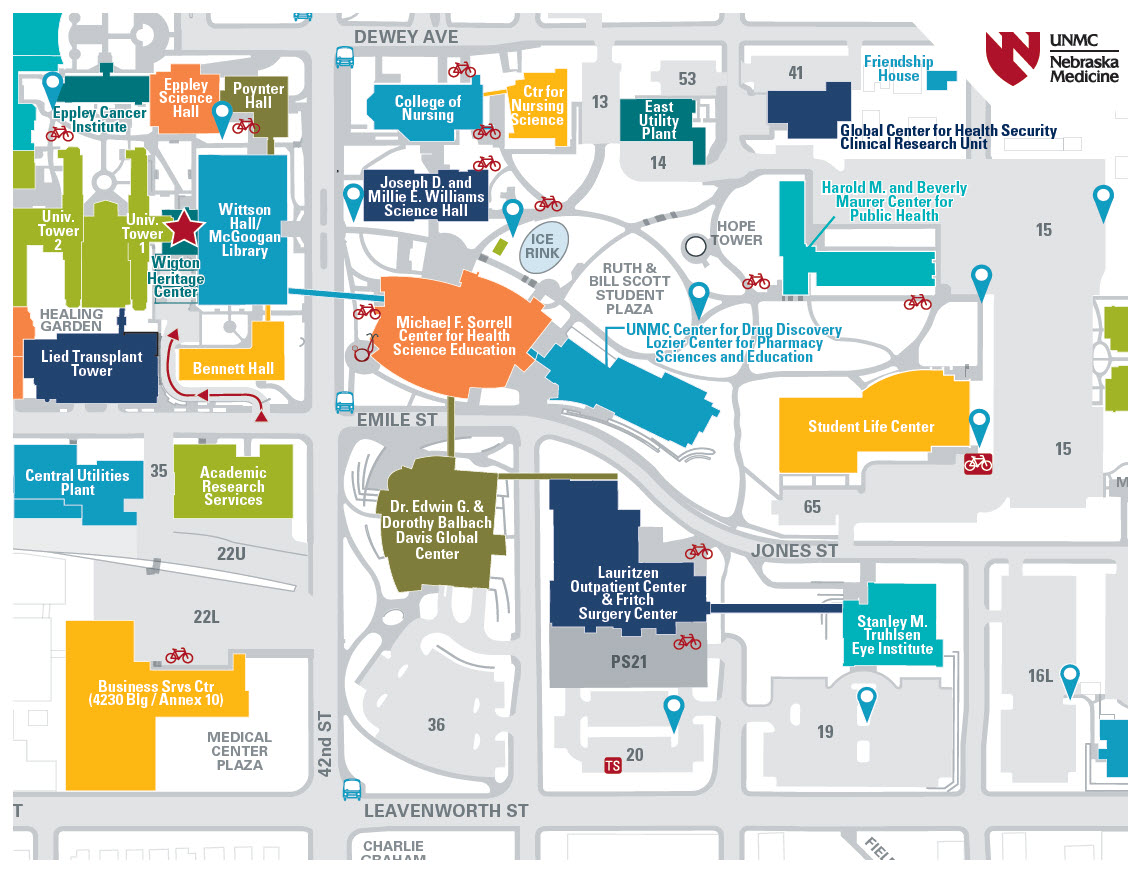
Omaha, NEpublicwww.unmc.edu/
The University of Nebraska Medical Center is not a typical undergraduate college; it's a powerhouse of health science education and a critical economic engine for the state. With a laser focus on training the next generation of doctors, nurses, and public health professionals, UNMC operates with the intensity of a major academic medical center, where campus life revolves around clinical rotations, research labs, and a culture of service. Its defining characteristic is a profound commitment to Nebraska, offering in-state applicants a significantly clearer path into its highly-regarded medical and nursing programs.
More details
- Undergrad enrollment
- 938
- Graduation Rate
- 93%
- New Housing Facility
- UNMC Residences (opened 2022)
- Student Organizations
- Integral to campus culture
- Median Earnings (10yr)
- $76,833
- Medical School Ranking
- Tier 1 Primary Care, Tier 2 Research
- National Ranking (BSN)
- #19 of 656
- Average UGPA for Med Applicants
- 3.74
Outcomes & value
Outcomes & value
- Median earnings (10 yr)
- $76,833
- Median debt at graduation
- $15,000
- Reducing loan balance (3 yr)
- 90%
- Pell (lower-income) share
- 22%
- First-gen share (among federal-aid recipients)
- 27%
- Endowment / student
- $125,372
Earnings = median of students working ~10 years after entry; debt = median of graduates. Value divides 10-yr earnings by one year’s net price — read it as earnings per dollar of annual cost, not a full lifetime ROI; it favors lower-cost schools. Source: U.S. Dept. of Education College Scorecard. Figures lag ~2 years and reflect all students, not your intended major.
Top-earning majors
Median earnings by field of study (highest credential), ~2 years after completion.
- Registered Nursing, Nursing Administration, Nursing Research and Clinical Nursing$59,450
- Clinical/Medical Laboratory Science/Research and Allied Professions$55,286
- Dental Support Services and Allied Professions$53,358
Source: U.S. Dept. of Education College Scorecard (field-of-study earnings). Figures cover graduates who received federal aid and lag ~2 years; not all programs report data.
Compare on earnings: best colleges for Nursing
Campus & location
Campus safety
- On-campus violent crimes (2024)
- 7
- Per 1,000 students
- 1.77
On-campus criminal offenses classed as violent (murder/non-negligent manslaughter, rape, robbery, aggravated assault) for the most recent reported year. Source: U.S. Dept. of Education Campus Safety and Security (Clery Act). Counts reflect what’s reported to the school, and urban campuses often report more partly due to non-student incidents nearby — read alongside campus size and setting, not as a standalone safety verdict.
Climate
- Pleasant days / yr
- 83
- Summer high
- 86°F
- Winter low
- 19°F
- Annual rain
- 23"
- Annual snow
- 21.6"
- Natural-hazard risk
- Relatively High
Pleasant days counts days per year with a mean temperature of 55–75°F, a high at or below 90°F, a low at or above 45°F, and little precipitation — a transparent comfort measure, not a weighting we invented. Computed from Open-Meteo ERA5 daily history (2019–2023). Natural-hazard risk is the county’s composite rating from the FEMA National Risk Index.
Quick answers
- How many undergraduates attend University of Nebraska Medical Center?
- University of Nebraska Medical Center enrolls approximately 938 undergraduate students.
- Where is University of Nebraska Medical Center located?
- University of Nebraska Medical Center is located in Omaha, NE.
Admissions
Admission to UNMC is a gateway into professional health sciences, and the process is fiercely competitive, particularly for its flagship programs. The institution's overall is reported variably across sources, from a highly selective 6.9% to 11%, reflecting the rigor of its graduate and professional programs. For the MD program specifically, the landscape is stark: the national acceptance rate for medical school applicants is less than 50%. UNMC, however, demonstrates a strong preference for its home state. One source notes the university accepts more than 40% of in-state medical school applicants, while another specifies an in-state acceptance rate of 35%—a dramatically higher probability for Nebraska residents compared to out-of-state candidates. This creates a dual reality: an intimidatingly low overall rate obscures a more accessible, mission-driven pathway for Nebraskans. The admitted student profile is academically strong, with sources citing an average undergraduate GPA of 3.74 for medical program applicants. While standardized test scores like the SAT and ACT are part of the evaluation, the emphasis is squarely on academic preparation for the health professions.
Compare University of Nebraska Medical Center
vs New Mexico Institute of Mining and Technologyvs United States Coast Guard Academyvs Virginia Military Institutevs Florida Polytechnic University
See colleges similar to University of Nebraska Medical Center →Sources
- Common Data Set 2024-2025
- Publications and Surveys | Factbook | University of Nebraska at ...
- Common Data Set: Home
- Common Data Sets - DigitalCommons@UNO
- Common Data Set - GradGPT
- Common Data Set Repository - College Transitions
- University of Nebraska Medical Center Requirements for Admission
- University of Nebraska Medical Center - The Princeton Review
- University of Nebraska Medical Center - Niche
- University of Nebraska Medical Center - Sallie
- University of Nebraska Medical Center [Acceptance Rate + Statistics]