Admit rate has ranged 29%–36% over the last 5 years. Source: IPEDS via Urban Institute.
Acceptance & SAT from Common Data Set / IPEDS; net price, earnings & graduation from the U.S. Dept. of Education College Scorecard. Figures lag ~1–2 years — verify with the school.
The University of North Carolina School of the Arts is not a typical college; it's a high-stakes, professional-grade conservatory where the studio and the stage are the primary classrooms. Nestled in Winston-Salem, UNCSA operates with a singular, unapologetic mission: to forge emerging talent into working artists through an immersive, discipline-specific curriculum that blends rigorous academics with world-class arts training. The atmosphere is one of intense collaboration among a small, fiercely dedicated community of dancers, filmmakers, musicians, actors, and designers, all living and breathing their craft from day one.
Admission requirements
Test-optional — scores considered if submitted
Required
High school transcript
Grade point average
Letters of recommendation
Demonstrated competencies
TOEFL (non-native English)
Considered (not required)
Class rank
Test scores (SAT/ACT)
College-prep program
Source: IPEDS Admissions survey (2022) via Urban Institute. Covers formal factors only — it does not reflect essays, extracurriculars, or other holistic criteria.
More details
Undergrad enrollment
945
In-state tuition
$9,477
Out-of-state tuition
$27,211
Graduation Rate
78%
Average Aid Package
$11,650
Median Earnings (10yr)
$38,357
First-Year Retention Rate
93%
Students Receiving Grant Aid
62%
Outcomes & value
Outcomes & value
Median earnings (10 yr)
$38,357
Value (earnings ÷ net price)
2.6×
Median debt at graduation
$23,870
Graduation rate
78%
First-year retention
93%
Reducing loan balance (3 yr)
64%
Pell (lower-income) share
26%
Endowment / student
$122,139
Earnings = median of students working ~10 years after entry; debt = median of graduates. Value divides 10-yr earnings by net price — read it as earnings per dollar of annual cost, not a full lifetime ROI; it favors lower-cost schools. Source: U.S. Dept. of Education College Scorecard. Figures lag ~2 years and reflect all students, not your intended major.
Top-earning majors
Median earnings by field of study (highest credential), ~2 years after completion.
Drama/Theatre Arts and Stagecraft$32,213
Film/Video and Photographic Arts$22,917
Dance$18,771
Source: U.S. Dept. of Education College Scorecard (field-of-study earnings). Figures cover graduates who received federal aid and lag ~2 years; not all programs report data.
Campus & location
Campus safety
On-campus violent crimes (2024)
0
Per 1,000 students
0.00
On-campus criminal offenses classed as violent (murder/non-negligent manslaughter, rape, robbery, aggravated assault) for the most recent reported year. Source: U.S. Dept. of Education Campus Safety and Security (Clery Act). Counts reflect what’s reported to the school, and urban campuses often report more partly due to non-student incidents nearby — read alongside campus size and setting, not as a standalone safety verdict.
Climate
Pleasant days / yr
99
Summer high
87°F
Winter low
34°F
Annual rain
45.5"
Annual snow
4.9"
Natural-hazard risk
Relatively Moderate
Pleasant days counts days per year with a mean temperature of 55–75°F, a high at or below 90°F, a low at or above 45°F, and little precipitation — a transparent comfort measure, not a weighting we invented. Computed from Open-Meteo ERA5 daily history (2019–2023). Natural-hazard risk is the county’s composite rating from the FEMA National Risk Index.
Deep dive — research, future-scholar output & economic mobility▾
Research output
Institutional h-index
16
Scholarly works
158
Institutional research volume and impact from OpenAlex. The h-index reflects large research universities and will be low for teaching-focused liberal-arts colleges — not a measure of undergraduate quality.
Economic mobility
Mobility rate
1.4%
Bottom → top quintile
34%
From bottom quintile
4%
Mobility rate = the share of students who both start in the bottom household-income quintile and reach the top quintile; bottom → top is that chance conditional on starting at the bottom. Source: Opportunity Insights Mobility Report Cards (Chetty, Friedman, Saez, Turner & Yagan). Reflects 1980–82 birth cohorts, so it’s directional, not current.
Quick answers
What is the acceptance rate at University of North Carolina School of the Arts?
University of North Carolina School of the Arts's acceptance rate is approximately 30% (Winston Salem, NC), based on the most recent figures we compiled from public and primary sources.
What SAT score do you need for University of North Carolina School of the Arts?
Admitted students at University of North Carolina School of the Arts typically score 1140–1370 on the SAT (the middle-50% range). Scores outside this band are still admitted, especially with strong applications.
How much does University of North Carolina School of the Arts cost?
At University of North Carolina School of the Arts, the average net price (after aid) is about $14,906 per year. Actual cost varies with financial aid and residency.
How many undergraduates attend University of North Carolina School of the Arts?
University of North Carolina School of the Arts enrolls approximately 945 undergraduate students.
Where is University of North Carolina School of the Arts located?
University of North Carolina School of the Arts is located in Winston Salem, NC.
Admissions
Gaining entry to UNCSA is a dual-track audition: you must prove your academic readiness and, more critically, your artistic promise. The school is selective, with an of 30%. The middle 50% SAT range for admitted students is 1140–1370, and the average GPA is around 3.6. However, these numbers only tell part of the story. The admissions process is heavily weighted toward the artistic review—auditions, portfolios, and interviews specific to each of the five arts schools (Dance, Design & Production, Drama, Filmmaking, and Music). For students with a weighted high school GPA between 2.5 and 2.8, submitting a standardized test score (ACT of 17 or higher or an equivalent SAT) is required. While the is a standard tool for many institutions, the unique, talent-driven nature of UNCSA's admissions means factors like demonstrated interest may be interpreted through artistic engagement rather than traditional campus visits. The process self-selects for students whose primary identity is that of a practicing artist.
Academic life at UNCSA is defined by total immersion. This is a conservatory, not a liberal arts college with a strong arts program. Students choose a path from the moment they arrive, pursuing Bachelor of Fine Arts degrees in Dance, Design and Production, Filmmaking, and Drama, or a Bachelor of Music. The curriculum is a deliberate fusion of rigorous college-preparatory academics with professional-level arts training, designed to empower young artists to think critically while mastering their craft. Class sizes are small, and the focus is intensely practical. The school's overarching mission is to prepare emerging artists for professional careers in the evolving global arts and entertainment industries. This means the line between classroom and career is deliberately blurred; projects are professional in scope, critiques are frank, and the expectation is that students are building a portfolio or reel from their first year. The environment is one of deep specialization, where students in the film school, the dance studios, and the scene shops are all operating at a near-professional pitch.
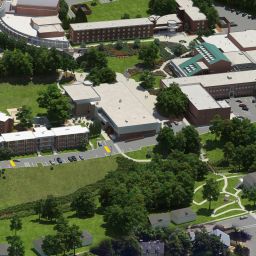
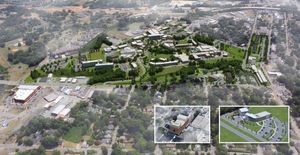
Life on UNCSA's campus is an extension of its academic intensity, but within a uniquely supportive and collaborative micro-community. The campus is described as small, cozy, and welcoming, where students live and collaborate in a community of fellow creatives who inspire and challenge one another daily. There's a palpable sense of shared purpose—students all share a common passion and drive for their art. This fosters wonderful relationships between the major schools; a filmmaker might collaborate with a composer, a dancer with a lighting designer. Social life is largely woven through this creative work. While it lacks the sprawling Greek life and major sports culture of a large university, the community is tight-knit. Campus life aims to support this unique ecosystem, helping students navigate the demands of a conservatory schedule while building the personal and professional networks that will sustain them long after graduation. Reviews often highlight the wonderful faculty and student body as a defining feature of the experience.
UNCSA measures success not in graduate school placements, but in professional launches. The graduation rate is 78%, and the first-year retention rate is a strong 93%, indicating students who come are prepared for the rigors and find their place. The most telling metrics, however, are earnings and career trajectory. The median earnings ten years after entry are $38,357. While this figure may appear modest compared to engineering or business schools, it is significant within the arts sector. Reports indicate that UNCSA graduates earn about 22% to 35% more than graduates from other arts-focused programs, with early-career averages reported between $28,000 and $55,000. This earnings premium underscores the school's effectiveness as a career launchpad. The outcome is a direct result of the professional training, industry connections, and portfolio-driven curriculum—students leave not just with a degree, but with a body of work and the skills to market it.
As a public institution within the University of North Carolina system, UNCSA offers a notably accessible price point for a conservatory education, especially for in-state students. The average after aid is $14,906. For the 62% of full-time beginning undergraduates who receive grant or scholarship aid, the average aid package is $11,650. The school offers need-based awards determined by the financial aid application. While the sources do not indicate a formal "no-loan" policy or a guarantee to meet 100% of demonstrated financial need, the combination of public tuition and institutional aid creates a financial profile that is far more manageable than that of many private conservatories. Prospective students are encouraged to use the school's net price calculator for a personalized estimate.
UNCSA stands out because it is a pure play. In a higher education landscape filled with hybrids and compromises, it remains a dedicated professional conservatory with a public-school soul. It offers the focused, all-consuming training of the nation's best private arts schools—where your art is your major, your extracurricular, and your social life—but at a public university price tag. This combination is rare and powerful. The culture is one of unvarnished professionalism; students are treated as artists-in-training from day one, collaborating across disciplines in a way that mirrors the real-world industry. The result is a track record of producing graduates who not only work in their fields but often out-earn their peers from other arts programs. For the student who knows, unequivocally, that their future is on stage, on screen, or behind the scenes, UNCSA provides a direct, unsentimental, and effective path to that future.
University of North Carolina School of the Arts seal · sourceUniversity of North Carolina School of the Arts Interactive Campus Maps · sourceUNC School of the Arts - North Carolina History · sourceUniversity of North Carolina School of the Arts Interactive Campus Maps · source