Admit rate has ranged 77%–89% over the last 5 years — notably volatile. Source: IPEDS via Urban Institute.
Acceptance & SAT from Common Data Set / IPEDS; net price, earnings & graduation from the U.S. Dept. of Education College Scorecard. Figures lag ~1–2 years — verify with the school.
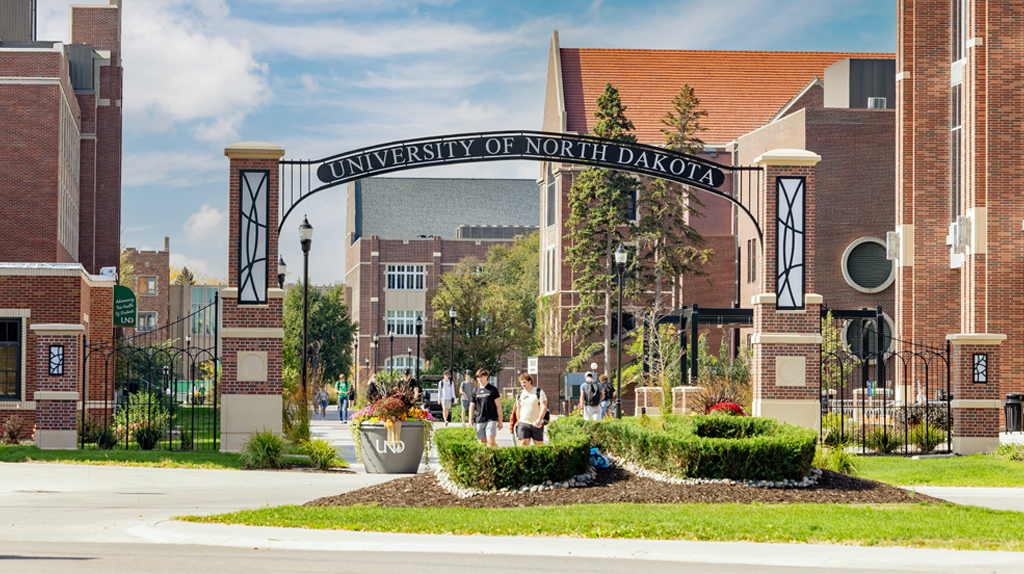
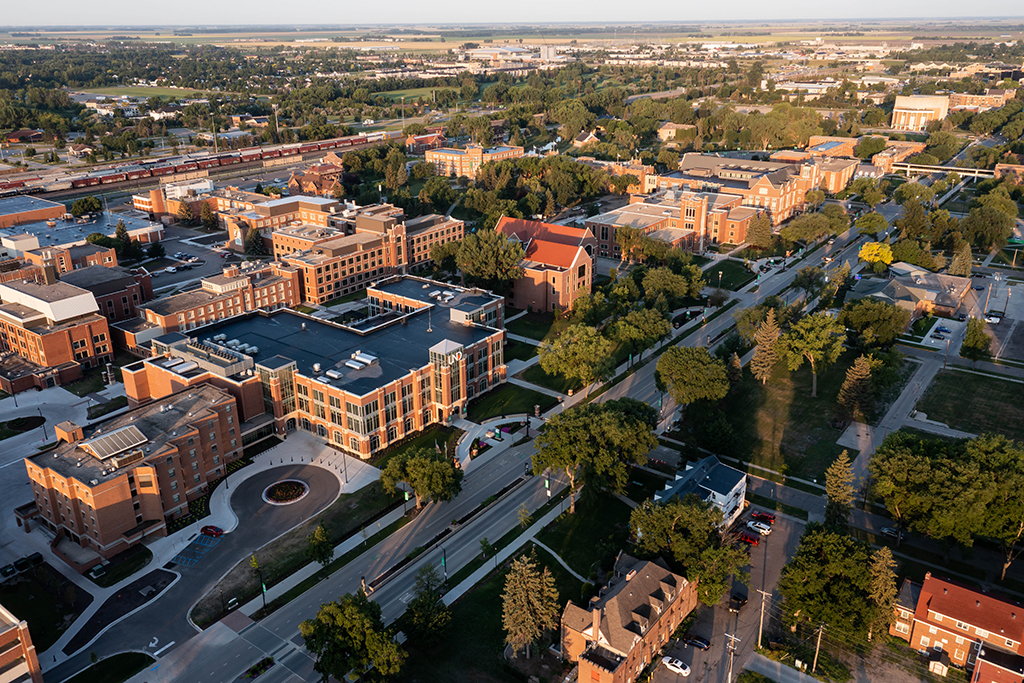
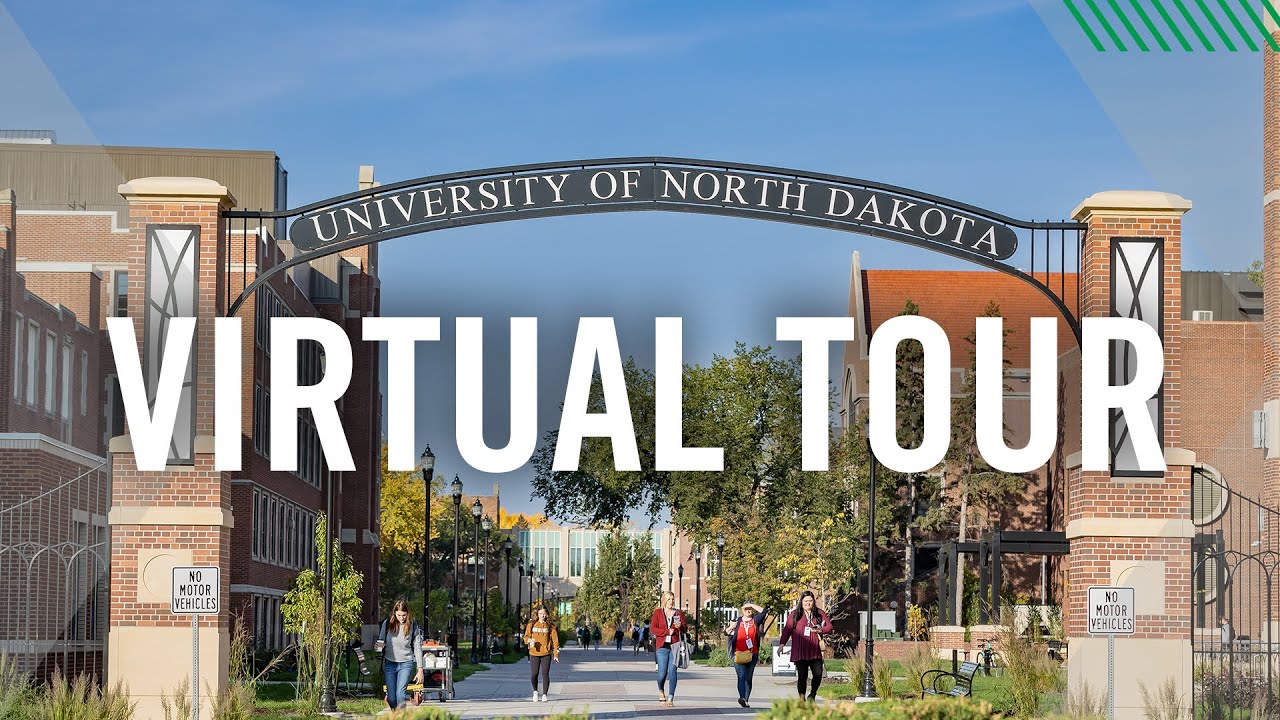
The University of North Dakota (UND) is the state's flagship public research university, known for its strong aviation programs, Division I hockey culture, and a sprawling campus in Grand Forks. With a 77% acceptance rate and a focus on hands-on learning, UND attracts students who want big-school opportunities with a tight-knit, Midwestern vibe. Its graduates land solid outcomes—85% employed or in further education—while paying below-average net prices thanks to robust financial aid.
Admission requirements
Test-blind — scores not considered
Required
High school transcript
Grade point average
College-prep program
TOEFL (non-native English)
Source: IPEDS Admissions survey (2022) via Urban Institute. Covers formal factors only — it does not reflect essays, extracurriculars, or other holistic criteria.
More details
Undergrad enrollment
9,981
In-state tuition
$10,951
Out-of-state tuition
$15,570
Campus Housing
25% of students
Signature Sport
Division I Hockey (Fighting Hawks)
Notable Programs
Aviation, Engineering, Space Studies
Student-Faculty Ratio
17:1
6-Year Graduation Rate
63%
Outcomes & value
Outcomes & value
Median earnings (10 yr)
$63,552
Value (earnings ÷ net price)
3.4×
Median debt at graduation
$22,057
Graduation rate
60%
First-year retention
84%
Reducing loan balance (3 yr)
76%
Pell (lower-income) share
17%
First-gen share (among federal-aid recipients)
19%
Top-earning majors
Median earnings by field of study (highest credential), ~2 years after completion.
Electrical, Electronics, and Communications Engineering$76,460
Petroleum Engineering$72,762
Chemical Engineering$66,325
Mechanical Engineering$64,608
Civil Engineering$63,005
Industrial Production Technologies/Technicians$63,005
Campus & location
Campus safety
On-campus violent crimes (2024)
5
Per 1,000 students
0.36
On-campus criminal offenses classed as violent (murder/non-negligent manslaughter, rape, robbery, aggravated assault) for the most recent reported year. Source: U.S. Dept. of Education Campus Safety and Security (Clery Act). Counts reflect what’s reported to the school, and urban campuses often report more partly due to non-student incidents nearby — read alongside campus size and setting, not as a standalone safety verdict.
Climate
Pleasant days / yr
92
Summer high
81°F
Winter low
3°F
Annual rain
22.2"
Annual snow
44.6"
Natural-hazard risk
Relatively Low
Pleasant days counts days per year with a mean temperature of 55–75°F, a high at or below 90°F, a low at or above 45°F, and little precipitation — a transparent comfort measure, not a weighting we invented. Computed from Open-Meteo ERA5 daily history (2019–2023). Natural-hazard risk is the county’s composite rating from the FEMA National Risk Index.
Deep dive — research, future-scholar output & economic mobility▾
Research output
Institutional h-index
300
Scholarly works
25,103
Institutional research volume and impact from OpenAlex. The h-index reflects large research universities and will be low for teaching-focused liberal-arts colleges — not a measure of undergraduate quality.
Economic mobility
Mobility rate
1.6%
Bottom → top quintile
35%
From bottom quintile
5%
Mobility rate = the share of students who both start in the bottom household-income quintile and reach the top quintile; bottom → top is that chance conditional on starting at the bottom. Source: Opportunity Insights Mobility Report Cards (Chetty, Friedman, Saez, Turner & Yagan). Reflects 1980–82 birth cohorts, so it’s directional, not current.
Quick answers
What is the acceptance rate at University of North Dakota?
University of North Dakota's acceptance rate is approximately 77% (Grand Forks, ND), based on the most recent figures we compiled from public and primary sources.
How much does University of North Dakota cost?
At University of North Dakota, the average net price (after aid) is about $18,551 per year. Actual cost varies with financial aid and residency.
How many undergraduates attend University of North Dakota?
University of North Dakota enrolls approximately 9,981 undergraduate students.
Where is University of North Dakota located?
University of North Dakota is located in Grand Forks, ND.
Admissions
UND is moderately selective, accepting 77% of applicants (fall 2023). The middle 50% of admitted students score between 1120–1310 on the SAT or 21–27 on the ACT, with an average high school GPA of 3.61. Notably, UND has rolling admissions and accepts 90% of completed applications, though competitive programs like Aviation Management require a higher GPA (3.25+). The August 15 deadline is lenient compared to many schools, making it accessible for late deciders.
Test-optional: UND does not require SAT/ACT scores for general admission, though some programs may recommend them.
North Dakota advantage: In-state applicants benefit from lower tuition and priority in certain programs, particularly those tied to state industries like energy and aerospace.
UND offers , including standout degrees in aviation (one of the few universities with its own airport), engineering, and health sciences. The most popular majors are in (a nod to its aviation dominance) and . The Essential Studies program—UND’s general education curriculum—emphasizes critical thinking and leadership, with faculty praised for their accessibility and real-world expertise.
Earnings = median of students working ~10 years after entry; debt = median of graduates. Value divides 10-yr earnings by one year’s net price — read it as earnings per dollar of annual cost, not a full lifetime ROI; it favors lower-cost schools. Source: U.S. Dept. of Education College Scorecard. Figures lag ~2 years and reflect all students, not your intended major.
Registered Nursing, Nursing Administration, Nursing Research and Clinical Nursing$61,437
Computer and Information Sciences, General$55,547
Source: U.S. Dept. of Education College Scorecard (field-of-study earnings). Figures cover graduates who received federal aid and lag ~2 years; not all programs report data.
Life at UND revolves around hockey games (the Fighting Hawks are a Division I powerhouse), 300+ student orgs, and a surprisingly active Greek scene (21 fraternities/sororities). Only 25% of students live on campus, but dorm life is social, with events like "Hockey Hooky" (skipping class for day games). The Wellness Center—a campus hub—boasts a climbing wall and fitness classes.
Cold-weather bonding: Students embrace the frigid winters with sledding, ice fishing, and UND’s infamous "Frozen Four" hockey watch parties.
Small-town perks: Grand Forks (pop. 59,000) offers cheap eats, a vibrant downtown, and an airport for weekend getaways.
Student voices: Reddit threads highlight the ease of making friends, especially through clubs or dorm events.
UND reports 85% of graduates employed, in the military, or pursuing further education within a year. The 6-year graduation rate is 63%, slightly above the national average for public universities. Alumni earn a median $36,427 one year post-graduation, with higher wages in fields like engineering and aviation.
Career support: 73% of surveyed graduates secured jobs directly after graduation, while 19% continued their education (2021 data).
State network: Strong ties to North Dakota employers in energy, healthcare, and agriculture boost local job placement.
UND’s net price averages $20,754 after aid, with in-state tuition at $11,400 (2023-24). Financial aid is generous—$13,500 per student annually—including scholarships for academics, athletics, and specific majors like nursing. The UND Foundation also offers hundreds of donor-funded awards.
Savings tip: North Dakota’s tuition reciprocity agreements with Minnesota, Montana, and South Dakota slash costs for neighboring residents.
Flight program caveat: Aviation students face additional fees (e.g., $125/hour for flight training), though scholarships often offset these.
UND is the only school in the country with a Space Studies PhD program, reflecting its niche strengths in aerospace and defense research. Its John D. Odegard School of Aerospace Sciences trains more commercial pilots than almost any U.S. university. Beyond academics, UND’s hockey culture (12 national championships) and resilient community spirit (the campus rebuilt after a devastating 1997 flood) give it a unique identity. For students seeking a blend of STEM rigor, outdoor adventure, and Division I spirit—without cutthroat competition—UND delivers.
University of North Dakota logo · sourceAbout UND | Grand Forks, ND | University of North Dakota · sourceCampus renewal, Part 2: What's under construction, continued - UND Today · sourceCampus Virtual Tour | Visit the University of North Dakota · source