Loading…
← All schools
University of Puerto Rico-Aguadilla
Aguadilla, PRpublicuprag.edu
Acceptance
81%
SAT 25–75
791–1023
Avg net price
$7,765
Earnings (10 yr)
$27,997
Graduation rate
46%
Admit rate has ranged 77%–90% over the last 5 years — notably volatile. Source: IPEDS via Urban Institute.
Acceptance & SAT from Common Data Set / IPEDS; net price, earnings & graduation from the U.S. Dept. of Education College Scorecard. Figures lag ~1–2 years — verify with the school.
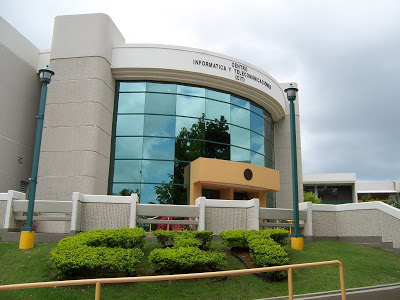
The University of Puerto Rico-Aguadilla (UPRAG) is a public, open-access institution on Puerto Rico's northwest coast, defined by its practical, career-oriented mission and its role as a vital educational and economic engine for the region. With an 81% acceptance rate and a focus on fields like biology, business, and aeronautics, it provides an affordable, low-debt pathway to a degree for nearly 2,000 undergraduates, though its 46% graduation rate signals the significant challenges many students face in completing their programs. The campus culture is deeply rooted in Puerto Rican life, offering a traditional collegiate experience focused on local community and workforce development.
Admission requirements
Test scores required
Required
- High school transcript
- Grade point average
- Test scores (SAT/ACT)
Source: IPEDS Admissions survey (2022) via Urban Institute. Covers formal factors only — it does not reflect essays, extracurriculars, or other holistic criteria.
More details
- Undergrad enrollment
- 1,883
- In-state tuition
- $5,954
- Out-of-state tuition
- $5,954
- Graduation Rate
- 46%
- Median Student Debt
- $6,250
- Median Earnings (10yr)
- $27,997
Outcomes & value
Outcomes & value
- Median earnings (10 yr)
- $27,997
- Value (earnings ÷ net price)
- 3.6×
- Median debt at graduation
- $5,500
- Graduation rate
- 46%
- First-year retention
- 69%
- Reducing loan balance (3 yr)
- 56%
- Pell (lower-income) share
- 83%
- First-gen share (among federal-aid recipients)
- 28%
Top-earning majors
Median earnings by field of study (highest credential), ~2 years after completion.
- Management Information Systems and Services$20,140
- Teacher Education and Professional Development, Specific Subject Areas$13,702
- Accounting and Related Services$13,702
- Human Resources Management and Services$13,290
- Marketing$12,776
- Biology, General
Campus & location
Campus safety
- On-campus violent crimes (2024)
- 0
On-campus criminal offenses classed as violent (murder/non-negligent manslaughter, rape, robbery, aggravated assault) for the most recent reported year. Source: U.S. Dept. of Education Campus Safety and Security (Clery Act). Counts reflect what’s reported to the school, and urban campuses often report more partly due to non-student incidents nearby — read alongside campus size and setting, not as a standalone safety verdict.
Climate
- Pleasant days / yr
- 26
- Summer high
- 86°F
- Winter low
- 71°F
- Annual rain
- 48.9"
Pleasant days counts days per year with a mean temperature of 55–75°F, a high at or below 90°F, a low at or above 45°F, and little precipitation — a transparent comfort measure, not a weighting we invented. Computed from Open-Meteo ERA5 daily history (2019–2023).
Quick answers
- What is the acceptance rate at University of Puerto Rico-Aguadilla?
- University of Puerto Rico-Aguadilla's acceptance rate is approximately 81% (Aguadilla, PR), based on the most recent figures we compiled from public and primary sources.
- What SAT score do you need for University of Puerto Rico-Aguadilla?
- Admitted students at University of Puerto Rico-Aguadilla typically score 791–1023 on the SAT (the middle-50% range). Scores outside this band are still admitted, especially with strong applications.
- How much does University of Puerto Rico-Aguadilla cost?
- At University of Puerto Rico-Aguadilla, the average net price (after aid) is about $7,765 per year. Actual cost varies with financial aid and residency.
- How many undergraduates attend University of Puerto Rico-Aguadilla?
- University of Puerto Rico-Aguadilla enrolls approximately 1,883 undergraduate students.
- Where is University of Puerto Rico-Aguadilla located?
- University of Puerto Rico-Aguadilla is located in Aguadilla, PR.
Admissions
UPRAG operates with an open-access philosophy, admitting the vast majority of its applicants. The admissions process is straightforward and test-centric, with nearly all admitted students submitting SAT scores. The middle 50% SAT range for admitted students is 791–1023, placing the academic profile of the incoming class in a broadly accessible band. The university received 657 applications for a recent cycle, admitting 537, which highlights its role as a primary post-secondary option for students in the Aguadilla region and across Puerto Rico. There is no mention of Early Decision or Early Action programs in the provided sources, and the , which would detail factors like demonstrated interest, is not available for this specific institution in the snippets, suggesting a process weighted heavily toward academic readiness as demonstrated by test scores and prior coursework.
Academics
Compare University of Puerto Rico-Aguadilla
vs University of Puerto Rico-Arecibovs University of Puerto Rico-Humacaovs University of Puerto Rico at Poncevs Abraham Baldwin Agricultural College
See colleges similar to University of Puerto Rico-Aguadilla →Sources
- Common Data Set: Home
- Common Data Set - GradGPT
- University of Puerto Rico-Aguadilla - IPEDS - Department of Education
- University of Puerto Rico--Aguadilla | US News Best Colleges
- University of Puerto Rico-Rio Piedras - Data USA
- [PDF] Common Data Set 2024-2025 - University of Florida
- University of Puerto Rico at Aguadilla SAT Scores and GPA
- University of Puerto Rico - Aguadilla Admissions & Acceptance - Niche
- University of Puerto Rico: Aguadilla Admissions - BigFuture
- University of Puerto Rico-Aguadilla Acceptance Rate - College Raptor