Loading…
← All schools
University of Rio Grande
Rio Grande, OHprivate nonprofitrio.edu
Avg net price
$23,686
Earnings (10 yr)
$41,478
Graduation rate
36%
Acceptance & SAT from Common Data Set / IPEDS; net price, earnings & graduation from the U.S. Dept. of Education College Scorecard. Figures lag ~1–2 years — verify with the school.
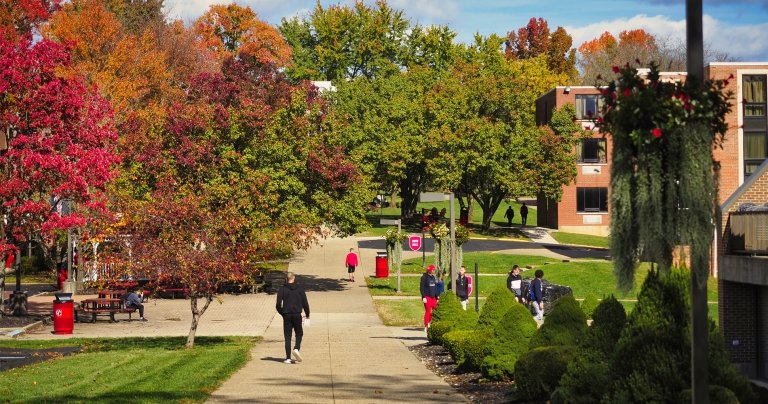
The University of Rio Grande is a small, private institution in rural Southeastern Ohio that operates with a fundamentally open-access mission. It's a place where the admissions gate is wide open—accepting nearly every applicant—but the academic and financial journey that follows is a steep climb, characterized by a low graduation rate and a net price that challenges its affordability promise. The experience is defined by an intimate, 15:1 student-faculty ratio, a tight-knit campus community, and a practical focus on career-oriented programs, making it a consequential choice for students who thrive on personal attention but must navigate its significant retention and cost hurdles.
More details
- Undergrad enrollment
- 1,400
- In-state tuition
- $20,560
- Out-of-state tuition
- $20,560
- Graduation Rate
- 36%
- Student-Faculty Ratio
- 15:1
- Median Earnings (10yr)
- $41,478
- First-Year Retention Rate
- 57%
Outcomes & value
Outcomes & value
- Median earnings (10 yr)
- $41,478
- Value (earnings ÷ net price)
- 1.8×
- Median debt at graduation
- $17,750
- Graduation rate
- 36%
- First-year retention
- 56%
- Reducing loan balance (3 yr)
- 32%
- Pell (lower-income) share
- 34%
- First-gen share (among federal-aid recipients)
- 52%
Financial health
1.3 / 3.0Passing, but in the added-oversight zone
U.S. Dept. of Education Financial Responsibility Composite Score (FY2022-23). Scale −1.0 to 3.0; ≥1.5 meets the standard. Reported for private nonprofit & for-profit institutions only — public universities are state-backed and not scored, so this is a stability signal, not a ranking.
Top-earning majors
Median earnings by field of study (highest credential), ~2 years after completion.
- Registered Nursing, Nursing Administration, Nursing Research and Clinical Nursing$68,499
- Fishing and Fisheries Sciences and Management$30,771
- Teacher Education and Professional Development, Specific Levels and Methods$30,771
- Business Administration, Management and Operations$26,353
Source: U.S. Dept. of Education College Scorecard (field-of-study earnings). Figures cover graduates who received federal aid and lag ~2 years; not all programs report data.
Compare on earnings: best colleges for Nursing · best colleges for Business
Campus & location
Campus safety
- On-campus violent crimes (2024)
- 0
- Per 1,000 students
- 0.00
On-campus criminal offenses classed as violent (murder/non-negligent manslaughter, rape, robbery, aggravated assault) for the most recent reported year. Source: U.S. Dept. of Education Campus Safety and Security (Clery Act). Counts reflect what’s reported to the school, and urban campuses often report more partly due to non-student incidents nearby — read alongside campus size and setting, not as a standalone safety verdict.
Climate
- Pleasant days / yr
- 91
- Summer high
- 85°F
- Winter low
- 30°F
- Annual rain
- 44.9"
- Annual snow
- 11.9"
- Natural-hazard risk
- Relatively Low
Pleasant days counts days per year with a mean temperature of 55–75°F, a high at or below 90°F, a low at or above 45°F, and little precipitation — a transparent comfort measure, not a weighting we invented. Computed from Open-Meteo ERA5 daily history (2019–2023). Natural-hazard risk is the county’s composite rating from the FEMA National Risk Index.
Deep dive — research, future-scholar output & economic mobility
Economic mobility
- Mobility rate
- 1.3%
- Bottom → top quintile
- 8%
- From bottom quintile
- 15%
Mobility rate = the share of students who both start in the bottom household-income quintile and reach the top quintile; bottom → top is that chance conditional on starting at the bottom. Source: Opportunity Insights Mobility Report Cards (Chetty, Friedman, Saez, Turner & Yagan). Reflects 1980–82 birth cohorts, so it’s directional, not current.
Quick answers
- How much does University of Rio Grande cost?
- At University of Rio Grande, the average net price (after aid) is about $23,686 per year. Actual cost varies with financial aid and residency.
- How many undergraduates attend University of Rio Grande?
- University of Rio Grande enrolls approximately 1,400 undergraduate students.
- Where is University of Rio Grande located?
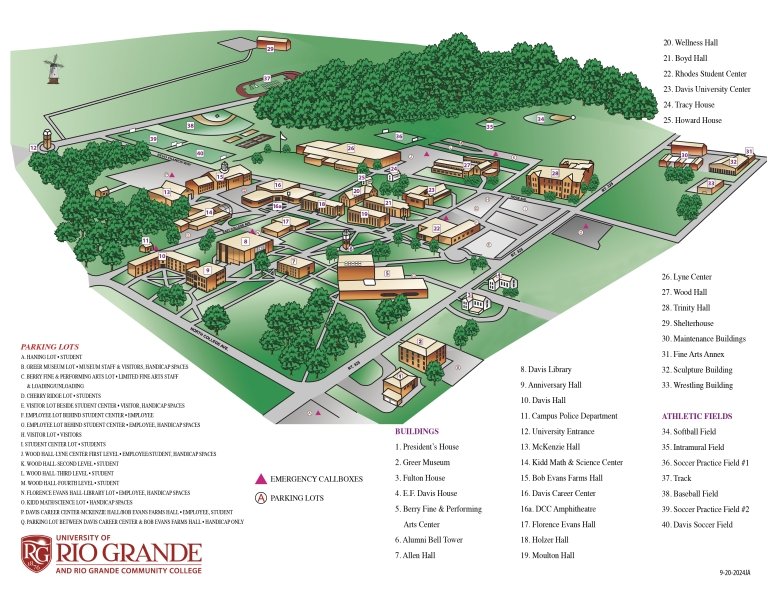
- University of Rio Grande is located in Rio Grande, OH.
Admissions
The University of Rio Grande's admissions process is best described as minimally selective, with an open-access philosophy. Multiple sources report an at or near 100%, with figures like 100%, 99.4%, and 80.6% cited. One source specifies that for the 2023 application year, 2,502 applicants resulted in 2,486 acceptances. The school is , not requiring SAT or ACT scores for admission. The admissions office promotes an "affordable education" and "personalized support" as hallmarks of the Rio Grande experience. The provided sources do not contain a for the University of Rio Grande itself; the links point to generic information about the CDS initiative or the CDS for other institutions (URI, Rice, USD, SDSU). Consequently, detailed data on the relative importance of academic and non-academic factors, specific GPA ranges, or the consideration of demonstrated interest is not available from the authorized sources for this university.
- Reported Acceptance Rates: 100% (Niche, Sallie), 99.4% (Clastify), 80.6% (PrepScholar).
- Policy: Test-optional (SAT/ACT not required).
- Admissions Pitch: Focus on affordability, personalized support, and a close-knit community.
Compare University of Rio Grande
vs Indiana Institute of Technologyvs Missouri Valley Collegevs Drury Universityvs Central Methodist University-College of Liberal Arts and Sciences
See colleges similar to University of Rio Grande →Sources
- Admissions
- Common Data Set: Home
- Where to find Common Data Set (CDS) for college ...
- Common Data Set – Office of Institutional Research
- Common Data Set Explorer 2026: Compare 100 Colleges
- Common Data Set - IDEAS - Institutional Effectiveness
- University of Rio Grande Admission Requirements
- University of Rio Grande - College
- University of Rio Grande Tuition, Acceptance Rate, & Academics
- University of Rio Grande Acceptance Rate
- University of Rio Grande [Acceptance Rate + Statistics]