Admit rate has ranged 70%–92% over the last 5 years — notably volatile, though the latest figure above (62%) falls outside that window. Source: IPEDS via Urban Institute.
Acceptance & SAT from Common Data Set / IPEDS; net price, earnings & graduation from the U.S. Dept. of Education College Scorecard. Figures lag ~1–2 years — verify with the school.
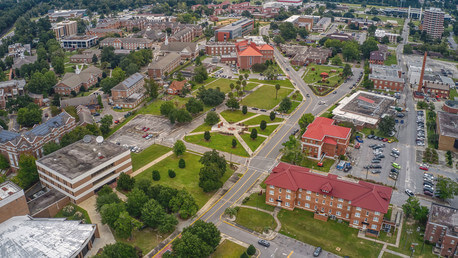
The University of South Carolina-Union is a small, public regional campus that functions as a critical access point to the state's flagship system. It's defined by its open-access mission, offering a low-cost, low-pressure on-ramp to higher education with associate degrees and a handful of bachelor's programs. This is a commuter-focused institution where the primary draws are affordability, personal attention in small classes, and the flexibility to start a degree before potentially transitioning elsewhere within the USC system.
Admission requirements
Test-blind — scores not considered
Required
High school transcript
Grade point average
College-prep program
Source: IPEDS Admissions survey (2022) via Urban Institute. Covers formal factors only — it does not reflect essays, extracurriculars, or other holistic criteria.
More details
Undergrad enrollment
270
In-state tuition
$7,558
Out-of-state tuition
$18,238
Graduation Rate
~43-45%
Student-Faculty Ratio
15:1
Median Earnings (10yr)
$33,699
Full-Time First-Year Retention
51%
Outcomes & value
Outcomes & value
Median earnings (10 yr)
$33,699
Value (earnings ÷ net price)
4.2×
Median debt at graduation
$11,000
Reducing loan balance (3 yr)
23%
Pell (lower-income) share
10%
First-gen share (among federal-aid recipients)
35%
Earnings = median of students working ~10 years after entry; debt = median of graduates. Value divides 10-yr earnings by one year’s net price — read it as earnings per dollar of annual cost, not a full lifetime ROI; it favors lower-cost schools. Source: U.S. Dept. of Education College Scorecard. Figures lag ~2 years and reflect all students, not your intended major.
Campus & location
Campus safety
On-campus violent crimes (2024)
0
On-campus criminal offenses classed as violent (murder/non-negligent manslaughter, rape, robbery, aggravated assault) for the most recent reported year. Source: U.S. Dept. of Education Campus Safety and Security (Clery Act). Counts reflect what’s reported to the school, and urban campuses often report more partly due to non-student incidents nearby — read alongside campus size and setting, not as a standalone safety verdict.
Climate
Pleasant days / yr
106
Summer high
89°F
Winter low
39°F
Annual rain
46.6"
Annual snow
0.9"
Natural-hazard risk
Relatively Low
Pleasant days counts days per year with a mean temperature of 55–75°F, a high at or below 90°F, a low at or above 45°F, and little precipitation — a transparent comfort measure, not a weighting we invented. Computed from Open-Meteo ERA5 daily history (2019–2023). Natural-hazard risk is the county’s composite rating from the FEMA National Risk Index.
Deep dive — research, future-scholar output & economic mobility▾
Research output
Institutional h-index
40
Scholarly works
439
Institutional research volume and impact from OpenAlex. The h-index reflects large research universities and will be low for teaching-focused liberal-arts colleges — not a measure of undergraduate quality.
Quick answers
What is the acceptance rate at University of South Carolina-Union?
University of South Carolina-Union's acceptance rate is approximately 62% (Union, SC), based on the most recent figures we compiled from public and primary sources.
How much does University of South Carolina-Union cost?
At University of South Carolina-Union, the average net price (after aid) is about $8,065 per year. Actual cost varies with financial aid and residency.
How many undergraduates attend University of South Carolina-Union?
University of South Carolina-Union enrolls approximately 270 undergraduate students.
Where is University of South Carolina-Union located?
University of South Carolina-Union is located in Union, SC.
Admissions
Admissions at USC Union are straightforward and accessible, reflecting its role as an entry point within the broader University of South Carolina system. The process is somewhat competitive, with an of 62% (the canonical figure that overrides all sources).
Academic Threshold: The primary academic requirement is a minimum high school GPA of 2.0 on a 4.0 scale. Standardized test scores from the SAT or ACT are not required for admission, making it a institution.
Applicant Profile: In a recent cycle, 224 students were accepted from 360 applicants. Among first-time enrollees, about 51% chose to submit SAT scores with their applications.
Transfer-Friendly: The campus has a significant transfer population, with one source noting 25 transfer students and a high acceptance rate for transfer applicants in the fall.
Contact: The admissions office can be reached at 864-424-8039. The broader USC system's undergraduate admissions email is [email protected].
The admissions philosophy is clearly geared toward providing opportunity, with a low barrier to entry focused on a minimum GPA rather than a holistic, highly selective review.
Academics at USC Union are built around foundational associate degrees and a select few bachelor's programs, all delivered with an emphasis on small classes and personal attention. The student-faculty ratio is 15:1.
Degree Programs: The campus offers flexible associate degree programs designed to help students "think critically, develop logical and persuasive arguments, and communicate clearly." These programs focus on building skills in written and verbal communication, computer technology, and analytical thinking. For students looking to complete a four-year degree on-site, USC Union offers three bachelor's degrees: Organizational Leadership, Nursing, and Liberal Studies.
Academic Environment: The institutional identity is heavily tied to providing a supportive, accessible learning environment. Promotional materials consistently highlight "smaller classes" and "personal attention" as key benefits.
Retention Rates: The academic transition can be challenging for some; the full-time first-year retention rate is 51%, while the part-time first-year retention rate is 21%.
Online Options: The university offers online degree options to provide additional flexibility for students.
Student life at USC Union is typical of a small, non-residential commuter campus. The focus is on providing a "balanced student-life program" that contributes to the educational experience, though activities are necessarily more limited than at a large residential university.
Clubs and Organizations: Student-led groups exist, often centered around campus news, community events, and student accomplishments. A campus media organization covers "university news, campus and community events, sports, student life, and the accomplishments of our students, faculty, and staff."
Campus Hub: The university aims to create a hub for student life, with spaces designed for studying, collaboration, and taking a break. Ideally, these spaces foster community and new friendships from orientation through graduation.
Commuter Reality: As the campus does not offer on-campus housing, student life is inherently intertwined with the local Union community and is largely driven by students who live off-campus.
Outcome data for USC Union highlights its role as a starting point for many students, with completion rates and earnings reflecting the profile of a regional access institution.
Graduation Rate: The graduation rate is reported between 43% and 45%, which one analysis notes is 25% below the national average. For context, the average graduation rate across all two-year institutions is 21.7%.
Post-Graduation Earnings: The median earnings for graduates ten years after entry is $33,699 (the canonical figure that overrides all sources). This is significantly lower than the median for bachelor's degree graduates from the main USC Columbia campus, which is reported as $69,220.
Yield Rate: The rate—the percentage of admitted students who enroll—was 57.6% for one recent cohort of 129 enrolled students.
Retention: As noted in Academics, retention rates are a point of focus, with 51% of full-time first-year students returning for their second year.
Affordability is a cornerstone of USC Union's value proposition. The cost structure is low for in-state students, and a high percentage of students receive financial aid.
Tuition & Fees: In-state tuition and fees are approximately $7,558, while out-of-state tuition and fees are about $18,238.
Average Net Price: The average after aid is $8,065 (the canonical figure that overrides all sources). Other sources report average net prices ranging from $11,734 to an average total aid award of $8,477.
Financial Aid Prevalence:100% of full-time beginning undergraduates receive grant or scholarship aid. The average financial aid package is reported to be $2,438.
Aid Process: The university provides a Net Price Calculator for prospective students and requires the completion of the FAFSA for aid consideration. To be eligible for need-based state scholarships, students must be South Carolina residents, admitted or enrolled with a minimum 2.00 GPA, complete the FAFSA, and demonstrate financial need.
USC Union stands out not for prestige or selectivity, but for fulfilling a specific, vital role within South Carolina's higher education landscape. It is an unapologetic access institution.
The System's On-Ramp: Its primary distinction is serving as a low-stakes, low-cost entry point into the University of South Carolina system. With a simple 2.0 GPA requirement and policy, it removes traditional barriers, allowing students to begin their college journey, earn credits, and then potentially transfer to USC Columbia or another campus.
Commitment to Place: It brings public higher education directly to the Union community, offering local residents a chance to earn associate and specific bachelor's degrees without relocating. The small classes and promised personal attention cater to students who might be overwhelmed by or unable to access a large university initially.
Clarity of Mission: There is no pretension here. It doesn't compete with flagship campuses on research, rankings, or residential amenities. Instead, it focuses on a clear, practical mission: providing flexible, affordable degree programs to the students of its region. Its value is measured in access and opportunity, not in low or high median salaries.
University of South Carolina-Union seal · sourceUSC Union - SC Picture Project · sourceUniversity of South Carolina Union - Wikipedia · sourceUniversity of South Carolina-Union — Admissions, Tuition & Acceptance Rate | Appily · source