Admit rate has ranged 50%–60% over the last 5 years — notably volatile. Source: IPEDS via Urban Institute.
Acceptance & SAT from Common Data Set / IPEDS; net price, earnings & graduation from the U.S. Dept. of Education College Scorecard. Figures lag ~1–2 years — verify with the school.
University of the Ozarks is a small, private liberal arts institution in Clarksville, Arkansas, that operates on a distinctly personal scale. It’s a place where the admissions process is rolling and holistic, the curriculum offers over 60 majors with a heavy tilt toward practical fields like business and health, and the campus vibe is defined by tree-lined walkways and a tight-knit community. Don’t confuse it with the hyper-selective, work-study College of the Ozarks in Missouri; this Ozarks is more accessible, with a focus on delivering a high job-placement rate and significant institutional aid to nearly every student.
Admission requirements
Test-optional — scores considered if submitted
Required
High school transcript
Grade point average
Considered (not required)
Letters of recommendation
Test scores (SAT/ACT)
College-prep program
Demonstrated competencies
TOEFL (non-native English)
Source: IPEDS Admissions survey (2022) via Urban Institute. Covers formal factors only — it does not reflect essays, extracurriculars, or other holistic criteria.
More details
Undergrad enrollment
767
In-state tuition
$25,950
Out-of-state tuition
$25,950
Campus Setting
Tree-lined, green spaces, near natural landscapes
Graduation Rate
51%
Financial Aid Reach
99% of students receive institutional aid
Application Decision
Rolling, beginning Oct 1
Median Earnings (10yr)
$44,384
Recent Job Placement Rate
95% (Class of 2024)
Outcomes & value
Outcomes & value
Median earnings (10 yr)
$44,384
Value (earnings ÷ net price)
2.6×
Median debt at graduation
$20,875
Graduation rate
51%
First-year retention
69%
Reducing loan balance (3 yr)
59%
Pell (lower-income) share
40%
First-gen share (among federal-aid recipients)
35%
Financial health
2.4 / 3.0Meets the federal financial-responsibility standard
U.S. Dept. of Education Financial Responsibility Composite Score (FY2022-23). Scale −1.0 to 3.0; ≥1.5 meets the standard. Reported for private nonprofit & for-profit institutions only — public universities are state-backed and not scored, so this is a stability signal, not a ranking.
Top-earning majors
Median earnings by field of study (highest credential), ~2 years after completion.
Teacher Education and Professional Development, Specific Levels and Methods$35,416
Business Administration, Management and Operations$33,993
Biology, General$29,685
Source: U.S. Dept. of Education College Scorecard (field-of-study earnings). Figures cover graduates who received federal aid and lag ~2 years; not all programs report data.
On-campus criminal offenses classed as violent (murder/non-negligent manslaughter, rape, robbery, aggravated assault) for the most recent reported year. Source: U.S. Dept. of Education Campus Safety and Security (Clery Act). Counts reflect what’s reported to the school, and urban campuses often report more partly due to non-student incidents nearby — read alongside campus size and setting, not as a standalone safety verdict.
Climate
Pleasant days / yr
71
Summer high
91°F
Winter low
35°F
Annual rain
54.6"
Annual snow
3.7"
Natural-hazard risk
Relatively Low
Pleasant days counts days per year with a mean temperature of 55–75°F, a high at or below 90°F, a low at or above 45°F, and little precipitation — a transparent comfort measure, not a weighting we invented. Computed from Open-Meteo ERA5 daily history (2019–2023). Natural-hazard risk is the county’s composite rating from the FEMA National Risk Index.
Deep dive — research, future-scholar output & economic mobility▾
Research output
Institutional h-index
44
Scholarly works
363
Institutional research volume and impact from OpenAlex. The h-index reflects large research universities and will be low for teaching-focused liberal-arts colleges — not a measure of undergraduate quality.
Economic mobility
Mobility rate
0.9%
Bottom → top quintile
10%
From bottom quintile
9%
Mobility rate = the share of students who both start in the bottom household-income quintile and reach the top quintile; bottom → top is that chance conditional on starting at the bottom. Source: Opportunity Insights Mobility Report Cards (Chetty, Friedman, Saez, Turner & Yagan). Reflects 1980–82 birth cohorts, so it’s directional, not current.
Quick answers
What is the acceptance rate at University of the Ozarks?
University of the Ozarks's acceptance rate is approximately 60% (Clarksville, AR), based on the most recent figures we compiled from public and primary sources.
What SAT score do you need for University of the Ozarks?
Admitted students at University of the Ozarks typically score 1020–1160 on the SAT (the middle-50% range). Scores outside this band are still admitted, especially with strong applications.
How much does University of the Ozarks cost?
At University of the Ozarks, the average net price (after aid) is about $17,360 per year. Actual cost varies with financial aid and residency.
How many undergraduates attend University of the Ozarks?
University of the Ozarks enrolls approximately 767 undergraduate students.
Where is University of the Ozarks located?
University of the Ozarks is located in Clarksville, AR.
Admissions
The admissions process at University of the Ozarks is defined by its rolling, individualized approach. The university notifies applicants of admission decisions on a rolling basis, beginning on October 1st, and does not require a housing deposit. Applicants are evaluated holistically, with consideration given to courses and grades, GPA, and ACT or SAT test scores. A high school diploma is required (a GED is accepted) and applicants must submit an official high school transcript. The process is designed to be accessible and ongoing throughout the year.
Critical Note on Selectivity: It is essential to distinguish University of the Ozarks (Clarksville, AR) from College of the Ozarks (Point Lookout, MO). External sources frequently conflate the two, but their admissions profiles are worlds apart. College of the Ozarks is frequently cited as being "very selective" or "extremely selective," with around 10-12%. University of the Ozarks operates with a significantly higher acceptance rate.
Earnings = median of students working ~10 years after entry; debt = median of graduates. Value divides 10-yr earnings by one year’s net price — read it as earnings per dollar of annual cost, not a full lifetime ROI; it favors lower-cost schools. Source: U.S. Dept. of Education College Scorecard. Figures lag ~2 years and reflect all students, not your intended major.
Ozarks offers a broad, career-oriented curriculum with "creative, student-oriented innovation." Students can choose from more than 60 majors and minors, ranging from traditional liberal arts to applied fields. The most popular majors are decidedly practical, heavily skewing toward business, health, and sciences. For the 2024 graduating class, the most popular majors were:
Business Administration and Management, General (25% of graduates)
Public Health Education and Promotion (16%)
Biology/Biological Sciences
Psychology
Elementary Education
This multidisciplinary approach is geared toward what the university promotes as a 95% record of professional success for its graduates, either in employment or graduate school.
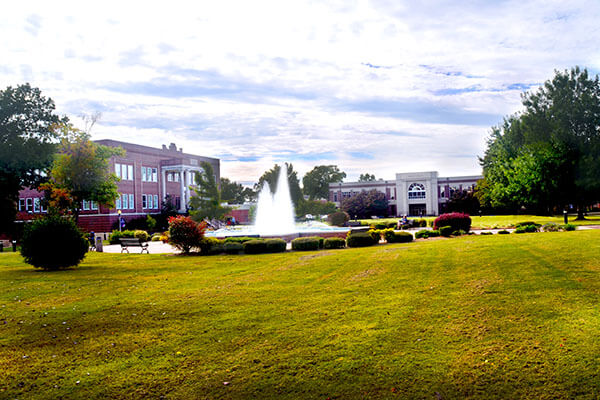
Life on the Clarksville campus is portrayed as vibrant and community-focused, set against a backdrop of natural beauty. The Office of Student Life oversees housing, campus recreation, and student conduct to support the student experience. The campus itself is described as having tree-lined walkways, open green spaces, and proximity to natural landscapes, providing an ideal setting for learning and recreation. Student engagement is driven by over 25 active, student-led clubs and organizations, offering opportunities to explore interests and build friendships. The university also highlights a diverse campus culture and encourages connection across the community.
The university aggressively promotes a near-perfect track record of post-graduate success, which it defines as employment or enrollment in graduate school within six months of graduation. For the Class of 2024, the job placement rate was reported at 95%. This marked the ninth consecutive year the university's success rate exceeded 90%, with a five-year average of 95%. The institution's six-year graduation rate is reported by federal sources as 46%, though the university's own communications emphasize employment outcomes over graduation metrics. Earnings for graduates vary by major, with one source noting median earnings four years after graduation.
University of the Ozarks is committed to making education affordable through substantial institutional aid. Last year, the university awarded over $11 million in institutional scholarships and financial aid to 99% of its students. Scholarships can reach up to $18,500 per student. The average grant award is reported to be $17,918. The university provides a Full-Need Tuition Scholarship Program for local students who demonstrate financial need and a commitment to learning, using FAFSA information to determine eligibility. Students are directed to use the official Calculator and follow step-by-step guidance for applying for aid and scholarships.
University of the Ozarks carves out its niche through a potent combination of accessibility, practical education, and a highly supportive financial aid model. Its rolling, process stands in stark contrast to the high-stakes, ultra-selective calendar of many private colleges. The academic focus is unapologetically geared toward marketable outcomes, with business, health, and biology dominating the list of popular majors—a curriculum directly aligned with its boast of a 95% job placement rate. Perhaps most significantly, it backs its mission with action: 99% of students receive institutional aid, with millions of dollars in scholarships distributed annually. This creates a distinct profile of a school that is less about exclusivity and more about providing a clear, funded pathway to a professional career for a broad range of students, all within a classic, green-campus setting in the Arkansas river valley.
University of the Ozarks seal · sourceUniversity of the Ozarks | A Multidisciplinary Approach to Education · sourceUniversity of the Ozarks | A Multidisciplinary Approach to Education · sourceU of O Ranked 7th by U.S. News - University of the Ozarks · source